Eton’s ET-700 Cuts Side Effects In Pilot Study, But GALZIN Blocks More Copper
Eton intends to test faster-release formulations in 2027 after preliminary results from a four-week study in healthy volunteers.


Eton Pharmaceuticals, which develops and sells rare-disease treatments, reported fewer treatment-related side effects with experimental Wilson disease drug ET-700 than with GALZIN — but a smaller reduction in copper absorption. Thursday’s SEC filing put the side-effect comparison at 1 of 12 ET-700 recipients versus 8 of 12 GALZIN recipients.
Copper Control Trails GALZIN
The primary analysis covered 29 participants who met the study’s protocol criteria. Liver copper uptake declined 12% with ET-700, compared with 46% for GALZIN; the placebo group recorded an 11% increase.
A supplementary analysis of 35 participants who completed both imaging scans pointed in the same direction: copper uptake fell 18% with ET-700 and 58% with GALZIN, while placebo again showed an 11% increase. GALZIN’s greater effect in that analysis was statistically significant, with p=0.023.
ETON shares soared about 17% to $55.03 in Friday trading. The company cautioned that these preliminary results establish neither efficacy in Wilson disease patients nor comparative safety over the long term.
Fewer Stomach-Related Events
The safety assessment included 36 healthy volunteers, split equally among ET-700, GALZIN and placebo over four weeks. ET-700 recipients reported one treatment-related gastrointestinal event, against 17 treatment-related events among GALZIN recipients and three among placebo recipients. No serious adverse events were reported.
Counting all adverse events, whether attributed to treatment or not, two ET-700 recipients were affected, compared with nine taking GALZIN and seven taking placebo. Estimated treatment-related gastrointestinal event rates per 100 participant-days were 0.30 for ET-700, 5.35 for GALZIN and 0.89 for placebo.
Aarhus University Hospital in Denmark sponsored and conducted the randomized study, with participants and investigators unaware of treatment assignments; Eton supplied funding and medication. Imaging with copper-64 PET/CT measured liver copper uptake before and after treatment as a gauge of intestinal absorption.
Both active treatments delivered 150 mg of elemental zinc daily. The GALZIN regimen used 50 mg three times a day; ET-700 used 75 mg twice a day, plus a matching placebo dose.
A Faster-Release Formulation Next
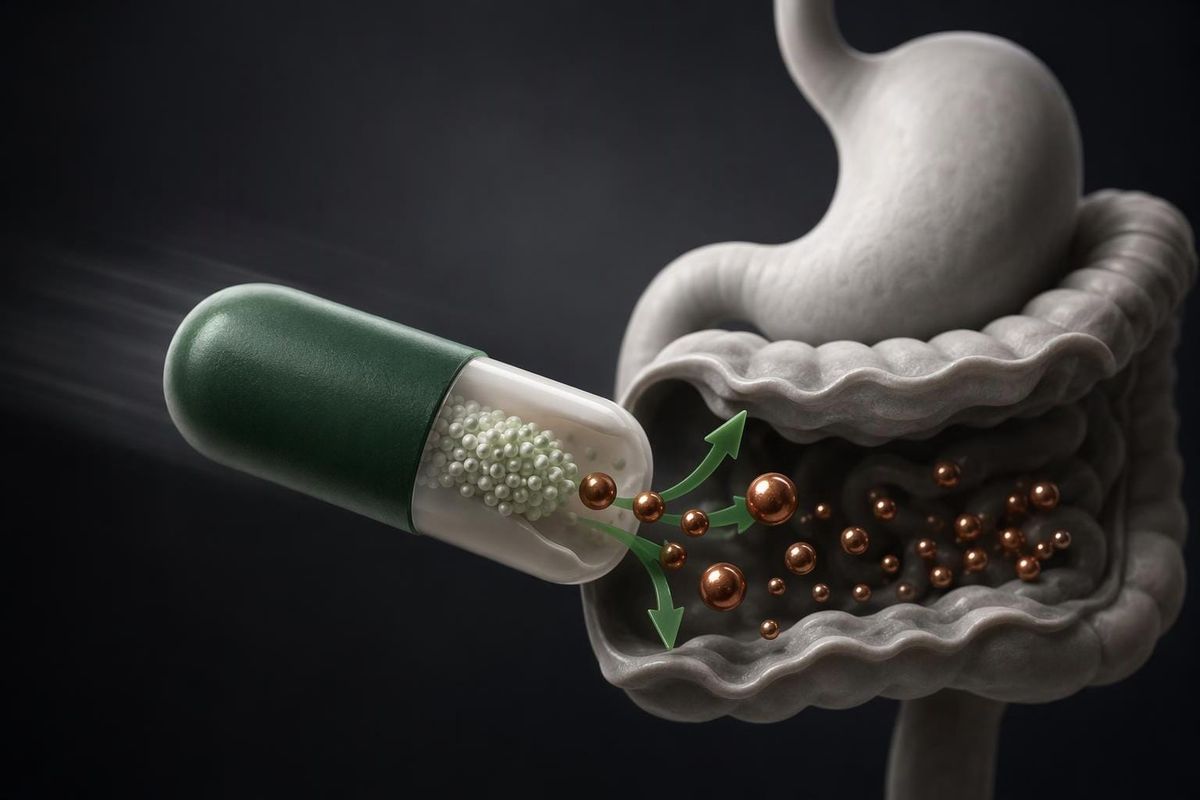
ET-700 is an extended-release version of zinc acetate. Eton’s hypothesis is that releasing it faster could deliver more zinc to the upper intestine, where most copper absorption occurs, and strengthen copper blocking without losing the gastrointestinal benefit.
Thomas Damgaard Sandahl, clinical professor at Aarhus University and Aarhus University Hospital, said: “Its effect on copper absorption was more modest than that of standard zinc acetate, but the study has taught us a great deal about how the release profile matters.”
The development effort sits alongside Eton’s existing Wilson disease business: it already sells GALZIN, a maintenance treatment for patients initially treated with a copper-removing chelating agent. Thursday’s release listed twelve rare-disease products and six additional candidates in late-stage development, including ET-700.
Sean Brynjelsen, Eton’s chief executive officer, said: “Our goal is to combine effective copper control, favorable tolerability, and twice-daily dosing.”
Eton is advancing faster-release formulations and intends to evaluate them in additional study arms in 2027, testing whether stronger copper blocking can coexist with fewer gastrointestinal side effects.
Sources
- 8-K Filing — Eton Pharmaceuticals, Inc. (ETON) — SEC EDGAR
- Exhibit ex_1038124.htm — Eton Pharmaceuticals, Inc. 8-K exhibit — SEC EDGAR
- Eton Pharmaceuticals Inc (ETON) (Q3 2026) Earnings Call Highlights: Record Revenue, Raised ... — Yahoo Finance
- Eton Pharmaceuticals Announces Preliminary ET-700 Pilot — globenewswire.com
- Eton Pharmaceuticals to Present at 2026 Jefferies Global — globenewswire.com
- Eton Pharmaceuticals Announces Licensing and Initiation of — globenewswire.com