Precision BioSciences Plans Hepatitis B Cure Trial After Viral Marker Vanishes In Six Patients
The company selected a dose for mid-stage testing, with dosing expected in the first quarter of 2027.


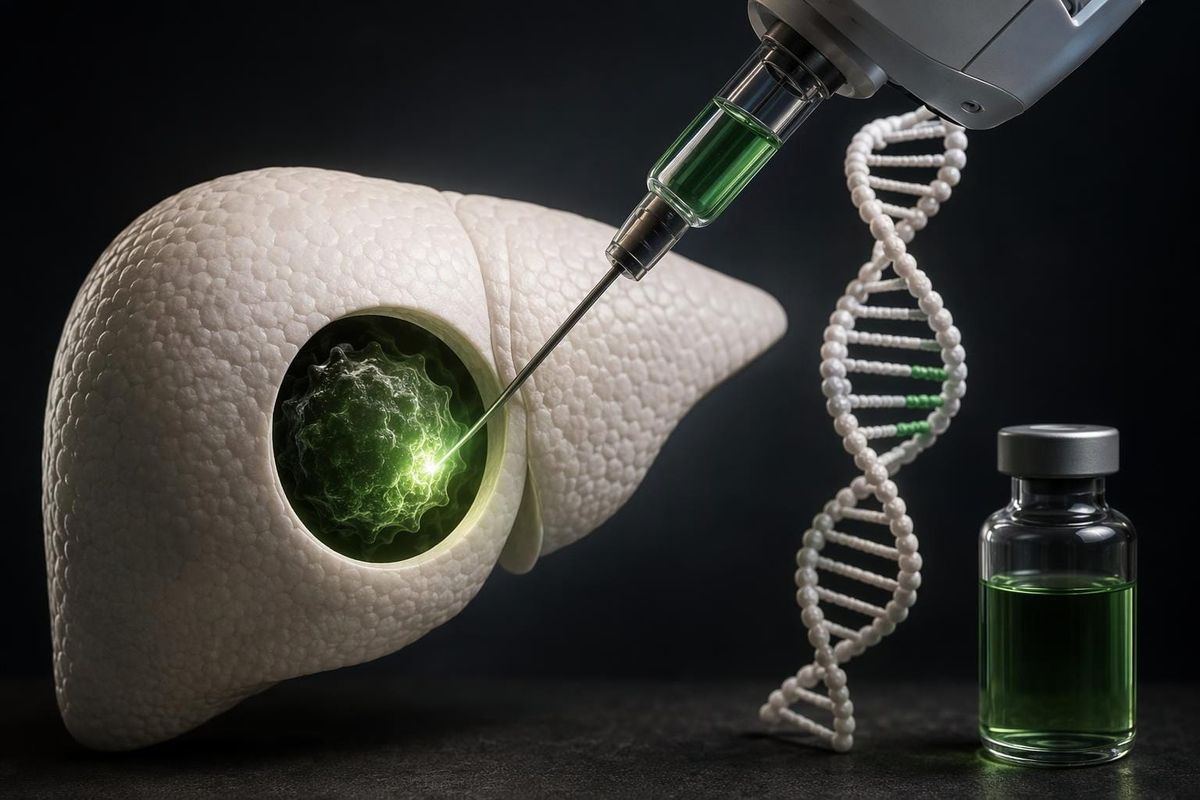
Precision BioSciences, which develops therapies that edit DNA inside the body, is preparing a global mid-stage trial of its hepatitis B treatment after all six evaluable patients at the selected dose achieved undetectable levels of a viral-activity marker. The company outlined the advance in an SEC filing Thursday, citing preliminary results from its ongoing early-stage study of PBGENE-HBV.
Six Patients, Sustained RNA Loss
At 0.4 mg/kg, the dose Precision selected for further testing, all six evaluable patients achieved undetectable pregenomic RNA, or pgRNA. This blood marker tracks activity from cccDNA — persistent viral DNA in the liver that PBGENE-HBV is designed to eliminate.
Across dose levels, 11 of 12 evaluable patients with detectable pgRNA before treatment reached undetectable levels. The remaining patient had received two administrations at 0.65 mg/kg and recorded a 95% reduction, with follow-up continuing.
The longest observed stretch of undetectable pgRNA approaches one year. Every patient who reached undetectable levels and had at least six months of follow-up maintained that result through the September 28 data cutoff, extending findings reported in May 2026.
Liver biopsies supplied another measure of the treatment's effect: two patients at 0.4 mg/kg had approximately 10-fold and 35-fold reductions in cccDNA, respectively. Hepatitis B surface antigen, a separate infection marker, declined in all 24 evaluable patients; maximum reductions approached 94% at the selected dose.
The study also included its first patient positive for hepatitis B e antigen, a group the company describes as harder to treat because of greater viral burden. That patient's pgRNA fell from 5,750 copies/mL to undetectable after the second administration at 0.4 mg/kg.
Safety Shapes The Dose Choice
Precision reported no dose-limiting toxicities across 59 administrations in 25 patients at four dose levels. Infusion reactions were the most common adverse events, generally starting and resolving within 24 hours; temporary liver-enzyme elevations also occurred.
No serious adverse events were reported at 0.4 mg/kg. Under the current infusion protocol, there were no severe hypotension events across 15 administrations in eight patients at that dose, and one delayed liver-enzyme elevation resolved without intervention.
Higher-dose experience carried additional risks. Precision's investor presentation describes two serious events in one patient at 0.8 mg/kg: myocardial ischemia considered treatment-related, which resolved without heart damage, and an intracerebral hemorrhage considered possibly related.
DTIL shares fell about 3% to $9.59 in Friday trading. The preliminary clinical findings establish biomarker responses; the planned trial will test whether treatment can enable patients to remain free of detectable virus after stopping medication.
Testing Life Off Daily Treatment
Precision's ARCUS gene-editing platform underpins PBGENE-HBV, a wholly owned program aimed at the liver's viral reservoir. Existing suppressive treatments leave that reservoir in place, according to the company.
Michael Amoroso, president and chief executive officer of Precision BioSciences, said the next study would address the off-treatment question: “we plan to evaluate cure rates after a finite course of treatment and cessation of nucleos(t)ide analogs.” Those analogs are the suppressive medicines patients take for hepatitis B.
The company is finalizing the study protocol and bringing clinical sites onboard globally. Testing will cover PBGENE-HBV alone and with an antisense therapy, with the investor presentation identifying bepirovirsen as the planned sequential treatment. Precision distinguishes viral cure, measured by sustained undetectable viral DNA off therapy, from functional cure, which also requires loss of hepatitis B surface antigen.
The findings are scheduled for presentation Sunday at the American Association for the Study of Liver Diseases' The Liver Meeting 2026.
Precision expects dosing to begin in the first quarter of 2027 and anticipates initial open-label results in the second half of 2027.
Sources
- 8-K Filing — PRECISION BIOSCIENCES INC (DTIL) — SEC EDGAR
- Exhibit ex99120261105precisionaasl.htm — PRECISION BIOSCIENCES INC 8-K exhibit — SEC EDGAR
- Exhibit pbgene-hbvaasld2026_finala.htm — PRECISION BIOSCIENCES INC 8-K exhibit — SEC EDGAR
- Exhibit ex993dmddsmbsafetyreview11.htm — PRECISION BIOSCIENCES INC 8-K exhibit — SEC EDGAR
- Exhibit ex994aasldinvestordeck_v.htm — PRECISION BIOSCIENCES INC 8-K exhibit — SEC EDGAR
- Precision BioSciences Announces Late-Breaking PBGENE-HBV Data at AASLD The Liver Meeting® 2026 Further Demonstrating cccDNA Elimination and Potential to Drive Viral Cure — businesswire.com
- Precision BioSciences Announces Positive DSMB Safety Review Supporting Additional PBGENE-DMD Dosing in Phase 1/2 FUNCTION-DMD Study — businesswire.com
- Precision BioSciences Reports Third Quarter 2026 Financial Results and Provides Business Update — businesswire.com