Autodesk Plans To Charge For AI Automation As Customers Buy Extra Fusion Usage
Its CEO sees value moving beyond drawing creation to engineering workflows that help customers take on more projects.


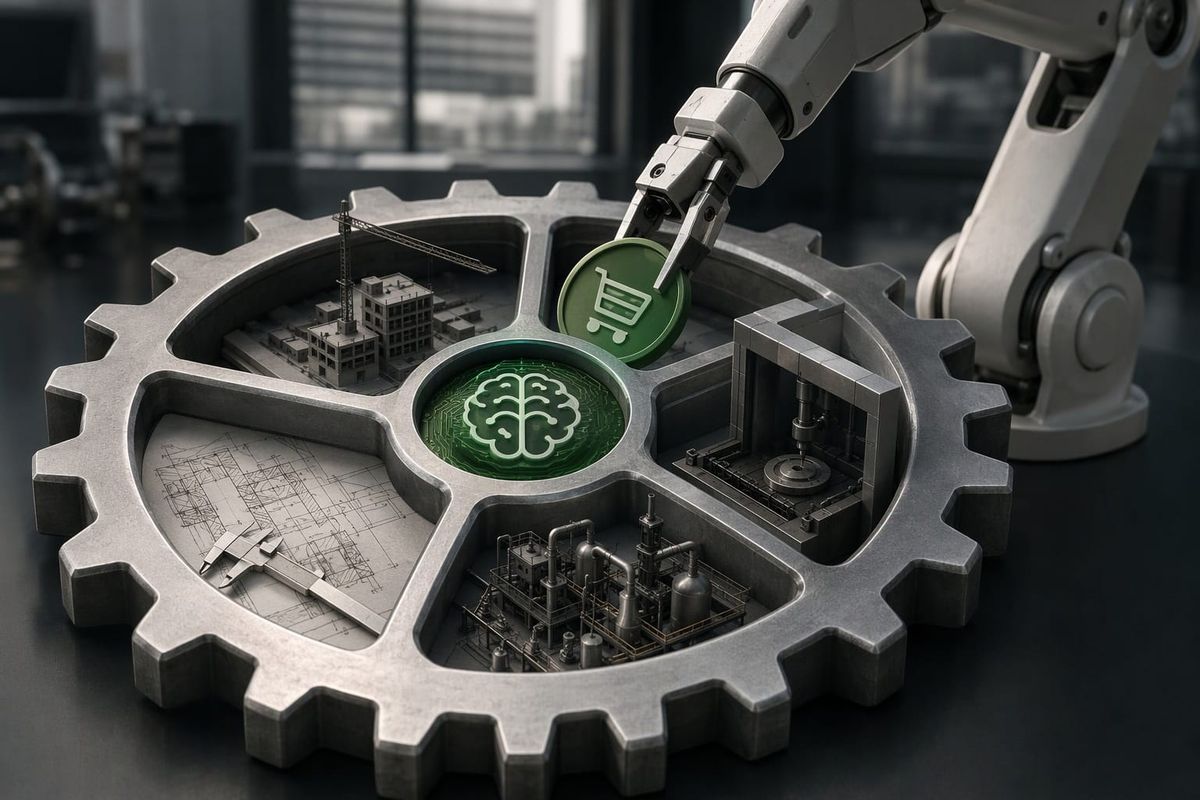
Autodesk, which makes design, engineering and construction software, plans to charge for increasingly automated engineering work, Chief Executive Officer Andrew Anagnost said on Tuesday's earnings call. Customers are already buying additional AI usage through its new Fusion subscription plans.
Selling The Work Automation Does
Anagnost wants Autodesk to collect part of the value customers gain when automation lets them handle more projects using fewer people per project. “We're obviously going to monetize some of that,” he said.
Charging for automation invoked directly by external AI agents has barely started, he said. He attributed some current business momentum to customers expecting AI capabilities and beginning to receive them, while arguing that additional automation charges will build over time.
Fusion, Autodesk's design, engineering and manufacturing platform, offers an early test of that approach. Its new tiers bundle allowances for Autodesk Assistant and AI-agent tools, replacing an extension-based system that Anagnost said customers found confusing.
Customers moving into the subscriptions received two-year price protection. Some are already purchasing Flex packs to add usage beyond the included allowances, he told a Baird analyst. Autodesk plans to bring AI-agent tools for managing product information into the tiers and broaden this packaging approach once it has tested its assumptions with customers.
Drawings Give Way To Engineering Workflows
The automation push addresses a competitive question: what happens to design software as AI becomes better at producing drawings and models?
Responding to a Stifel analyst, Anagnost argued that creating those outputs matters less economically than using them across an asset's life. “The value is shifted away from the creation of these models and these drawings,” he said.
Autodesk sells recurring subscriptions, cloud services and enterprise agreements to architects, engineers, builders, manufacturers and entertainment creators. Its products include AutoCAD for drafting, Revit for building design and Fusion for product development. The company has expanded its strategy beyond designing assets to helping customers manufacture and operate them.
Anagnost described a collaboration with a global engineering and consultancy company that automates architectural documentation in Revit. A focused test produced a customer-reported reduction of more than 90% in drawing-generation time before full production review and quality assurance.
After those checks, the customer's estimated net savings could still reach at least 50%. The company is exploring similar automation for structural engineering and mechanical and electrical design, alongside ways to make knowledge from past projects accessible to more employees.
Autodesk's AI architecture, discussed last quarter, supports both people working through Autodesk Assistant and external applications or agents accessing its engineering capabilities. Anagnost said the company combines AI models with its own engineering tools to meet customers' precision requirements.
Growth Supports The Usage Experiment
Autodesk's existing business grew while it developed that charging model. Third-quarter revenue reached $2.16 billion, up 17% as reported and 14% at constant exchange rates, according to the company's results release.
Chief Financial Officer Janesh Moorjani said the underlying increases in full-year guidance midpoints were about $29 million for billings and $48 million for revenue before currency effects. He tied the improved expectations to construction, emerging markets and the quarter's performance.
The release puts the full-year revenue outlook at $8.36 billion–$8.375 billion. Management's outlook assumes a broadly stable economic environment and retains caution around sales productivity.
The sales reorganization earlier this year automated renewals so teams could spend more time helping customers deploy additional tools. Anagnost described the engineering automation collaboration as part of that effort. He said new-business productivity was improving in the Americas and Asia-Pacific, while Western Europe was taking longer to adjust.
Fusion customers already have a way to pay for more usage. Autodesk's next planned step is to extend that model to more automation tools and, once validated, more of its offerings.
Sources
- Autodesk Inc. results release (Form 8-K, EX-99.1) — SEC EDGAR
- AUTODESK, INC. ANNOUNCES FISCAL 2027 THIRD QUARTER RESULTS — prnewswire.com