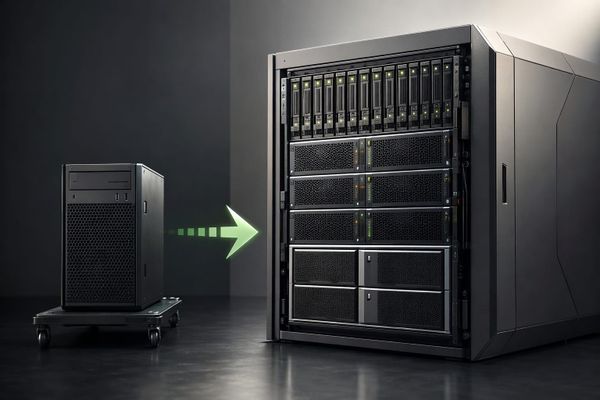
Nutanix Spent About $20 Million On GPUs To Rein In Its Own AI Bill
The company targets about 80% of internal AI needs on its own clusters as it courts enterprises facing rising model costs.


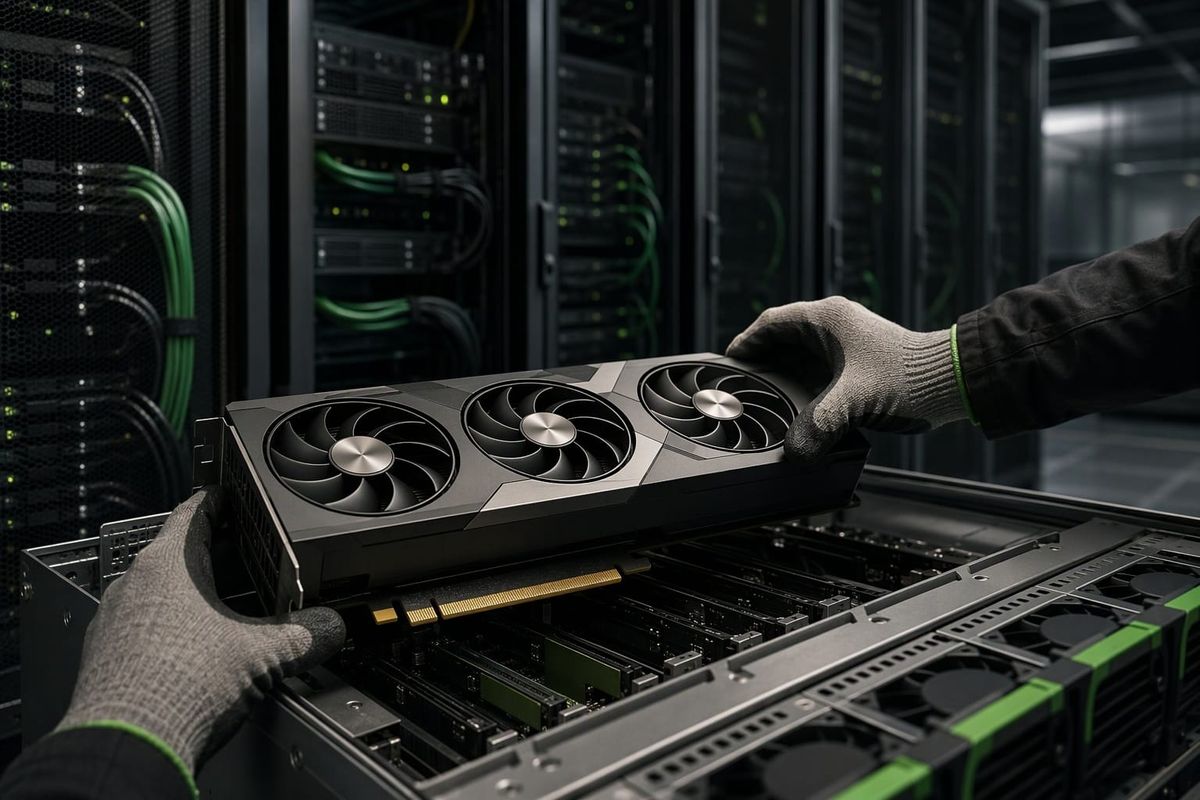
Nutanix, which sells software for running applications and AI across data centers and clouds, spent about $20 million on GPUs earlier this year to tackle rising internal AI costs. Chief Executive Officer Rajiv Ramaswami described the investment on the company's earnings call Tuesday as an example of the cost problem facing its enterprise customers.
An AI Bill Worth Reworking
Software development is Nutanix's biggest use of generative AI, Ramaswami said. Employees use it throughout the process, from designing software and writing code to testing and preparing documentation.
The company initially used frontier models at attractive prices. A switch to token-based charging changed the economics: "our costs started to explode," Ramaswami said.
Nutanix bought GPUs to build internal computing clusters running open-weight models. Management expects those clusters and models eventually to handle about 80% of internal AI requirements, leaving the remaining 20% for frontier models.
Responding to a Needham analyst, Ramaswami said some enterprise customers spend over $100 million a year using frontier models. Larger bills are encouraging those customers to explore alternatives, he said, including their own infrastructure or rented GPUs from specialized AI cloud providers.
Cost comes alongside control. Enterprises first want tools that track AI consumption, regulate access and direct applications to suitable models, Ramaswami said. Nutanix also works with Kronoscale, an AI cloud partner, to pair its software with GPU and data-center capacity for enterprise customers.
Small AI Sales, Broader Architecture
The internal investment comes while Nutanix's own AI business remains early in its development. "The AI numbers are still relatively small, but growing nicely," Ramaswami told a Piper Sandler analyst.
One larger deal in the quarter involved an Asia-Pacific government agency building an internal GPU service. It plans to use the platform for applications including video analytics and vision-language models.
Nutanix's Cloud Platform combines computing, storage and networking, alongside tools for containers, databases and AI models. The company mainly sells subscriptions through channel partners and hardware makers, including Dell, HPE and Cisco.
A William Blair analyst questioned whether AI systems that scale computing and storage independently would diminish the relevance of Nutanix's original combined architecture. Ramaswami replied: "We're no longer wedded to HCI versus external storage"—referring to hyperconverged infrastructure, which combines computing and storage.
Nutanix now supports external storage and Kubernetes-based applications. Even its combined infrastructure can use computing-only and storage-only nodes, Ramaswami said. Its customer conferences have increasingly focused on AI and cloud-native applications.
The company also completed its purchase of Ryax Technologies, which manages AI computing resources, according to its results release. Nutanix plans to integrate Ryax's GPU-utilization and scheduling tools into its Kubernetes Platform and Enterprise AI products.
More Cash, A Leadership Handoff
Chief Financial Officer Rukmini Sivaraman raised the full-year free cash flow forecast by $25 million to $875 million–$975 million. Management still plans investments in AI, cloud-native software, digital sovereignty and additional salespeople.
First-quarter revenue rose 15% to $772.4 million, while free cash flow increased to $209.3 million from $174.5 million a year earlier. Annual recurring revenue—the annualized value of active subscription contracts—grew 15% to $2.63 billion.
The board is searching for Ramaswami's successor. He will remain CEO until the replacement takes over, then serve as a senior advisor for a period.
Ramaswami described the subscription transition and creation of a profitable, growing business as the company's previous transformation. Establishing Nutanix as an enterprise AI platform is the next task, he said.
Ramaswami said strategic priorities will stay in place during the search; the next leader's assignment is to scale the AI business already being built.
Sources
- Nutanix results release (Form 8-K, EX-99.1) — SEC EDGAR
- EdgarFiling — sec.gov
- EdgarFiling — sec.gov
- Nutanix Reports First Quarter Fiscal 2027 Financial — globenewswire.com
- Nutanix Announces CEO Succession Plan — globenewswire.com