Verizon CEO Assumes SpaceX Will 'Execute Flawlessly,' Then Prices A Rival Network At $300 Billion And Up
Dan Schulman says a satellite-led terrestrial rival would need four to six years and hundreds of billions of dollars to build.


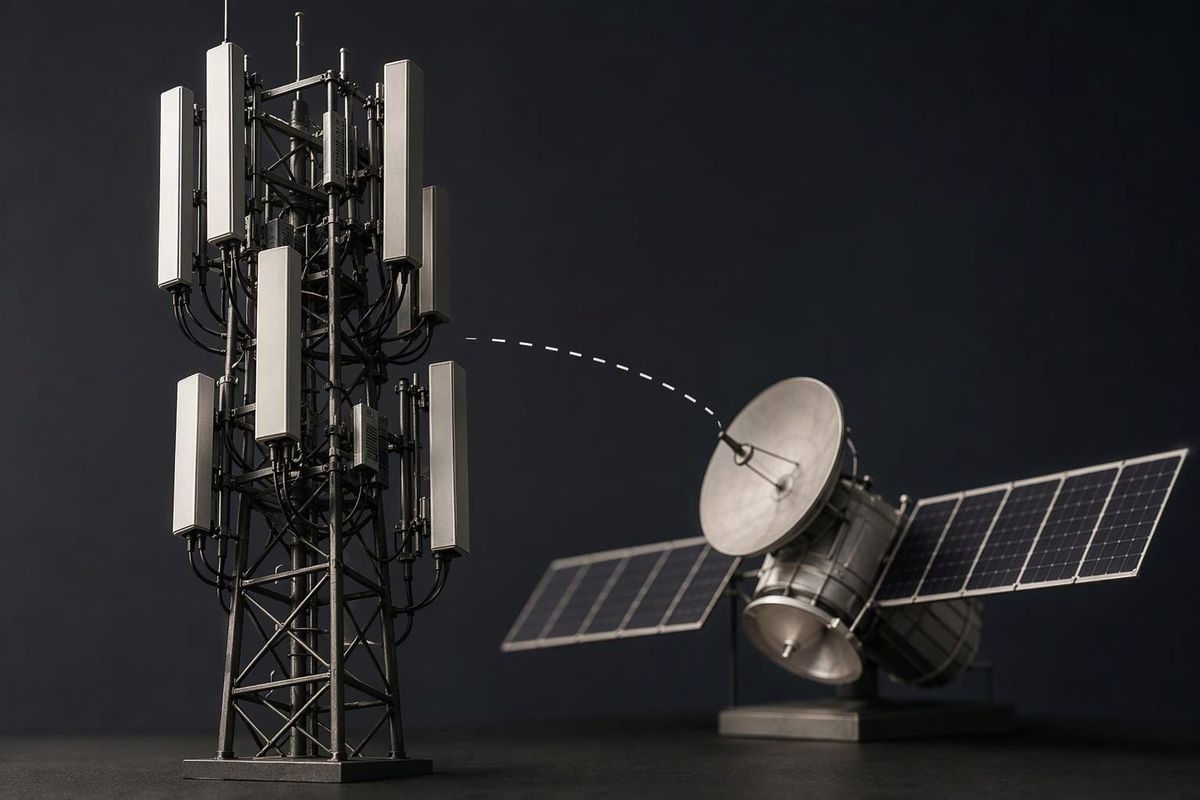
Verizon CEO Dan Schulman, asked on the company's third-quarter earnings call Monday about a possible Starlink entry into mobile, said he assumes SpaceX will deliver on everything it promises, then put the cost of a terrestrial network at $300 billion to half a trillion dollars over the next seven or eight years.
The build Schulman sketched
"I also operate under the assumption that everything SpaceX says they will do, they will do, and that they will execute flawlessly," Schulman said. He added that SpaceX always needed a terrestrial network to have a chance at a competitive service, because satellite alone leaves it with a small addressable market in very rural areas.
If SpaceX builds one, he said, it would need 65,000 to 80,000 macro sites, backhaul, radio equipment and a great deal of spectrum. He put the build at "a minimum of four to six years," and said it would also need retail, customer service and back-office systems.
The result, he argued, would be a network with the same capabilities and cost structure as Verizon's today, with "no radically lower structural cost advantage." SpaceX could become the sixth competitor in the market, he said, and he would welcome competing with it.
No back door for satellite providers
Asked whether Verizon would offer a wholesale access deal to satellite providers, Schulman said "there are no back doors to any of our MVNO agreements," the arrangements that let other companies resell Verizon's network. He saw no benefit in extending one and called the prisoner's dilemma argument "ridiculous."
In suburban and urban areas, where he said about 98% of Verizon's revenues sit, he said the company is "somewhere between 100% to a thousand times more efficient" than satellite. He did see a role for satellites in remote areas, possibly through partnerships.
Spectrum is the counterweight
Schulman pointed to Verizon's 1,700 megahertz of millimeter wave spectrum, which he said is two times that of any competitor. Verizon, which sells wireless and home internet to consumers and businesses, plans a one-gig fixed wireless product in metro areas using it, starting this quarter.
On upper C-band spectrum coming up in the first half of next year, he noted speculation about whether SpaceX will participate and said he was not sure either way. Any such spectrum, he said, would take four to five years to clear.
Barron's reported that investors have worried about SpaceX disruption. Verizon shares were at $43.00 in Monday trading, down 3.72% from the prior close of $44.66.
Schulman said he would share Verizon's 2027 outlook on the next earnings call.
Sources
- Verizon lifts annual forecasts, signs more than $2 billion AI infrastructure deal with AWS — Reuters
- Verizon raised outlook, signed $2B+ Amazon AI deal in Q3 2026 earnings — qz.com
- Verizon’s stock rises as subscriber surge impresses Wall Street - MarketWatch — MarketWatch
- Verizon Raises Earnings Outlook as Quarterly Postpaid Subscribers Surge; Announces AI Infrastructure Deal With AWS — Yahoo Finance
- Verizon Stock: Earnings Show Why It’s This Year’s Wireless Winner — Barron's