Rocket Lab Rejects Cheaper Neutron Bookings As It Bets On Higher Launch Prices
Customers booked eight missions for roughly $515 million during the quarter, even with the rocket's first flight pushed to 2027.


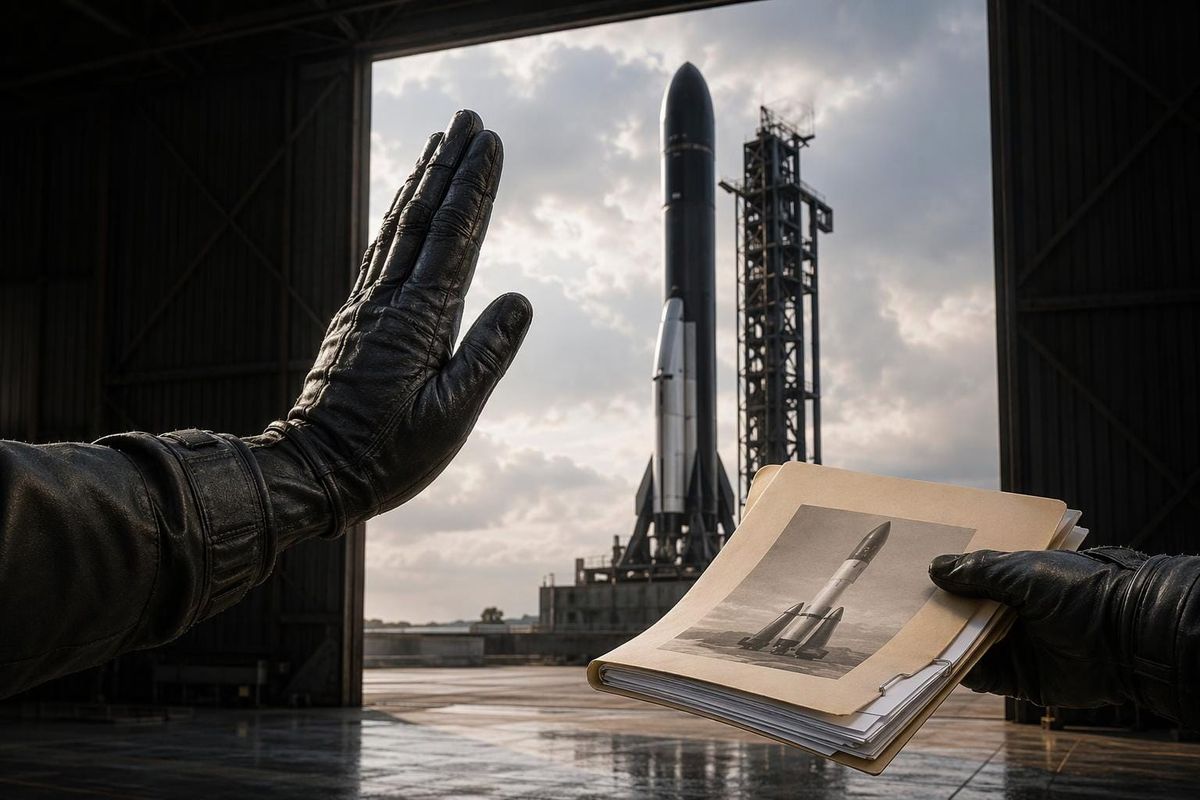
Rocket Lab, which builds and launches rockets and makes spacecraft and their parts, turned down lower-priced Neutron launch bookings, Chief Financial Officer Adam Spice said on the company's earnings call Monday—even though the rocket's debut has slipped to 2027. Some signed contracts already carry a $70 million baseline, compared with its earlier $55 million price.
Holding Out For Higher Prices
Rocket Lab Founder and Chief Executive Officer Sir Peter Beck said customers booked eight Neutron missions during the third quarter for roughly $515 million. The rocket's first 16 launches are booked, and the next customer openings are in the 2030s.
Management could have signed more business. Instead, Spice told a TD Cowen analyst, it "chose to go for higher ASP and lower volume"—higher average selling prices rather than more launches. Customers seeking additional flights at somewhat lower prices were turned away.
Spice also corrected a Cantor Fitzgerald analyst's suggestion that the $70 million baseline was a future increase: contracts at that price were already in the backlog. He expects prices to climb further.
"So why sell out all the capacity now at these prices even?" Spice asked. Beck attributed the bookings to tightening launch supply and customers' trust in Rocket Lab's ability to deliver. Spice said the contracts require deposits and carry cancellation fees; they are bookings, rather than options to buy launches.
Customer Flights Come First
The company is protecting capacity for more than outside customers. Beck's long-term plan allocates 50% of Neutron capacity to customers and 50% to Rocket Lab's own services, including eventually helping replace the Iridium constellation if its pending purchase of Iridium Communications closes.
That split would come later in the program. Beck said contracted customer missions would dominate the early schedule, while the company reserves room for its longer-term ambitions.
Neutron would expand a business that already launches the smaller Electron rocket and sells spacecraft, solar power products, navigation components and optical systems. But higher selling prices alone will not determine Neutron's profitability. Beck said factories, launch sites, staffing and other overhead matter more to vehicle costs than the materials that go into each rocket. Spice expects spreading those fixed costs across more launches to help margins.
A Tank Rebuild And More Spending
Neutron's pricing strategy still depends on completing development. Beck said voids in a propellant-tank dome prompted the previously announced move of its first launch to 2027. A replacement dome has completed manufacturing and curing, and the team is assembling the first-stage tank.
The next steps are water-pressure testing at the Neutron factory, followed by cryogenic testing at Launch Complex 3 and integration with the other vehicle assemblies in Virginia. Work to increase engine and composite-structure production has continued alongside the tank rebuild.
Neutron also keeps spending elevated. Rocket Lab's third-quarter adjusted loss before interest, taxes, depreciation and amortization was $18 million, an increase of $9.2 million from the prior quarter that Spice attributed primarily to higher Neutron research and development spending. Management expects development and production expansion to keep consuming cash through the first launch.
A $150 million conditional government loan agreement announced Monday offers another source of financing. Answering a BTIG analyst, Spice said it would help accelerate Neutron's expansion without issuing additional shares.
Beck said he will wait for the first-stage tank to complete its testing campaign before committing to a more specific launch date.
Sources
- Rocket Lab shares dip after the company's 'defining' quarter misses the mark | Morningstar — morningstar.com
- Rocket Lab (NASDAQ:RKLB) reports bullish Q3 2026, guides for strong sales next quarter — Yahoo Finance
- Rocket Lab Q3 earnings preview: Investors await Neutron timeline, growth outlook | Seeking Alpha — seekingalpha.com
- Rocket Lab Signs $515 Million In Launch Deals For Neutron | Aviation Week — aviationweek.com
- Rocket Lab Announces Third Quarter 2026 Financial Results: Posts Record Revenue, $1.2 Billion or 52% Sequential Quarterly Backlog Growth, Positive GAAP Operating Cash Flow, and Guides to Record Revenue and Gross Margin Expansion in Q4 2026 — Yahoo Finance