Revolution Medicines Books $197.6 Million In First Rasonque Sales, Yet Quarterly Loss Widens To $407.5 Million
The company says early launch sales include a finite wave of transitioning patients and should not be read as the longer-term trajectory.


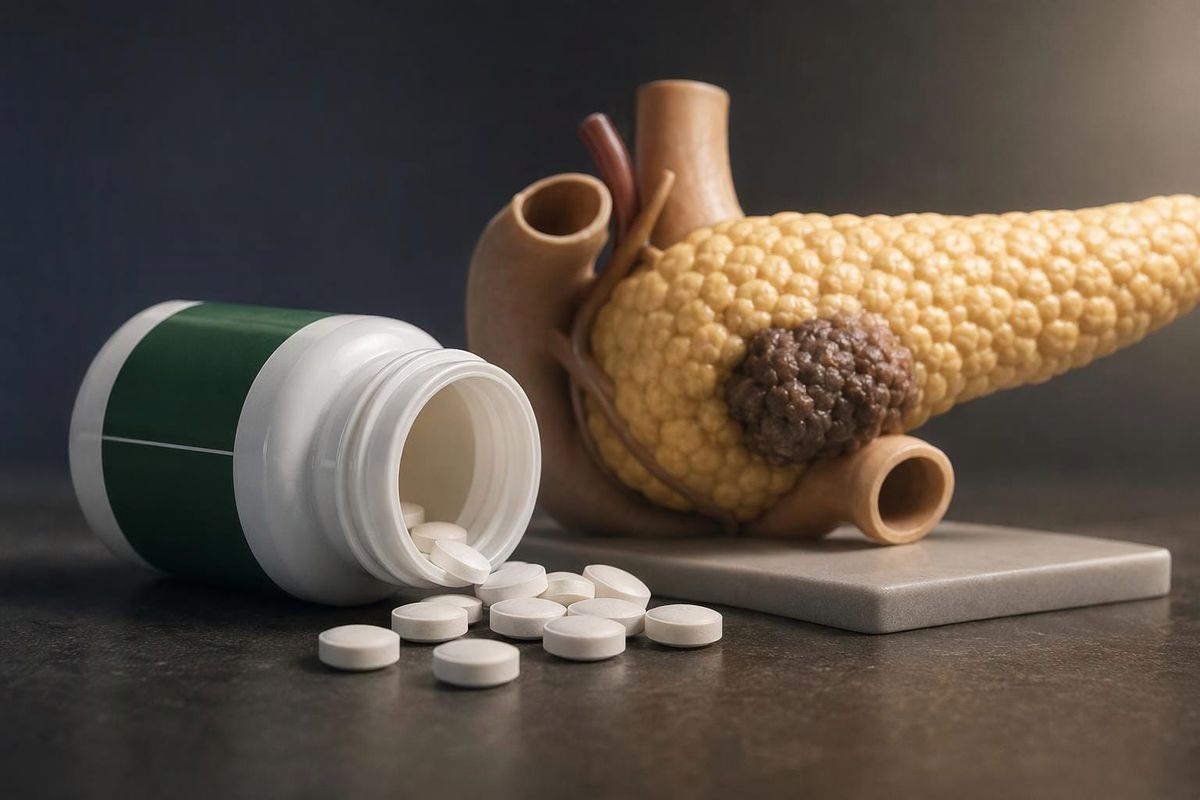
Revolution Medicines, which develops targeted drugs for RAS-driven cancers, reported $197.6 million in first-ever net product sales of the pancreatic cancer drug Rasonque for the third quarter, in an 8-K filed Wednesday. The quarterly net loss still grew to $407.5 million, and the company cautioned that the sales are not a guide to the launch's longer-term path.
Five weeks of sales, with a warning
Rasonque, the oral drug daraxonrasib, won FDA approval on August 26 and was launched right away. The $197.6 million covers roughly five weeks of availability through September 30, the company said.
More than 5,000 unique patients received commercial drug in the U.S. in that span. Early revenue included patients moving over from the expanded access program, patients who had run out of options and were waiting for an approved drug, and initial stocking of inventory in the distribution channel.
The company called the transition and waiting-patient groups "finite early-launch dynamics" and said third-quarter results should not be viewed as indicative of the launch's longer-term trajectory. Claims have been reimbursed across health plans representing more than 90% of U.S. covered lives with pancreatic cancer, it said, while formal coverage policies are still developing.
Spending outruns the new revenue
Net loss was $407.5 million, against $305.2 million a year earlier. It included $40.7 million of non-cash charges from the change in fair value of warrants assumed in the EQRx acquisition.
Research and development spending rose to $417.1 million from $262.5 million, and selling, general and administrative costs reached $153.3 million from $52.8 million, driven by headcount and launch costs. Cost of sales was only $0.3 million because the product sold included inventory whose manufacturing costs were previously expensed to research and development; the company said that figure is not representative of normal levels.
Cash, cash equivalents and marketable securities stood at $3.7 billion on September 30. That excludes $250 million received in October from the first mandatory debt tranche under the Royalty Pharma funding arrangement. The company chose not to draw an optional $250 million royalty tranche, citing its strong financial position, and reiterated full-year 2026 operating expense guidance of $2.1 billion to $2.2 billion.
Europe next, and a rival's complaint
The European Medicines Agency's drug committee gave a positive opinion in October recommending approval of daraxonrasib for previously treated metastatic pancreatic cancer. A European Commission decision is pending. The company also plans to start a first-in-human trial of RM-055 in the fourth quarter of 2026.
The launch is also felt by competitors. Novocure's chief executive said on an analyst call that daraxonrasib's launch has significantly affected the company's access to medical practices for its Optune Pax pancreatic cancer device. Wedbush, which rates Novocure Neutral, attributed the slowdown more to practice disruption than to direct displacement by daraxonrasib.
The company hosted a webcast at 4:30 p.m. Eastern on Wednesday to discuss the results.
Sources
- 8-K Filing — Revolution Medicines, Inc. (RVMD) — SEC EDGAR
- Exhibit rvmd-ex99_1.htm — Revolution Medicines, Inc. 8-K exhibit — SEC EDGAR
- Novocure CEO Says RVMD’s Daraxonrasib Slowed Optune Pax Adoption – Wedbush Sees Disruption Rather Than Direct Competition — Yahoo Finance
- Revolution Medicines Reports Third Quarter 2026 Financial — globenewswire.com