PepsiCo Cuts Its 2026 Core EPS Outlook After A July Call That Rejected An 'Earnings Reset'
PepsiCo now expects 2026 core EPS growth of 2.5% to 3.5%, down from the low end of 5% to 7%, after a July call that blamed gas prices for a convenience-store slump.


PepsiCo on Thursday lowered its 2026 earnings outlook: it now expects core EPS growth of 2.5% to 3.5%, after guiding to the low end of 5% to 7%, even as it raised its net revenue growth outlook to about 6%, the top of its earlier 4% to 6% range. On the company's July 9 second-quarter call, Chairman and CEO Ramon Laguarta had said North America did not need an earnings reset, pinning the U.S. shortfall on gas prices and delayed execution of price cuts, and CFO Steve Schmitt said earnings per share "may be towards the low end of the EPS range."
What management said on the July call
A Morgan Stanley analyst asked whether reviving U.S. sales growth might take more spending, or an earnings reset. Laguarta answered: "we don't think we need any sort of reset because we have a very strong productivity record."
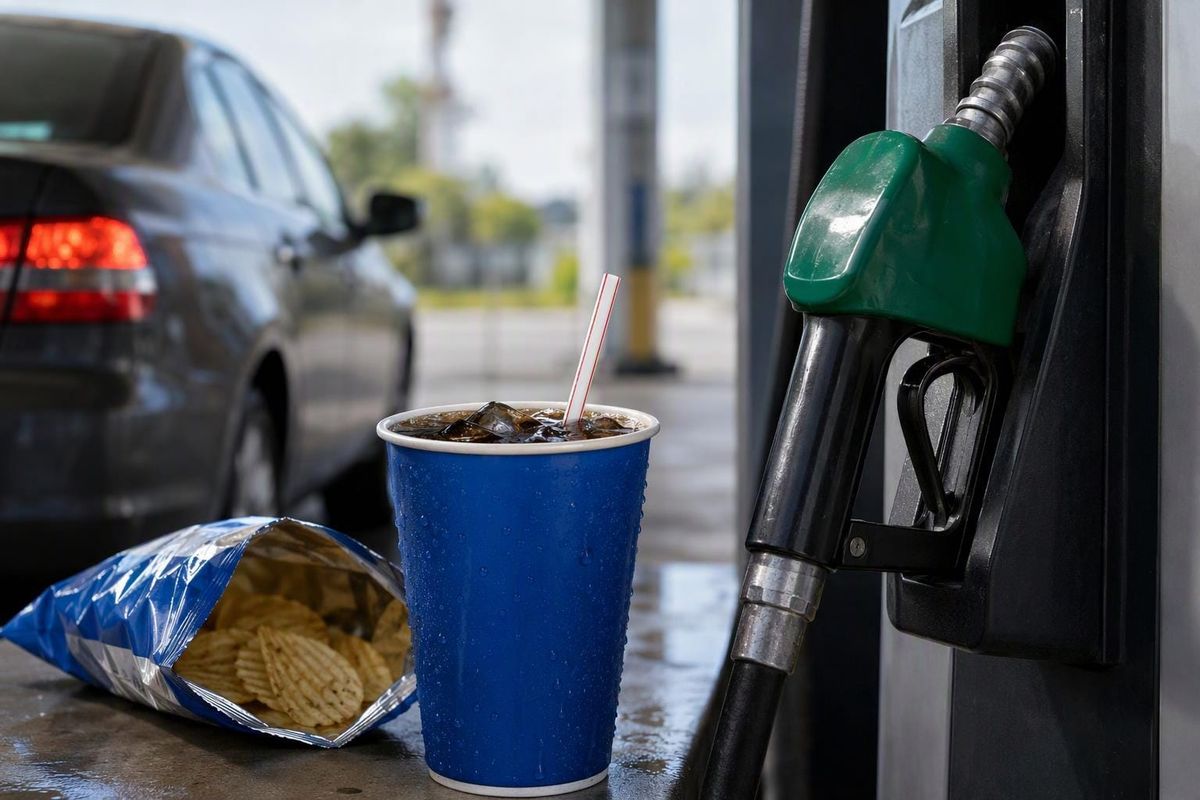
The surprise, he said, was the convenience channel: "what was different this quarter that we were not planning is the performance on the impulse channels." He tied it to gasoline prices and said the company is working with partners to convert gas-station visitors into beverage and food purchases. He said the Iran war's effect on gas prices has been meaningful, and that whether shoppers' behavior in those channels changes in the coming months "all depends on the price of gas."
Schmitt said North America was "softer" than expected in the second quarter and will improve gradually, at a more moderate pace than management thought coming into the quarter. He said refund claims on tariffs paid last year will add about one full point of EPS growth for the year, helping offset commodity pressure.
Also on the July call: price cuts and shelf space
Asked in July by a BNP Paribas analyst why North American food volume fell short of expectations, Laguarta cited two causes: a consumer worse off than anticipated, mainly because of gas prices, and delays in executing price investments at some customers. He said the delays have been solved and an acceleration should follow in the second half.
He added that tweaks are needed but said: "I wouldn't question the strategic logic of the investments." On shelf space, he said planned increases have come throughout the year, more is due, and permanent space gains should arrive mostly in the second half.
Within North America, Schmitt said in July that he expected profit to improve faster at the beverage unit than in foods, and better profit performance in the fourth quarter than in the third. He said the North American beverage unit's operating margin fell about 90 basis points in the second quarter, with about half of the decline in its gross-profit rate tied to the Alani arrangement.
What July's call pointed to
In July, Laguarta pointed to first-half revenue growth of almost 7% and global volume growth of 3% in foods and 2% in beverages, which he called the fastest since 2022. He said the permissible food portfolio is already $3 billion and growing almost double digit. International, he said, will cross $40 billion this year.
Laguarta promised more detail on combining the two U.S. businesses' logistics, being tested in the Texoma region, later this year or early next year.
In July, Laguarta said he expected the tweaked price investments and delayed shelf-space gains to pay off in the second half, and Schmitt said the full-year EPS range might be reached only at its low end. Thursday's outlook is below that range.
Correction, October 9, 2026: An earlier version of this story presented remarks from PepsiCo's July 9 second-quarter call as comments made on Thursday's third-quarter call, and said the company had reaffirmed its full-year guidance. On Thursday PepsiCo lowered its 2026 core EPS growth outlook to 2.5% to 3.5%. Remarks from the July call, including on beverage margins and shelf space, are now dated.
Sources
- PepsiCo Posts Higher Profit, Sales as Turnaround Continues - WSJ — The Wall Street Journal
- PepsiCo cuts full-year profit forecast in Q3 2026 earnings — qz.com
- PepsiCo (PEP) Q3 2026 earnings — CNBC
- PepsiCo sees strong overseas demand but a lackluster North American performance in the third quarter | AP News — Associated Press
- PepsiCo Q3 Adj. EPS $2.34 Beats $2.29 Estimat... — benzinga.com