Oculis Nine-Month Loss Narrows To CHF 57.1 Million, Helped By A Warrant Gain, As Dry Eye Readout Nears
Cash of $252.0 million is meant to last into the second half of 2029, and the dry eye trial's topline results are due around year-end.


Oculis, a Swiss biopharmaceutical company, cut its nine-month net loss to CHF 57.1 million, from CHF 75.4 million a year earlier, but the improvement came from a non-cash warrant gain and currency swings while operating expenses rose, the company said Tuesday.
A narrower loss with rising costs
The loss for the nine months ended September 30, 2026 was CHF 57.1 million, or $71.7 million, against CHF 75.4 million, or $89.7 million, in the same period of 2025. The company attributed the decrease mainly to a fair value gain on warrant liabilities, driven by a lower market value than a year before, and to a favorable foreign currency effect on dollar-denominated transactions and assets.
Operating expenses climbed to CHF 69.5 million from CHF 61.8 million. The operating loss widened to CHF 68.9 million from CHF 61.0 million.
In the third quarter, the loss was CHF 18.2 million, or CHF 0.30 per share, compared with CHF 16.9 million, or CHF 0.32 per share, a year earlier. Research spending was CHF 15.1 million, up from CHF 14.1 million, and general and administrative costs were CHF 8.6 million, up from CHF 6.4 million. The company pointed to headcount costs, including share-based pay, and certain non-recurring corporate initiatives in 2026.
Runway into 2029
Cash, cash equivalents and short-term investments totaled CHF 210.3 million, or $252.0 million, at September 30, down from CHF 213.0 million, or $268.7 million, at the end of 2025. The company said that gives it runway into the second half of 2029. It cited operating expenses and roughly $8.0 million of currency movement during the third quarter as drags, partly offset by proceeds from its at-the-market share sales program.
Dry eye readout and an MS filing
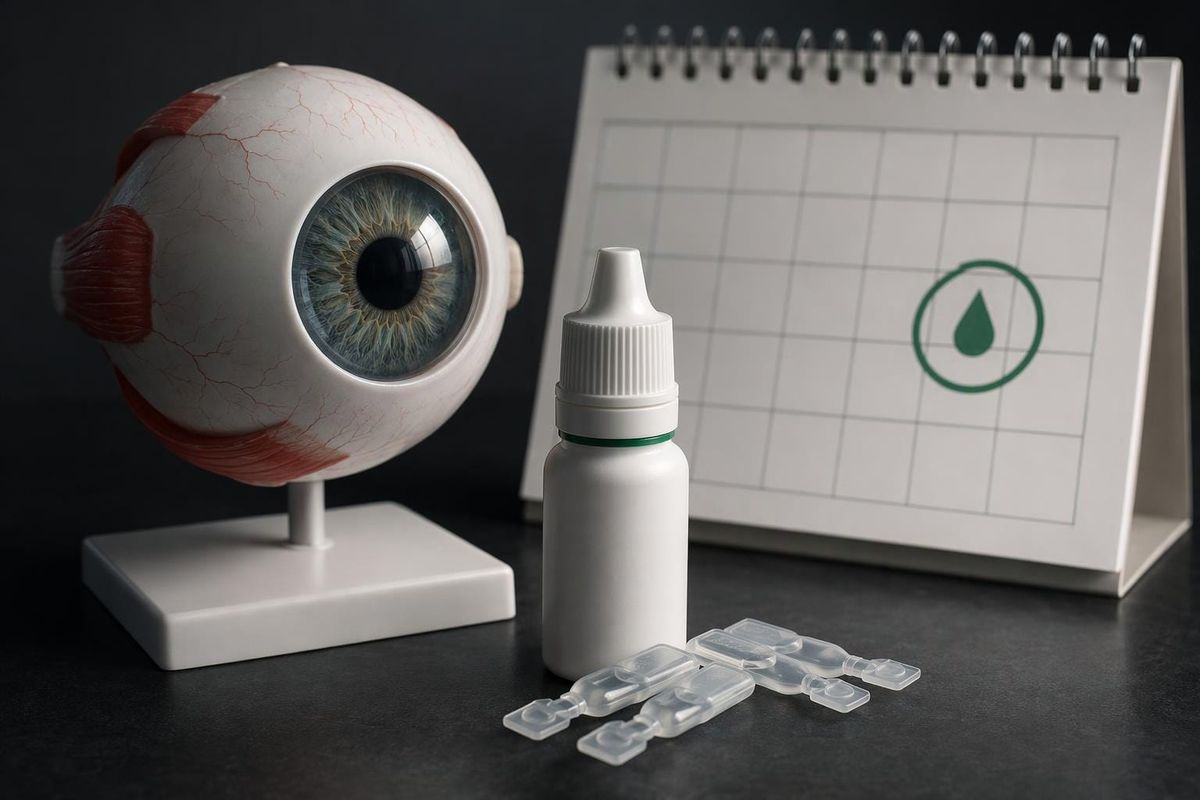
Oculis develops drugs for eye diseases and diseases of the nerves connected to the eye. Randomization is complete in PREDICT-1, the registrational trial of Licaminlimab, an eye drop for dry eye disease. The trial enrolled 176 patients, two-thirds of whom carry a TNFR1 genetic variant tied to a stronger response in earlier studies, and topline results are expected around year-end 2026.
CEO Riad Sherif said a positive result would position the drug to potentially become "the first precision medicine in ophthalmology."
For Privosegtor, tested in optic neuritis, the company expects clearance of an application to begin trials in acute multiple sclerosis relapses in the fourth quarter of 2026. It also named Prof. Björn Tackenberg, who joins from Roche, as chief scientific officer, and completed its asset purchase of Privosegtor rights from Accure Therapeutics.
Oculis will hold an R&D Day on December 8 at the St. Regis New York, with presentations on both drugs.