Mercury Systems Orders Soar 48% As It Raises Its Annual Sales Outlook
The defense-electronics supplier returned to quarterly profit, but cash outflow after capital spending widened to $24 million.


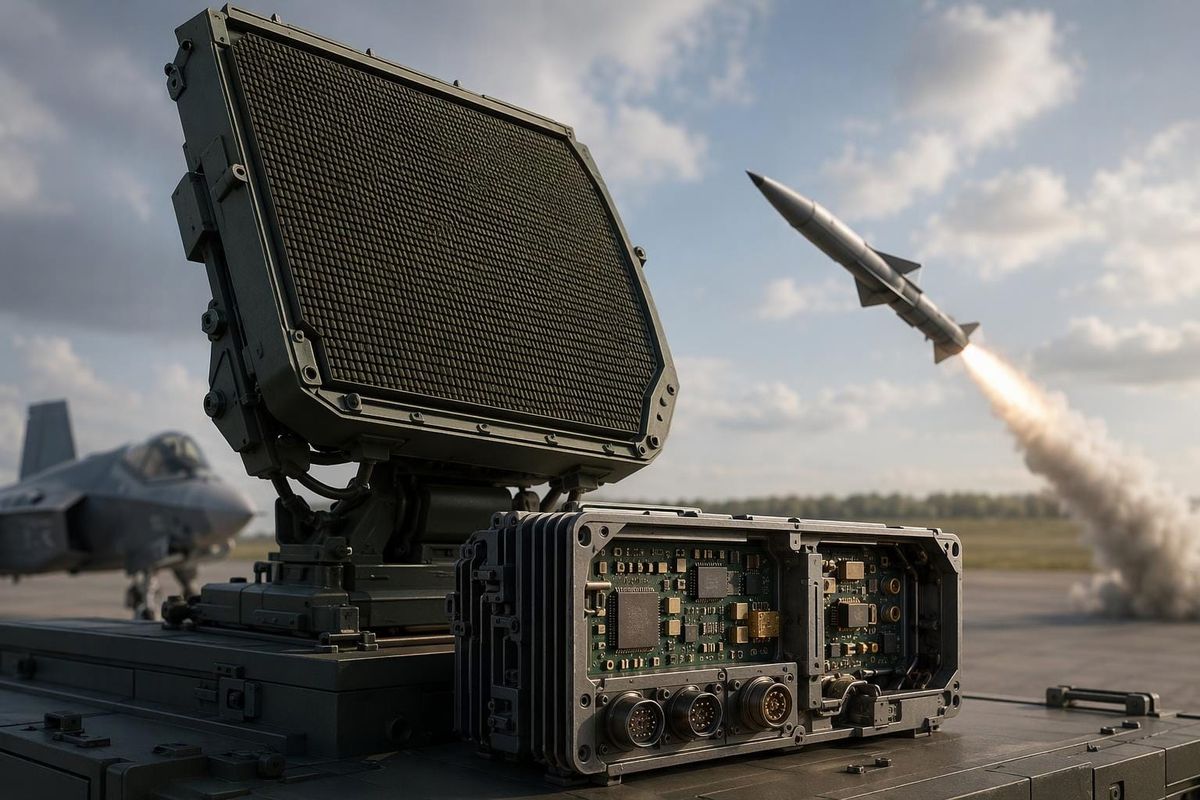
Mercury Systems, which makes processing electronics for aerospace and defense, booked $370 million in first-quarter orders, up 48% from a year earlier, and raised its fiscal 2027 outlook Tuesday. Sales rose 12.4% to $253 million from $225 million, while management credited higher-volume production and improved ability to scale for the stronger outlook.
Weapons And Radar Fill The Pipeline
Mercury's unfilled orders approached $2.1 billion, up 44.7% from a year earlier. More than $1 billion of that backlog is expected to become revenue within the next 12 months, according to its earnings release.
Management described weapons-related orders as a particular source of strength, including an advanced-weapons production award that expands Mercury's role and a follow-on order for an established missile-defense platform. Radar awards grew across multiple programs. Electronic-warfare orders included business won from a competitor on the F-35 program, which Mercury partly attributed to better operational execution.
The company also received satellite follow-on orders and funding for early-stage Golden Dome missile-tracking capabilities. Mercury said some defense spending was reaching its order book sooner than expected; bookings over the trailing 12 months reached $1.7 billion, which it called a company record.
Mercury supplies electronics that process signals and data for radar, sensors, electronic warfare, avionics and weapons. Its customers include U.S. and European defense prime contractors, the U.S. government and commercial aerospace equipment makers. Fiscal 2026 revenue totaled $983.6 million.
A Higher Forecast, Stronger Margins
Mercury now expects fiscal 2027 sales approaching $1.1 billion, with double-digit growth rather than its earlier expectation of growth approaching double digits. Its earnings presentation also lifted expected adjusted EBITDA—earnings before interest, taxes, depreciation, amortization and certain other costs—to around $210 million from approaching $200 million.
Chairman and CEO Bill Ballhaus said, "Based on this solid execution, we are raising our outlook for fiscal year 2027."
Quarterly adjusted EBITDA grew 58.6% to $56 million, with a 22.3% margin versus 15.8% a year earlier. Gross margin reached 35.2%, compared with 27.9%, which management attributed to a more favorable sales mix and better margins in its backlog. Adjusted earnings per share rose to $0.52 from $0.26.
Under standard accounting, Mercury earned $13 million, or $0.21 per diluted share, compared with a $13 million loss, or $0.21 per share, a year earlier. Operating income reached $18.5 million against an $8.6 million loss.
The higher outlook replaces guidance Mercury reaffirmed in September, when it extended Ballhaus's employment contract through August 15, 2030.
Cash Outflow And Finance Changes
Operations used $14 million in cash, compared with generating $2 million a year earlier. After capital spending, cash outflow widened to $24 million from $4 million. Inventory absorbed $32.3 million of cash during the quarter, versus $12.1 million a year earlier.
Mercury nevertheless repaid $100 million of debt during the quarter. Quarter-end net debt was $232 million, down 19% from a year earlier; debt repayments over the last two quarters totaled $250 million.
Management raised its expected full-year free cash flow as a share of adjusted EBITDA to approaching 40% from approaching 35%. It expects positive second-quarter free cash flow and a stronger second half than first half, while investing in inventory, automation and factory improvements.
Mercury also formalized chief financial officer David E. Farnsworth's additional role as chief operating officer, with a $500,000 restricted-stock-unit award. The company said he had already been performing that work.
Brian Caulfield, Mercury's corporate controller, will become acting chief accounting officer Friday, replacing Douglas Munro, who accepted an outside role. Caulfield will oversee accounting and financial reporting during the permanent-successor search and receive a $50,000 retention bonus subject to employment conditions.
Mercury expects to revisit its fiscal 2028 financial reference points in the second half of fiscal 2027. Those reference points describe a possible financial profile, rather than formal guidance.
Sources
- 8-K Filing — MERCURY SYSTEMS INC (MRCY) — SEC EDGAR
- Exhibit a2027q1earningsreleaseex.htm — MERCURY SYSTEMS INC 8-K exhibit — SEC EDGAR
- Exhibit q1fy27earningspresentati.htm — MERCURY SYSTEMS INC 8-K exhibit — SEC EDGAR
- Mercury Systems Reports First Quarter Results — globenewswire.com
- 8-K filed 2026-09-16 — MERCURY SYSTEMS INC (earlier disclosure) — SEC EDGAR