Lucky Strike Entertainment Stock Soars 23% Even As Its Founder Proposes Taking It Private
The $4.35-per-share proposal requires approval from independent directors and Class A holders outside the bidder's ownership.


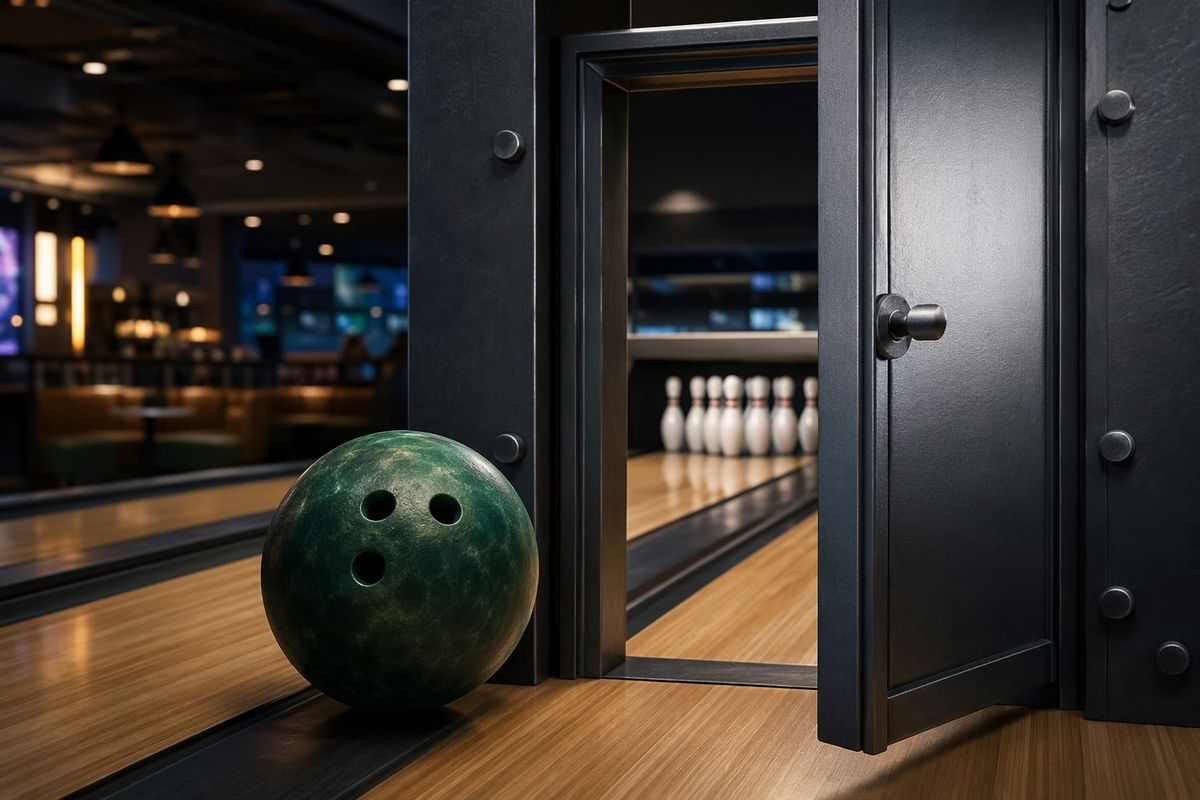
Lucky Strike Entertainment, which runs bowling centers, arcades and water parks, soared 23% in Tuesday trading, adding $104 million in market value. Founder and CEO Thomas F. Shannon proposed taking it private, according to his SEC ownership amendment.
A $4.35 Offer, With A Vote
LUCK shares rose 22.9% to $4.08 in Tuesday trading, as of 9:41 AM ET, putting the company's market value at about $556 million. The stock was on pace for its second gain of 10% or more this month.
Shannon offered $4.35 per share, with no financing contingency. Assuming Class B shares convert and options are exercised, his beneficial ownership represents about 52% of Class A stock.
The proposal still needs approval from independent directors with no interest in the transaction. A majority of Class A shares outside Shannon's and his affiliates' holdings must also support it, and that voting requirement cannot be waived.
A Rally After A 31% Slide
Lucky Strike Entertainment entered Tuesday's session following a 31% decline over the previous month. Even with Tuesday's rally, its price was 57% below its 52-week high.
The business spans more than 360 North American locations, with customers paying for walk-in visits, bowling leagues, group parties and passes, plus food, drinks and gaming. Its brands include the lounge-style Lucky Strike concept, traditional bowling chain AMF and family-attraction operator Boomers Parks. It also owns the Professional Bowlers Association, which sanctions professional bowling and runs tournaments and broadcasting.
The company reported 3.5% revenue growth to $302.6 million in its first-quarter results released Thursday. Its net loss widened to $25.7 million from $13.8 million a year earlier, and revenue at locations operating throughout both comparison periods fell 2.6%.
Shannon attributed the sales weakness to walk-in bowling and alcohol. Events, leagues, food and non-alcoholic drinks grew, and September's comparable-location sales turned positive. “We are in a better place than a year ago, but a negative comp is a negative comp, and fixing it comes first,” Shannon said.
Cash Goes Toward Debt
The board suspended the dividend to retain cash for debt reduction. Operating activities generated $17.1 million in the first quarter, compared with $6.4 million consumed a year earlier, while capital spending fell to $21.5 million from $25.9 million.
Adjusted earnings before interest, taxes, depreciation and amortization slipped to $72.1 million from $72.7 million. Management reaffirmed its fiscal 2027 outlook: revenue growth of 3% to 5%, revenue of $1.28 billion to $1.31 billion, adjusted earnings on that measure of $340 million to $360 million, and approximately $90 million in capital spending.
Shannon said the company expects to direct free cash flow and proceeds from some non-core asset sales toward debt reduction. He expects full-year capital spending to be roughly half its fiscal 2024 peak.
For holders considering the take-private proposal, the decisive protection is the required majority vote from Class A shares outside Shannon's ownership group.
Sources
- 3 Gaming Stocks Offering Growth Amid Industry Headwinds — Yahoo Finance
- The company's filing (Lucky Strike Entertainment) — SEC filing
- Lucky Strike Entertainment — Form 10-Q for the quarter ended 2026-09-27 (quarterly results) — SEC EDGAR
- Lucky Strike Entertainment — earnings release (Form 8-K, Item 2.02), filed 2026-11-05 — SEC EDGAR