How To Calculate Stock Dilution: The Formula, Worked Through Real Offerings
Divide the new shares by the shares outstanding after the sale. Here is the math, step by step, on real October stock offerings, plus where to find each number.


How to calculate stock dilution: the short answer
Divide the number of new shares by the total shares outstanding after the offering, then multiply by 100. The result is the share of the company that the new buyers own. Everyone who held stock before owns that much less of the whole.
What stock dilution is
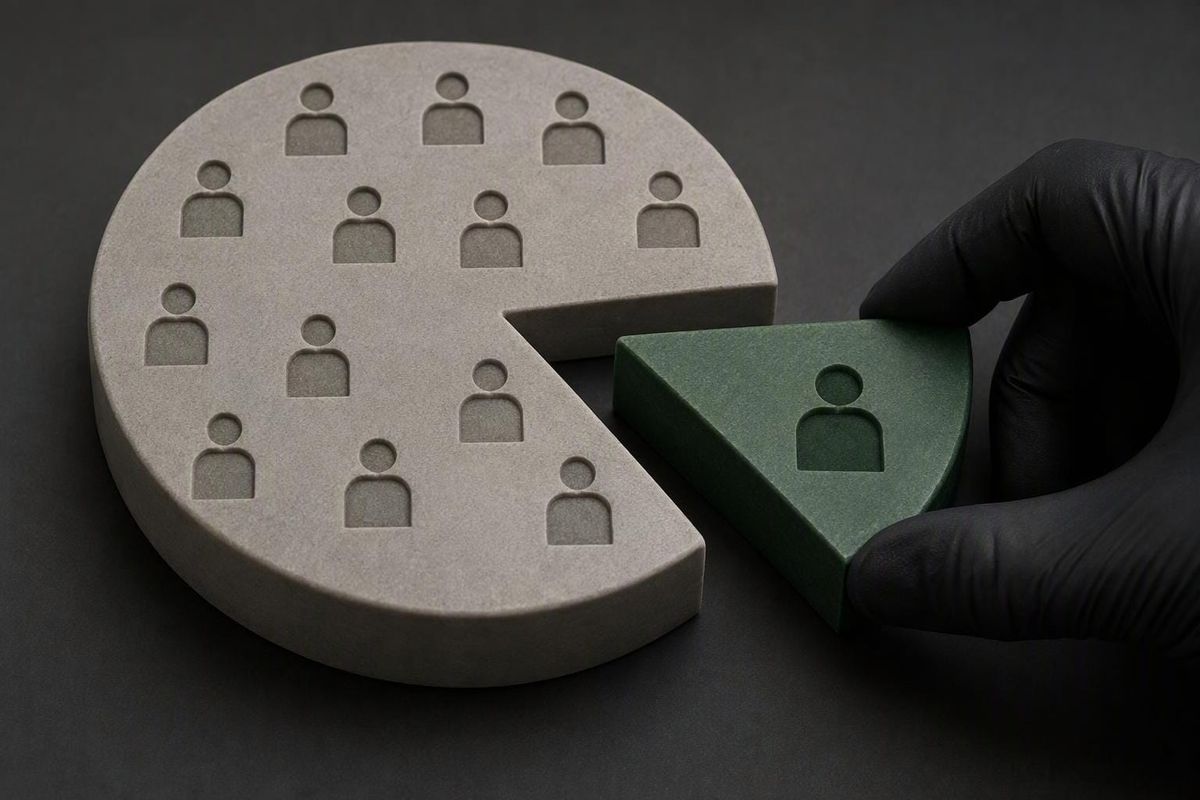
When a company sells new shares, the pie gets cut into more slices. Your shares do not disappear, but each one is a smaller piece of the company. If you owned 1% before, you own less than 1% after.
Dilution is about ownership percentage. It is a separate question from whether the money raised will be put to good use, which is why it is not automatically bad news.
The dilution formula: new shares divided by shares outstanding after the deal
Three steps:
- Find the new shares being sold.
- Find the shares outstanding after the sale. If you only have the count before, add the new shares to it.
- Divide new by after, and multiply by 100.
Use the "after" count as the denominator because you want the new buyers' share of the finished company. Dividing by the "before" count gives a different, larger number, and it is not the figure these filings use.
Worked example: Disc Medicine's offering
Start with Disc Medicine's stock sale: 6,000,000 common shares, priced at $75.00. Adding them to the 38,345,666 already outstanding gives 44,345,666.
Dividing 6,000,000 by 44,345,666 gives about 13.5%, the new buyers' stake. A holder of the old shares now owns a smaller slice, with the new buyers holding that 13.5%.
Two more offerings, same formula
Teknova's 8 million-share sale started from 53,702,534 shares outstanding and ended at 61,702,534. Dividing 8,000,000 by 61,702,534 gives 13.0%.
Arcus Biosciences sold 14,285,715 new shares at $17.50 each, which are 10.1% of the 141,304,346 shares outstanding after the deal.
| Company | New shares | Shares outstanding after | New shares as % of after |
|---|---|---|---|
| Arcus Biosciences | 14,285,715 | 141,304,346 | 10.1% |
| Disc Medicine | 6,000,000 | 44,345,666 | 13.5% |
| Teknova | 8,000,000 | 61,702,534 | 13.0% |
Notice that the dollar size tells you little. Teknova raised $40.0 million gross and Disc raised $450,000,000, yet their percentages are close. What matters is the new share count against the total share count.
Warrants, options and at-the-market programs add more later
The base calculation counts only shares in the deal. Several things can enlarge the count afterward:
- Underwriters' option. Arcus's 2,142,857-share option would lift its total to 143,447,203. Disc's count would be 45,245,666 if its option is used. Teknova's option covers up to 1,200,000 more shares.
- Warrants and stock options. These are rights to buy shares later at a set price. If exercised, they create new shares that were not in today's count.
- At-the-market programs. A company can sell new shares gradually into the market over time, which adds to the count a few at a time.
To work out the larger case, add the extra shares to both the numerator and the denominator. This guide does not recompute those cases, because each filing's own figures should be used; check the prospectus for the count with the option included.
Preferred stock offerings do not dilute the same way
Bank of America's Series WW sold 2,000,000 depositary shares at $1,000 each, and US Bancorp's Series P sold 1,000,000 depositary shares at $1,000.00 each. Each depositary share is backed by 1/25th of a $25,000 liquidation preference. These carry a fixed dividend and are a different claim on the company. They are not new common shares, so the new-over-after formula does not measure them. Check the terms in the filing instead.
Where to find the share counts in the filing
Look for the prospectus supplement or the underwriting announcement, usually filed with the SEC. Companies file an 8-K, the report they file when something important happens, around a deal. Search for the company on EDGAR full-text search and look for the "The Offering" summary. It usually lists shares offered, shares outstanding before and after, and the option for extra shares. The SEC's Investor.gov explains basic offering terms.
Frequently asked questions
How do you calculate stock dilution?
Divide new shares issued by total shares outstanding after the issuance, then multiply by 100. In Disc Medicine's offering, that was 6,000,000 over 44,345,666, or 13.5%.
Is dilution bad for shareholders?
It reduces your ownership percentage, but whether that hurts depends on what the company does with the money raised, which the filing describes. Arcus, for example, said proceeds were aimed at its kidney-cancer drug. The calculation tells you the size of the slice, not whether the sale was wise.
What is the difference between dilution and a share split?
A split divides each existing share into more shares, so every holder gets proportionally more and ownership percentages stay the same. Dilution sells new shares to new buyers, so existing holders' percentages fall.
How this analysis was done
The examples use the figures listed in Bullished's stories on offerings priced from October 21 to October 22: Arcus Biosciences, Disc Medicine and Teknova for common stock, and Bank of America and US Bancorp for preferred. Percentages are those reported for the offerings; the shares-after counts come from the same stories. Nothing here predicts how any stock will trade.
Sources
- EDGAR full-text search — U.S. Securities and Exchange Commission
- Form 8-K: General instructions — U.S. Securities and Exchange Commission
- Investor.gov — U.S. Securities and Exchange Commission
- Disc Medicine Prices $450 Million Stock Sale At $75 A Share, Below Its $79.48 Close — Bullished
- Teknova Prices $40 Million Stock Offering At $5 A Share, A 26.5% Discount To Its October 19 Price — Bullished
- Arcus Biosciences Prices $250 Million Stock Sale At $17.50 A Share, 8.4% Below Wednesday's Close — Bullished
- Bank Of America Prices $2 Billion Of 7.200% Preferred Stock, With Its Own Affiliate Running The Deal — Bullished
- US Bancorp Prices $1 Billion Of 7.20% Preferred Stock, With Dividend Resetting In January 2032 — Bullished
Bullished Learn guides explain how filings and markets work. They are education, not investment advice: nothing here is a recommendation to buy or sell any security.