Kura Oncology Says Approximately 40 Patients Could Support Full Approval Of Its Second Drug
Darlifarnib's proposed salivary gland cancer study would be smaller than the 112-patient trial behind KOMZIFTI's approval.


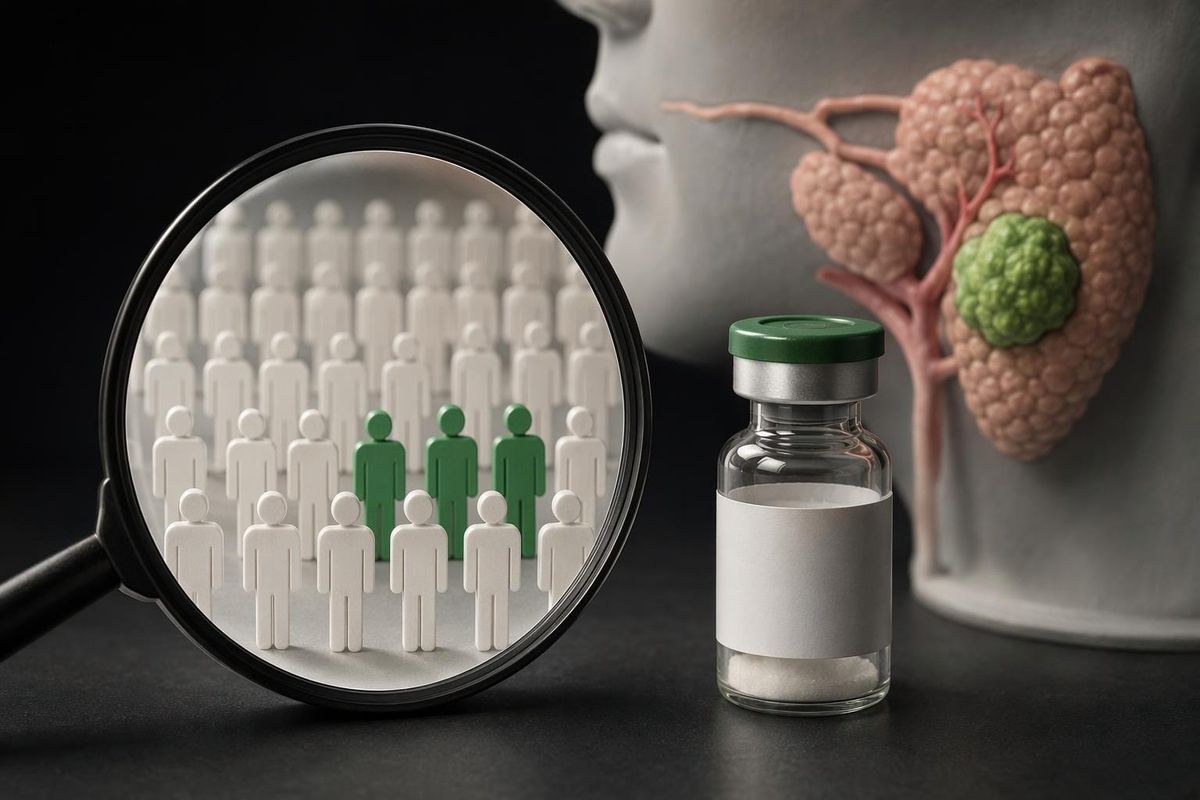
Kura Oncology, which develops and sells genetically targeted cancer medicines, could secure full approval for darlifarnib through a study of approximately 40 patients, President and Chief Executive Officer Dr. Troy Wilson said on the company's earnings call Tuesday. Its results release described FDA agreement on the planned study's design for HRAS-mutated salivary gland cancer—a potential route to Kura's second commercial medicine.
Full Approval, Not Accelerated
The distinction was striking enough that an analyst asked whether Wilson had meant accelerated approval. Wilson answered: "You heard it correctly. It was full approval."
Wilson compared the proposed trial with the 112-patient study that supported KOMZIFTI's approval. He stopped short of calling the smaller pathway unprecedented, saying "there's not a lot of precedents for this."
Kura Chief Medical Officer Dr. Mollie Leoni said systemic therapies produce responses in about 5% of patients with recurrent or metastatic salivary gland cancer, and the rate is probably lower among those with HRAS mutations. She argued that this leaves considerable room for a clinically meaningful improvement.
Leoni pointed to previously reported durable responses with darlifarnib alone and continuing requests for early access. She said treatment experience collected through compassionate use could supply confirmatory evidence alongside the planned trial. FDA agreement on a study design remains a pathway to potential approval, rather than approval of the drug.
A Solid-Tumor Route Beyond Leukemia
Kura's existing product, KOMZIFTI treats adults whose NPM1-mutated acute myeloid leukemia has returned or resisted treatment. The oral medicine is approved for patients with no satisfactory alternative treatment options. Kura records its U.S. sales and splits commercialization profits and losses equally with Kyowa Kirin, which handles commercialization outside the United States.
Third-quarter KOMZIFTI revenue rose 53% from the second quarter to $13.9 million. Approximately 150 patients started treatment, up 30% from the prior quarter, while prescriptions, including refills, increased 65% to more than 420.
Wilson framed a salivary gland cancer approval as a clinical, regulatory and commercial foundation for broader darlifarnib combinations. Kura expects to finish enrollment in its early-stage kidney cancer study with cabozantinib in the first half of 2027 and report initial findings in the second half. It also plans to begin testing darlifarnib with daraxonrasib in previously treated KRAS-mutated pancreatic cancer in the first half of 2027, with preliminary results targeted for the second half.
Conditional Capital For Clinical Milestones
Kura arranged up to $300 million in conditional financing from Oberland Capital: up to $275 million of debt and $25 million of equity investments. It received $55 million at closing, comprising $50 million of debt before fees and a $5 million equity investment.
Chief Financial Officer Jennifer Fulk said additional draws would be assessed against funding needs, clinical results and other capital sources, balancing dilution with financing costs and future obligations. The seven-year debt carries interest of 6.95% to 8.95%, plus a single-digit royalty on U.S. KOMZIFTI sales capped at 20% of the principal advanced.
Kura's cash, cash equivalents and short-term investments fell from $667.2 million at December 31, 2025 to $492.1 million at September 30. Management expects its resources, subsequent financing proceeds and $180 million in anticipated Kyowa Kirin payments to fund operations beyond the initial frontline leukemia trial results expected in 2028.
Leoni said Kura plans to submit its application to begin the darlifarnib trial by year-end and start the approximately 40-patient study in the first half of 2027.
Sources
- Kura Oncology results release (Form 8-K, EX-99.1) — SEC EDGAR
- Kura Oncology: Q3 Earnings Snapshot | wfaa.com — Associated Press
- Kura Oncology Reports Third Quarter 2026 Financial Results — globenewswire.com