GSK's Exdensur Meets Remission Goal With Twice-Yearly Doses In Rare Disease Trial
GSK plans approval submissions in the first half of 2027 to expand Exdensur beyond its existing respiratory uses.


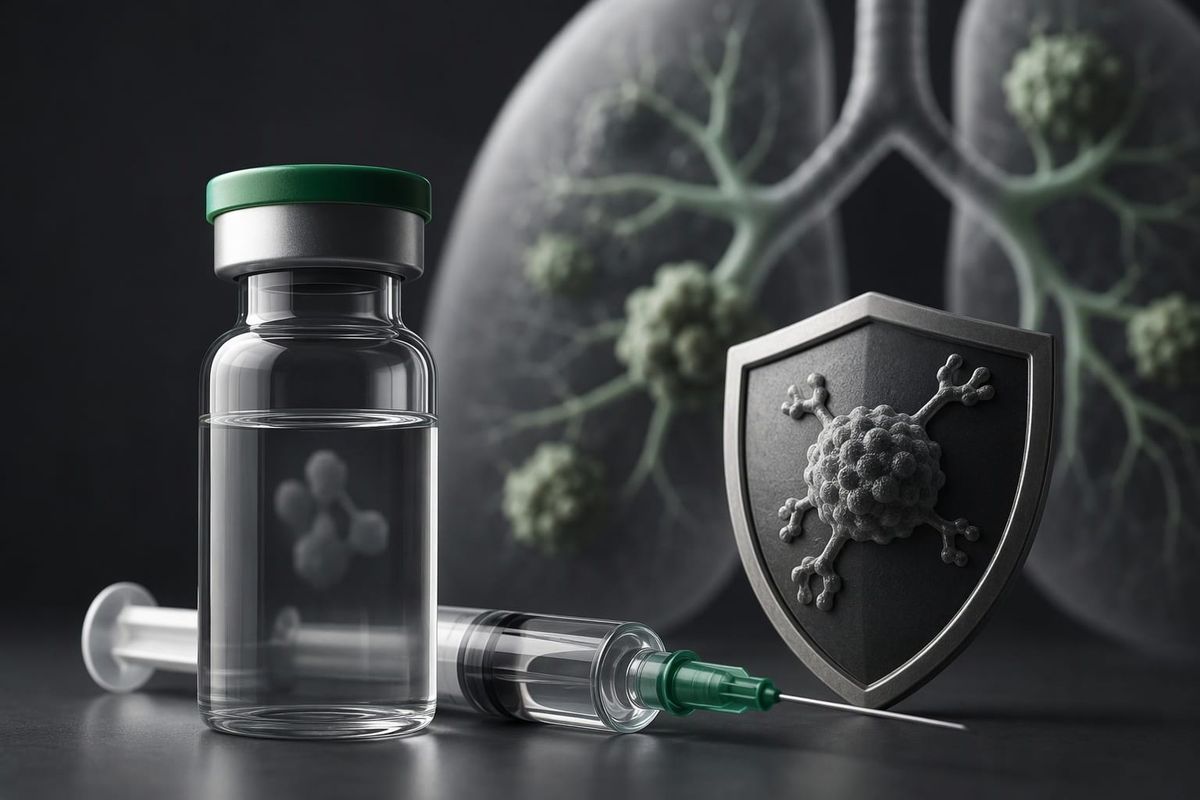
GSK, which develops medicines including treatments for respiratory diseases, reported Wednesday that twice-yearly Exdensur met the remission goal against monthly Nucala in a late-stage trial for a rare inflammatory disease. The results support its planned approval submissions in the first half of 2027 for EGPA, which can damage organs and become life-threatening.
Fewer Doses, Comparable Remission Results
The OCEAN trial tested whether Exdensur, also called depemokimab, could achieve remission at least as effectively as Nucala, or mepolizumab. GSK reported that it met that goal, with comparable efficacy and safety.
Researchers enrolled 162 patients across 19 countries whose EGPA had returned or resisted treatment. During the 52-week treatment period, participants received either 200-milligram depemokimab injections every 26 weeks or 300-milligram mepolizumab injections every 4 weeks.
Both groups continued standard treatment: oral corticosteroids, sometimes combined with medicines that suppress the immune system. To qualify as being in remission, patients needed no measurable disease activity and a daily oral corticosteroid dose of no more than 4 milligrams at both week 36 and week 52.
Adverse events were similar in frequency and severity between the groups. GSK said those findings were consistent with depemokimab's established safety profile.
Relapses And Organ Damage Drive Need
EGPA—eosinophilic granulomatosis with polyangiitis—causes inflammation in small and medium blood vessels. It affects an estimated 34 people per million worldwide and can harm multiple organ systems.
Symptoms can overlap with other conditions, complicating recognition of the disease. More than 90% of patients have asthma, and 54% have persistent nose and sinus inflammation accompanied by nasal polyps.
GSK said high-dose corticosteroids and immune-suppressing medicines do not adequately maintain disease control, exposing patients to relapses and complications from prolonged treatment. Its Nucala was the first approved biologic for EGPA, but the company said additional options are needed to sustain protection against relapses.
Dr Kaivan Khavandi, GSK's global head of respiratory, immunology and inflammation research and development, said the results showed “it could help patients achieve disease remission with twice-yearly dosing, reducing the need for corticosteroids and other immunosuppressive therapies.”
An Expansion Beyond Respiratory Approvals
GSK said depemokimab is not approved for EGPA anywhere. Exdensur already has approval for severe asthma in the U.S., and for severe asthma and chronic rhinosinusitis with nasal polyps in the EU, Japan, China and UK.
The medicine targets interleukin-5, a protein involved in type 2 inflammation. Its extended half-life enables twice-yearly dosing, and GSK is also exploring its use in chronic obstructive pulmonary disease.
GSK plans to submit the full OCEAN results for a scientific congress and peer-reviewed publication. Those results will support its planned EGPA regulatory submissions in the first half of 2027.
Sources
- Form 6-K — GSK ANNOUNCES POSITIVE PHASE III EXDENSUR RESULTS — SEC EDGAR
- GSK says asthma drug comparable to its own approved treatment for rare immune disorder — Reuters
- GSK advances Tuesday, outperforms market - MarketWatch — MarketWatch
- BBIO, PYPD Stocks On Radar Ahead Of FDA Rulings This Week — CAPR Gets CRL, Savara Still Awaits Molbreevi Decision — Yahoo Finance
- Trading at levels seen 25 years ago, are GSK shares finally ready to rocket? — Yahoo Finance
- These 2 UK stocks are forecast to grow a stunning 57% in the next 12 months! Here’s what I think — Yahoo Finance