Fervo Can Build Google's 396-Megawatt Power Supply Without Waiting For Its Data Center
Google's expansion option depends more on data center progress, while Fervo is pushing spending later without cutting its construction budget.


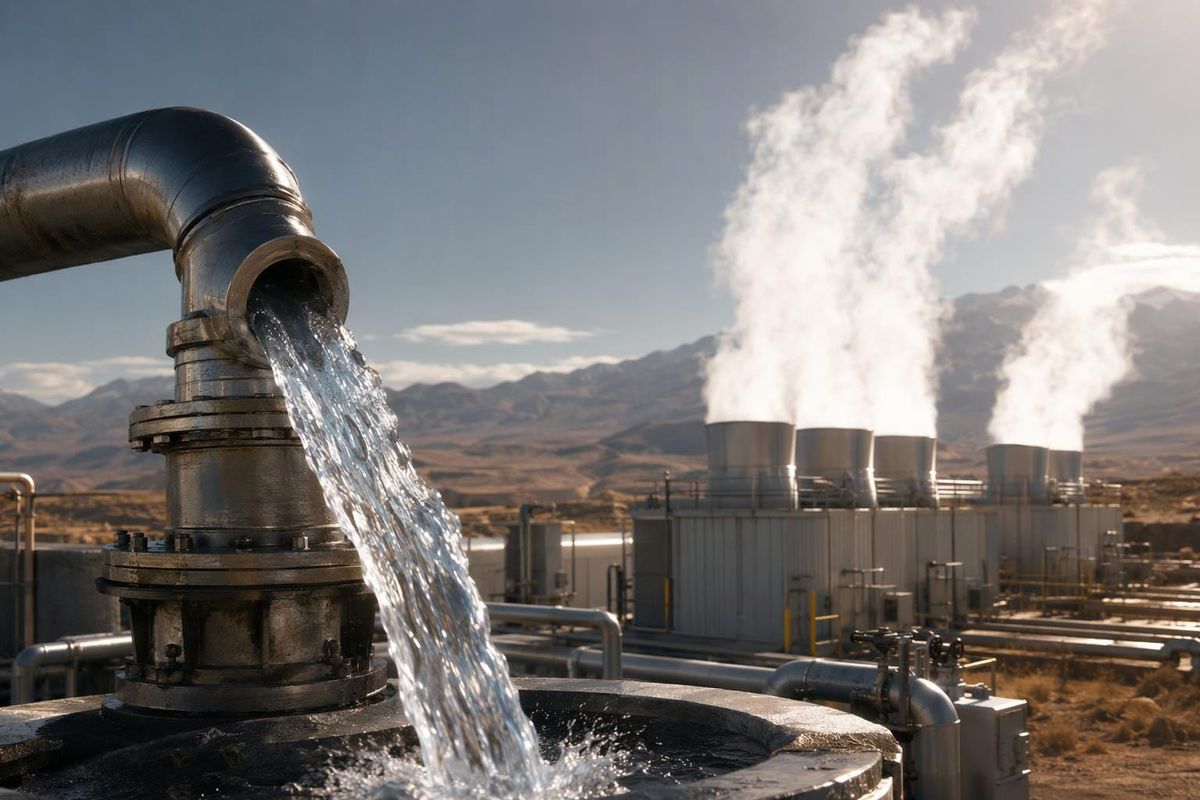
Fervo Energy, which builds and operates geothermal power plants, can build Google's approximately 396-megawatt electricity supply without waiting for the customer's potential Utah data center, Co-Founder and Chief Executive Officer Tim Latimer said on Monday's earnings call. Google must pay under the contract regardless of its Beaver County development plans, he said.
Google's Purchase And Option Diverge
The agreement announced in September fixes the terms of Google's power purchases for 15 years. Guarantees from Alphabet and Fervo back the commitment, which Latimer described as a contract lenders can finance.
The contracted power will initially connect to the grid. Latimer said Google can sell electricity into the wider market rather than consume it all itself, letting each company follow its own development schedule: "neither party is waiting on the other."
Google's approximately 600-megawatt expansion option works differently. The companies are pursuing a direct connection to the potential regional data center under Utah's SB 132 framework, with regulatory approval efforts underway. Exercising the option would bring the total to one gigawatt.
An analyst at William Blair asked whether a data center permit would trigger that expansion. David Ulrey, Fervo's Chief Financial Officer, said the option depends more on the data center's development, but its trigger is not a particular permit. He expects Google to continue working through development requirements into 2027.
Fervo's binding power agreements now cover 1,054 megawatts, up about 60% from last quarter's 658 megawatts following the Google agreement. Latimer put contracted revenue at approximately $11.9 billion, compared with $7.2 billion at the company's IPO.
Less Spending Now, Same Build Budget
Fervo lowered its second-half capital spending outlook to $700–$750 million from $850–$900 million. Ulrey said construction teams had found ways to shorten work periods and delay some expenditures until closer to the start of revenue generation.
The company still expects to invest approximately $2.2 billion in Cape Google 400 through 2028, with delivery dates unchanged. Ulrey told analysts "the overall construction budget is not changing."
Eight generating units are under construction for that project. Management targets initial commercial operation in mid-2028 and the full contracted supply before year-end. Drilling is approximately 18% complete, with four rigs working at Cape Station.
Ulrey expects the project to be ready for financing around mid-2027, targeting debt worth roughly 70% of project value. Fervo closed a $421 million project loan in March of 2026 for Cape Station's earlier phase. Ulrey said the broad lender group was chosen to acquaint banks with enhanced geothermal production and permitting before financing the larger Google project.
Fervo ended the third quarter with $1.9 billion in unrestricted cash and cash equivalents and $301.6 million in debt. FRVO shares rose 21% to $10.92 in Monday trading, as of 11:31 a.m. ET, with a market value of $2.7 billion.
Cape Station Starts Earning Revenue
Fervo drills horizontal wells into hot rock and connects them through hydraulic fracturing, allowing water to bring heat to the surface for electricity generation. Its Nevada pilot, Project Red, has supplied three megawatts to the grid since 2023.
Cape Station's first 33-megawatt unit entered commercial operation on September 30 after a 23-month build. Latimer said its water temperatures, flow rates and power delivery match management's expectations. Two more units have completed mechanical construction, with commercial operation still expected by January 1, 2027.
The Google phase uses larger, 50-megawatt units. Management continues to target installed capital costs of $5,500.00 per kilowatt, compared with approximately $7,000.00 for the first three Cape units. Latimer said hotter wells improve both electricity output and plant efficiency; Fervo's longer-term target remains $3,000.00 per kilowatt.
For the binding Google purchase, Fervo's construction schedule stands on its own. The approximately 600-megawatt option remains a separate bet on progress toward the potential data center.
Sources
- Fervo: Q3 Earnings Snapshot – WTOP News — wtop.com
- Fervo Energy Company GAAP EPS of -$0.07 beats by $0.02, revenue of $0.12M misses by $0.03M (FRVO:NASDAQ) | Seeking Alpha — seekingalpha.com
- Fervo: Q3 Earnings Snapshot | wfaa.com — Associated Press
- Fervo: Q3 Earnings Snapshot | khou.com — Associated Press
- Fervo: Q3 Earnings Snapshot | wusa9.com — Associated Press