FDA Approves GSK's Jemperli For MSI-H Rectal Cancer On 68% Response Rate In Single-Arm Trial
The accelerated approval came ahead of the FDA's target date, but the independent-review result behind the trial's main goal is 47% and still maturing.


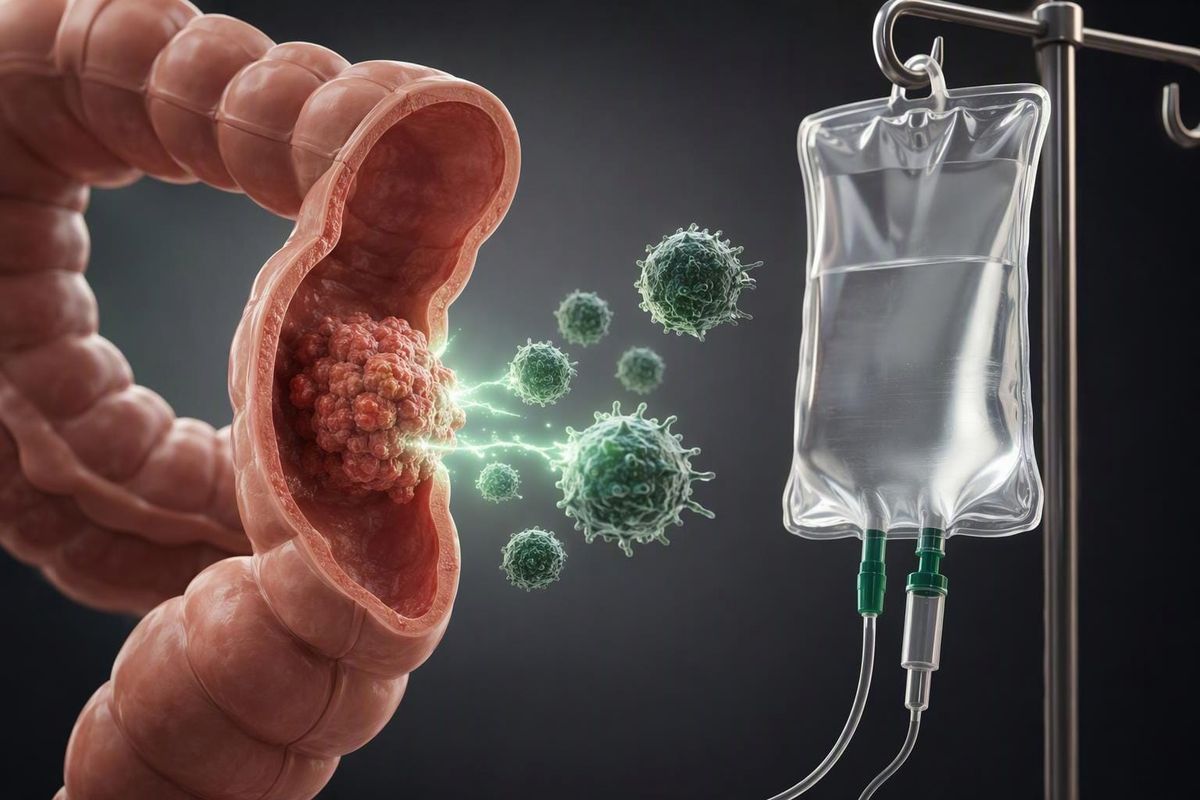
The FDA has approved GSK's Jemperli (dostarlimab) under its accelerated approval pathway for adults with stage II and III MSI-H/dMMR locally advanced rectal cancer, GSK said Monday in a release furnished to the SEC. The company calls it the first and only immunotherapy for the group, whose tumours cannot properly repair DNA damage.
What the trial data show
The approval rests on AZUR-1, a global, open-label, single-arm phase II trial of 154 patients with previously untreated disease. Patients received nine cycles of dostarlimab over six months, as a 500mg intravenous infusion every three weeks.
Investigator-assessed data showed 68% of evaluable patients (98/144) had a sustained clinical complete response at 12 months. In an exploratory analysis, 76% (110/144) had no evidence of cancer one year or more after treatment. That group includes 12 patients whose complete response was confirmed by tissue analysis after surgery.
The trial's primary objective, measured by independent central review, is lower: 47% of evaluable patients (54/116) have reached the 12-month mark. GSK said those data continue to mature, and another 38 participants still working toward 12-month follow-up have already achieved a clinical complete response.
No disease recurrences have been reported among responders after median follow-up of more than two years.
Safety and what it changes
Serious adverse reactions occurred in 20% of patients, and 3% permanently stopped treatment because of them. The most common reactions were fatigue (32%), rash (22%), diarrhoea (18%) and pruritus (17%).
Standard care for locally advanced rectal cancer is chemotherapy, radiation and surgery, which GSK says can leave bowel, urinary and sexual dysfunction, secondary cancers and infertility. The company says Jemperli alone could let eligible patients avoid those steps. The MSI-H/dMMR biomarker is found in around 5-10% of rectal cancers.
Tony Wood, GSK's Chief Scientific Officer, said the approval "offers a new treatment approach." Michael Sapienza, CEO of the Colorectal Cancer Alliance, said biomarker testing at diagnosis "will be essential" to identify eligible patients.
The application had Fast Track and Breakthrough Therapy designations, Priority Review and a National Priority Voucher, which GSK said resulted in approval ahead of the FDA's target decision date. In Monday trading, GSK stock was at $49.53, up 0.04%, with a market value of $99.2 billion.
What to watch
Full AZUR-1 interim data will be presented at the European Society for Medical Oncology Congress in October 2026. Reviews by other health authorities under Project Orbis, an FDA initiative allowing concurrent international review, are ongoing.
The ESMO presentation will put the full interim AZUR-1 data, including the maturing independent-review figure now at 47%, in public view.