ClearPoint Neuro Taps Its Stock Program For $22 Million, Its First Use, To Fund Robotics And Ultrasound Together
The company ended the third quarter with $46.2 million in cash, and its CFO says burn should fall gradually over four to six quarters.


ClearPoint Neuro used its at-the-market stock program for the first time in the third quarter, raising $22 million in net proceeds, CEO Joe Burnett said on the company's Wednesday earnings call. The company, which makes systems for minimally invasive brain surgery, ended September with $46.2 million in cash.
Three reasons to raise now
Burnett gave three reasons for tapping the program. First, the Torrey Pines lab, called ClearPoint Advanced Laboratories, needs front-loaded spending on construction, equipment and hiring. Second, the company wants to deliver five product and clinical milestones in 2027 for its Eraflow fluid-management line in parallel, not in series.
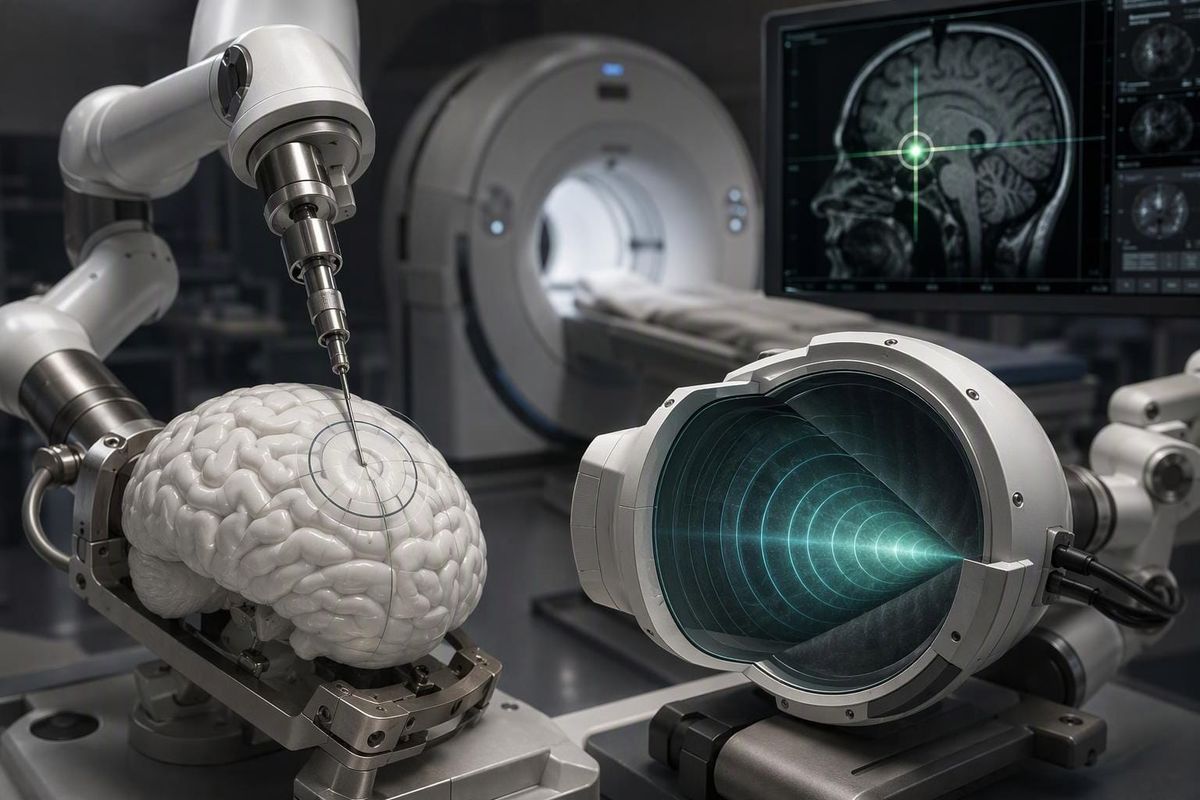
Third, the money lets it fund its robotic and focused ultrasound systems at once, "not have to choose one over the other." Burnett said two or three opportunities were "screaming at us" to go faster, which led the company to raise a little more capital.
Chief Financial Officer Danilo D'Alessandro said cash rose from $45.9 million at the end of 2025, as the $22 million in proceeds outweighed $20.1 million of operating cash burn through the first nine months of 2026.
Burn, but gradually
Asked about the burn outlook, D'Alessandro said capital spending on the lab is new and will land over the next 12 months. On operations, he said the company aims for revenue to outpace expense growth so burn falls gradually over the coming four to six quarters.
A TD Cowen analyst summed it up in his own words as a message that the company is not going out "like drunken sailors." D'Alessandro replied, "Yes, yeah, we don't drink."
Operating expenses were $13.4 million in the quarter, down from nearly $17 million in the second quarter. Revenue rose 36% to $12.1 million from $8.9 million a year earlier, against 23% growth in operating expenses. Gross margin slipped to 58% from 63%, which D'Alessandro attributed mainly to overhead at the new lab and amortization of acquired intangibles.
Harvest, growth and startup bets
Burnett described a portfolio in three tiers. MRI-guided deep brain stimulation is a mature, profitable business in a harvest stage that needs little investment. Cranial laser therapy and Eraflow are growth products, and the startups include spine laser therapy, the lab, a subdural hematoma indication and commercial drug delivery.
His example was histology, a lab service that requires equipment and technicians three to six months before a first study. "We're not going to get any histology revenue in the next six months," he said.
Navigation revenue grew 59% to $5.4 million, helped by Eraflow, which came with the IRRAS acquisition, and the company reported its largest capital sales quarter.
Partner catalysts and 2027
Burnett said partner UniQure's application to the FDA for its Huntington's disease gene therapy is the key near-term event. He expects an FDA decision on whether to accept it within about a month, and, if it did, a companion device submission from ClearPoint. He said a final decision could come six to eight months after acceptance if all went perfectly.
On 2027, Burnett said mid-teens base revenue growth still feels right, though the company has not issued official guidance.
Burnett said he expects to know much more within about two months, as phase three trials start and the FDA responds to the Huntington's filing.
Sources
- ClearPoint Neuro, Inc. GAAP EPS of -$0.24 beats by $0.08, revenue of $12.1M misses by $0.2M (CLPT:NASDAQ) | Seeking Alpha — seekingalpha.com
- ClearPoint Neuro to Announce Third Quarter 2026 Results October 28, 2026 - The Globe and Mail — theglobeandmail.com
- INVESTOR ALERT: Pomerantz Law Firm Investigates Claims On — globenewswire.com