Cerus Says Germany Wants More Data On Its New LED Illuminator, And The FDA Decision Slips
Cerus can no longer build its old illuminator, and its quarterly report says the LED replacement faces extra data demands in Germany and the US.


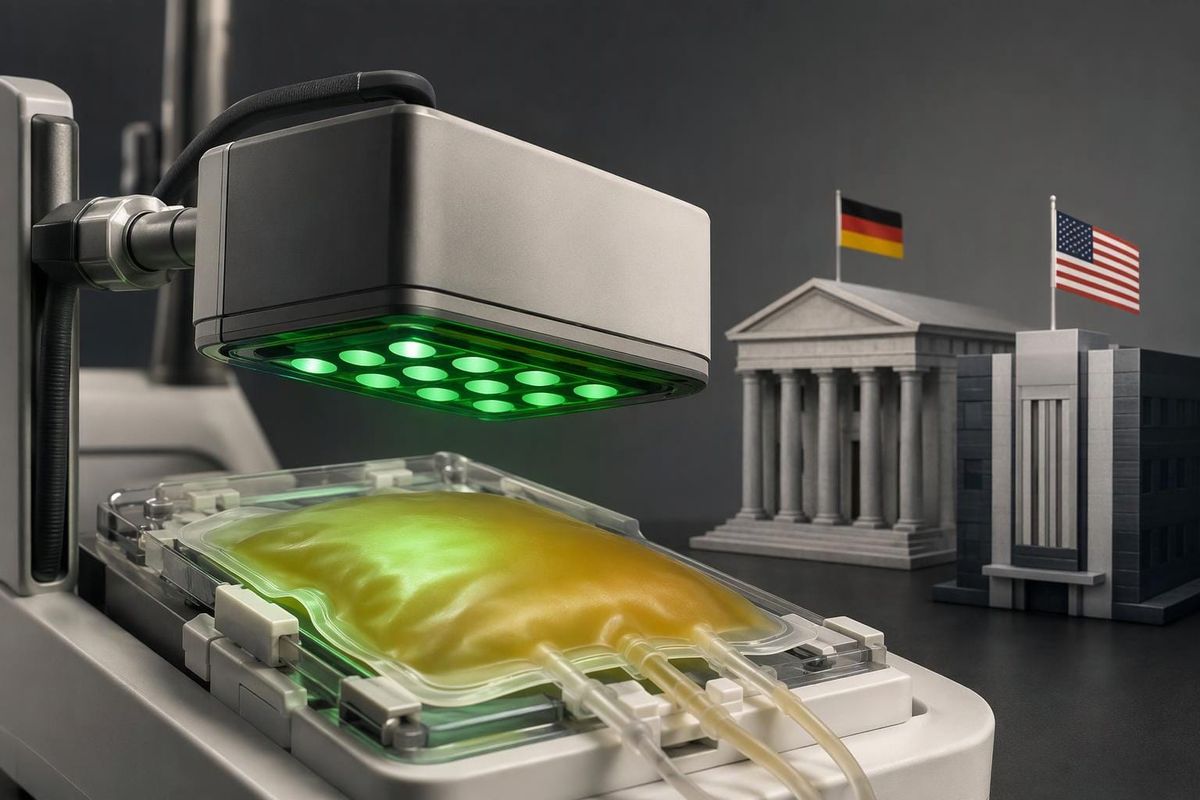
Cerus, which sells the INTERCEPT Blood System that treats donated platelets and plasma to cut infection risk, said in its quarterly report filed Monday that Germany's Paul Ehrlich Institute will require additional data before the new LED illuminator can be used with its platelet system. Until then, the company can sell only with the remaining first-generation illuminators and spare parts, both "in limited supply."
Two regulators, one device
The report also says the company must generate additional data before the FDA will consider its premarket approval application for the platelet system with the LED illuminator. That, it says, "will delay our previous estimate of the timeline for an approval decision."
The second-quarter 10-Q had said the company was "currently working with the FDA to understand the data requirements." The new filing drops that line, and drops the statement that the company could not keep manufacturing the first-generation illuminator, which it had said it bought a last-time build of because of obsolete components.
The company also dropped the line that the RedeS red blood cell trial would finish in the second half of 2026. In its place, it describes topline results: the trial met its main goal of non-inferiority to conventional red cells, with no statistically significant difference in related adverse events. It warns that those results "do not ensure that the data will be deemed acceptable or supportive of regulatory approval by the FDA."
Growth with rising costs
Product revenue rose 10% to $57.7 million in the third quarter, and 14% to $168.8 million for the first nine months, the company reported. Nine-month cost of product revenue rose 23% to $81.1 million, and gross margin on product sales was 52% against 56% a year earlier.
Current inventories were $64.7 million at September 30, against $56.1 million at December 31, 2025. The company reiterated full-year product revenue guidance of $229 million to $231 million.
Cerus had $28.5 million drawn on its revolving credit line and can borrow another $16.5 million, subject to borrowing base levels. Its market value was $459 million at Monday's report.
BARDA funding stretches to 2031
The US biodefense funder BARDA extended its 2024 agreement, which supports the red blood cell program, through September 2031. In July it committed another $33.2 million, bringing committed funding to $65.3 million, and raised the total funding opportunity to $209.0 million.
The company says it cannot predict whether German certification will come on the timeframe it anticipates, or at all.
Sources
- 10-Q Filing — Cerus (CERS) — SEC EDGAR
- 10-Q Filing — Cerus (CERS), Q2 FY2026 filed 2026-07-30 (comparison basis) — SEC EDGAR
- Earnings release (8-K Item 2.02, cers-ex99_1.htm) — Cerus, filed 2026-11-02 — SEC EDGAR
- Cerus GAAP EPS of $0.00 beats by $0.01, revenue of $64M beats by $2.9M (NASDAQ:CERS) | Seeking Alpha — seekingalpha.com
- 12 Health Care Stocks Moving In Monday's After-Market Session — benzinga.com
- Cerus Corporation Announces Positive Topline Results from Phase 3 RedeS Trial of the INTERCEPT Blood System for Red Blood Cells — Yahoo Finance
- Cerus Corporation Announces Third Quarter 2026 Financial Results — businesswire.com