Cerus Third-Quarter Product Sales Rise 10% To $57.7 Million As Red Cell Trial Hits Its Main Goal
The blood-safety company kept its 2026 product revenue forecast, with U.S. fibrinogen sales up and a net loss of $0.6 million.


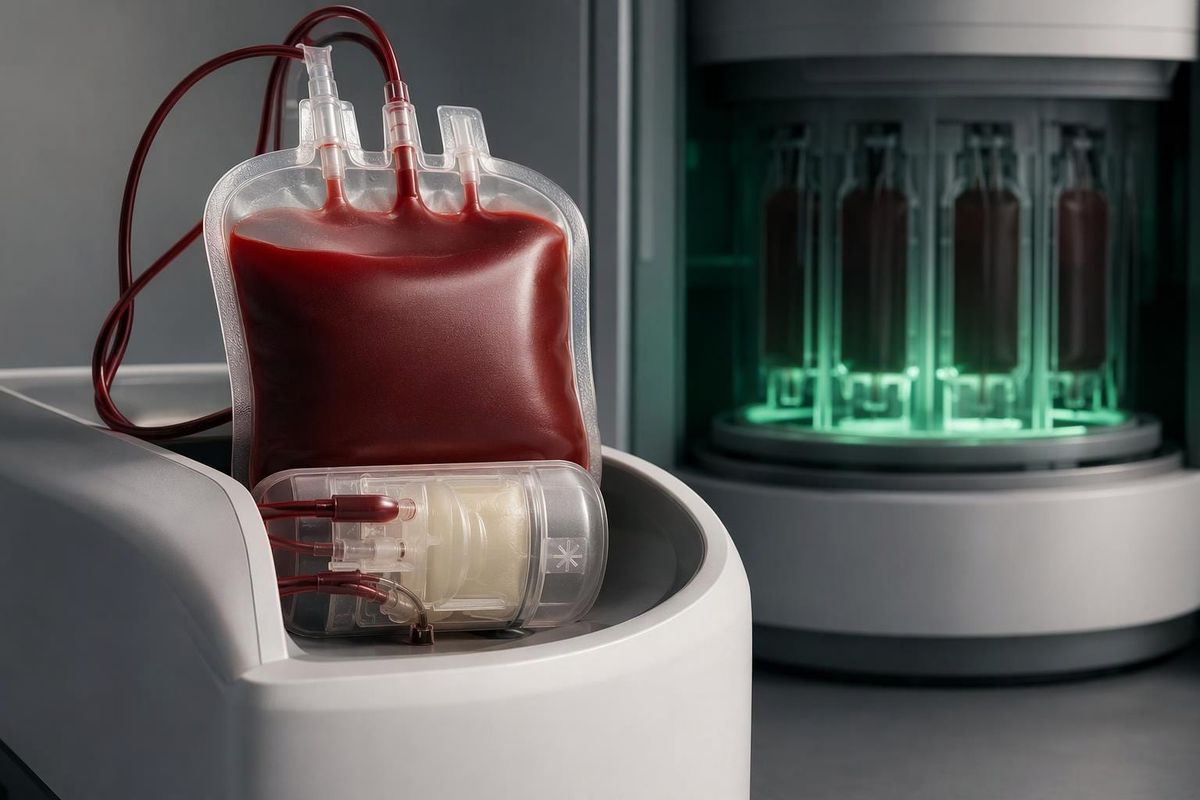
Cerus, which sells the INTERCEPT Blood System to reduce pathogens in donated blood, said Monday that third-quarter product revenue rose 10% to $57.7 million, from $52.7 million a year earlier. Cerus also kept its full-year guidance and reported that its RedeS study of the red cell version met its primary goal.
Fibrinogen volumes up about 80%
Total revenue reached $64.0 million, up 6% from $60.2 million. The company said growth came from higher U.S. sales of INTERCEPT Fibrinogen Complex, a strong U.S. platelet business and sales of its INT200 illuminator device in Europe, the Middle East and Africa.
U.S. fibrinogen sales were $5.6 million, up from $3.9 million, and volumes grew about 80%. For the first nine months, product revenue rose 14% to $168.8 million.
Government contract revenue fell to $6.3 million from $7.5 million. Cerus tied the drop to the completion of its FDA contract in 2025 and the wind-down of a BARDA contract, a U.S. government biodefense funding program.
Margin slips, loss stays small
Product gross margin was 52.4%, down from 53.4%. The company blamed a weaker dollar against the euro and higher product costs from inflation, partly offset by pricing and product mix.
The net loss attributable to Cerus was $0.6 million, or $0.00 per share, against $0.02 million a year earlier. Operating income was $383,000 versus $1.2 million. Adjusted EBITDA, which excludes items such as share-based compensation, was positive $5.7 million, up from $5.0 million. Net loss for the first nine months narrowed to $5.1 million from $13.4 million.
Cash and short-term investments were $57.1 million at September 30, up $0.8 million from June 30 and down from $82.9 million at December 31. Cerus had $35.0 million outstanding on its term loan and $28.5 million drawn on its revolving credit line.
Guidance and the red cell study
Cerus reiterated that 2026 product revenue should come in between $229 million and $231 million, growth of 11% to 12%, including $23 million to $25 million from fibrinogen.
Chief Executive Vivek Jayaraman called the RedeS result "an important milestone" toward bringing pathogen reduction to red cell transfusions. The red cell system is under regulatory review in Europe and in late-stage development in the U.S. The company cautioned that topline findings may change once the full data, including secondary measures, are analyzed.
Management planned a 4:30 p.m. ET call Monday to discuss the results and the RedeS data.
Sources
- 8-K Filing — CERUS CORP (CERS) — SEC EDGAR
- Exhibit cers-ex99_1.htm — CERUS CORP 8-K exhibit — SEC EDGAR
- Cerus Corporation Announces Positive Topline Results from Phase 3 RedeS Trial of the INTERCEPT Blood System for Red Blood Cells — Yahoo Finance
- Cerus Corporation Announces Third Quarter 2026 Financial Results — businesswire.com