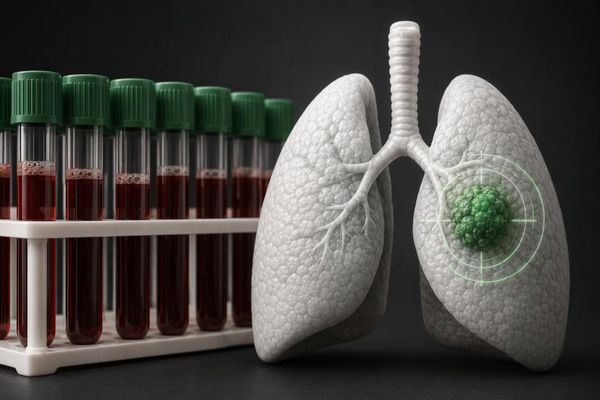
Castle Biosciences Targets $385–395 Million In Revenue — TissueCypher Leads Quarterly Growth
Third-quarter sales rose 24%, but operating cash flow fell and the net loss widened, including non-cash stock pay.


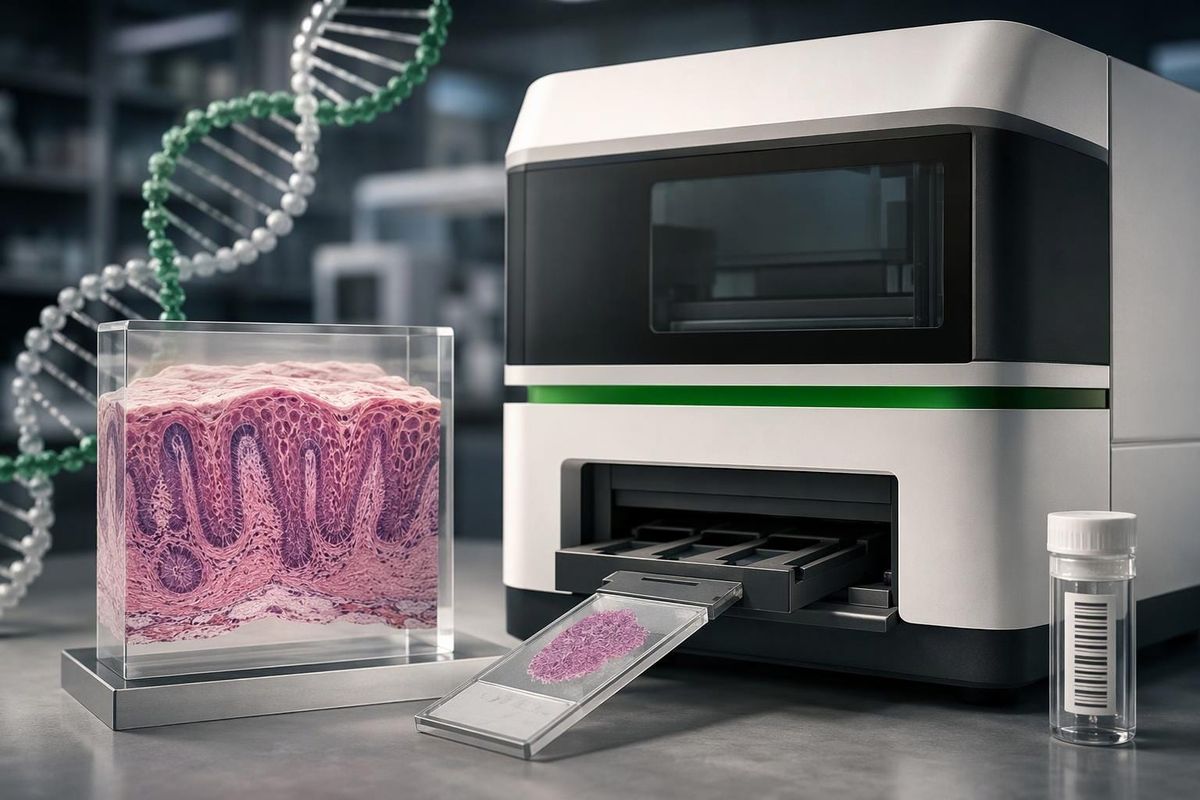
Castle Biosciences, which sells molecular tests to guide diagnosis and treatment, raised its 2026 revenue forecast to $385–395 million Thursday, replacing its $365–375 million outlook. Third-quarter sales rose 24%, while the company generated less cash from operations and recorded a wider net loss.
TissueCypher Carries The Sales Growth
Castle reported $102.9 million in third-quarter revenue in its earnings release, against $83.0 million a year earlier. Total deliveries reached 32,431 test reports.
TissueCypher, designed to assess the risk of progression to esophageal cancer in patients with Barrett’s esophagus, delivered 15,574 reports. That was 47% more than the 10,609 delivered a year earlier.
Derek Maetzold, Castle Biosciences’ president and chief executive officer, said, “TissueCypher was a key contributor to our top-line performance.”
The growth was uneven across the portfolio. DecisionDx-Melanoma deliveries fell to 10,177 from 10,459, although its first-nine-month volume increased 5% year over year. Quarterly DecisionDx-SCC reports fell to 3,882 from 4,186; MyPath Melanoma declined to 798 from 1,151; and DecisionDx-UM declined to 422 from 436.
Newer offerings added volume: AdvanceAD-Tx delivered 1,109 reports and Esopredict delivered 469. Neither test was offered in the third quarter of 2025.
More Adjusted Earnings, Less Cash
Castle’s quarterly net loss reached $4.1 million, including $11.2 million in non-cash stock compensation, versus a $0.5 million loss a year earlier. The per-share loss widened to $0.13 from $0.02.
Adjusted earnings before interest, taxes, depreciation and amortization increased to $12.7 million from $9.2 million. That measure excludes stock compensation, gains and losses on equity securities, and other items. Cash generated by operations moved the other way, falling to $19.7 million from $22.6 million.
Gross margin—the portion of sales left after direct costs—remained at 75% on the company’s rounded figures. Its rounded adjusted margin also held at 77%.
The nine-month figures show a weaker cash and adjusted-earnings comparison. Revenue reached $290.1 million versus $257.2 million, but operating cash flow fell to $12.8 million from $37.4 million, and adjusted earnings before interest, taxes, depreciation and amortization declined to $20.0 million from $32.5 million. Castle held $277.7 million in cash, cash equivalents and marketable securities at September 30.
An Outlook Moving Higher
The revenue forecast began at $340–350 million in February, moved to $345–355 million in May and reached $365–375 million in July before Thursday’s increase.
Castle’s business spans dermatologic cancers, Barrett’s esophagus, atopic dermatitis and uveal melanoma, an eye cancer. Reimbursement from Medicare and insurers supplies most of its revenue; Medicare patients accounted for 44% in 2025, when Castle delivered 105,053 reports and recorded $344.2 million in revenue.
Reimbursement also affects comparisons. The company cited the April 24, 2025, change in DecisionDx-SCC Medicare coverage, a refocusing of commercial efforts and the May 2025 discontinuation of IDgenetix as factors affecting its nine-month revenue comparison.
Castle maintained its expectation of positive adjusted earnings before interest, taxes, depreciation and amortization for the fourth quarter, all of 2026 and all of 2027.
Sources
- 8-K Filing — CASTLE BIOSCIENCES INC (CSTL) — SEC EDGAR
- Exhibit exhibit991q32026earningsre.htm — CASTLE BIOSCIENCES INC 8-K exhibit — SEC EDGAR
- Exhibit exhibit992q32026.htm — CASTLE BIOSCIENCES INC 8-K exhibit — SEC EDGAR
- Castle Biosciences signals $385M-$395M 2026 revenue outlook as TissueCypher targets 50%-52% volume growth (NASDAQ:CSTL) | Seeking Alpha — seekingalpha.com
- Castle Biosciences Inc (CSTL) (Q3 2026) Earnings Call Highlights: Revenue Jumps 24% as ... — Yahoo Finance
- Castle Biosciences Q3 2026 Earnings Call Transcript — benzinga.com
- Castle Biosciences Reports Third Quarter 2026 Results — prnewswire.com