Carvana Says Fuel And Rate Swings Cost About $200 A Car, Then Explains Its Pivot To GAAP Earnings
Carvana's CEO called the $200-per-unit hit temporary, and its CFO said adjusted EBITDA matters less as GAAP profit grows.


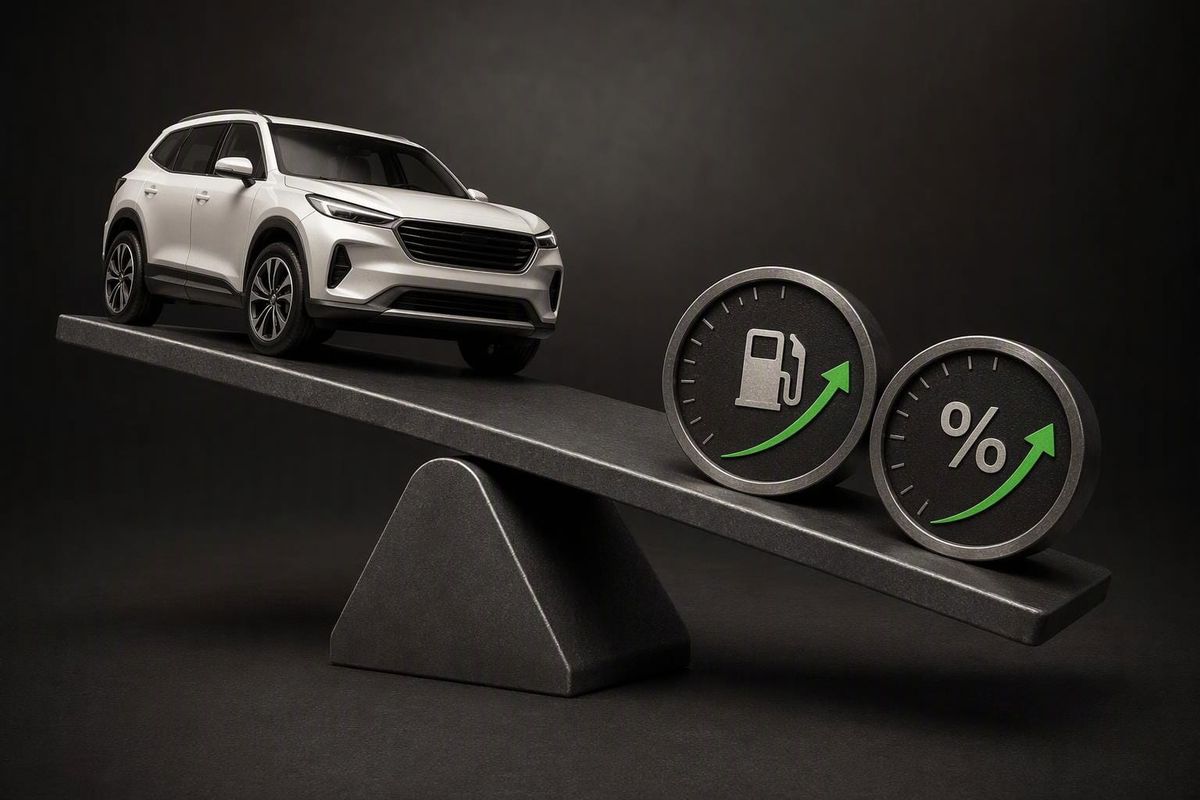
Carvana, the online used-car retailer, lost about $200 per vehicle to jumps in gas prices and interest rates this quarter, CEO Ernie Garcia told analysts on the company's third-quarter earnings call on Wednesday. CFO Mark Jenkins used the same call to explain why the company will lean on GAAP earnings, rather than adjusted EBITDA, in 2027 reporting.
A $200 hit Garcia calls temporary
Asked by a JPMorgan analyst whether profit per unit would start expanding again in the fourth quarter, Garcia pointed to the long-term goal of a 13.5% adjusted EBITDA margin. He said "pretty significant moves in gas prices and in interest rates" cost about $200 per unit this quarter, but "those things tend to zero out."
Adjusted EBITDA margin was 10%, down from 11.3% a year earlier, Jenkins said, driven by a mix of higher-priced vehicles and value given back to customers through lower financing rates. Adjusted EBITDA reached a record $800 million on revenue of $8.04 billion, up 42%. Retail units sold rose 39% to 217,385.
Net income was $483 million, up $220 million, even after a one-time $53 million pretax expense for redeeming senior secured notes early. GAAP operating income was $714 million, about 89% of adjusted EBITDA.
Why GAAP, and why 2027
A Bank of America analyst asked why now for the change, which the analyst described as a focus on GAAP earnings over non-GAAP. Jenkins called it "a natural step in our evolution as a company." He said adjusted EBITDA has tracked progress for years, but its value falls as Carvana becomes more profitable on a GAAP basis, and that large technology companies focus on operating income and net income instead.
Garcia added that the 13.5% EBITDA target maps to a 12.5% operating income margin.
Outlook and the balance sheet
Jenkins said Carvana expects a sequential rise in retail units sold in the fourth quarter. It also expects full-year 2026 adjusted EBITDA at the higher end of its earlier $2.7 billion to $3.0 billion range, as long as the environment stays stable.
Carvana, which sells used cars online and delivers them to customers' homes or its car vending machines, refinanced the remaining $1.7 billion of senior secured notes due 2030 with a term loan, saving roughly $45 million a year in interest. Net debt stood at 0.8 times trailing adjusted EBITDA.
Carvana's market value was $65.2 billion as of Wednesday's report, and the 2027 reporting change will put operating income and net income at the center.
Sources
- Carvana Q3 2026 Earnings Call Transcript — benzinga.com
- Carvana Reaches Sales Milestone but Earnings Come in Short — Barron's
- Carvana Co. (CVNA) Stock Price, News, Quote & History - Yahoo Finance — Yahoo Finance
- Compared to Estimates, Carvana (CVNA) Q3 Earnings: A Look at Key Metrics — Yahoo Finance
- Carvana (CVNA) Misses Q3 Earnings Estimates — Yahoo Finance