Baker Hughes Stock Plunges 7%, Wiping Out $4.3 Billion, After Call Flags AI Power Timing Risk
Shares fell 7.36% Wednesday after the CEO said AI power backlog carries timing risk, a day after quarterly profit fell by a third.


Baker Hughes shares plunged 7.36% to $54.66 in Wednesday trading, as of 4:00 p.m. ET, erasing $4.3 billion in market value on the day of its earnings call. On the call, CEO Lorenzo Simonelli described the risk to AI power orders as one of delayed timing rather than widespread cancellations.
Defending the AI power backlog
He said customers' non-refundable deposits and cancellation penalties shield those orders. The stock was on pace for its biggest one-day drop in at least 275 trading sessions, since Sept. 24, 2025.
Before Wednesday's drop, the shares were up about 30% year to date as of Tuesday's close, against about 13% for the S&P 500. The stock still sat well below its 52-week high of $70.41.
Profit down a third, orders up 31%
The company reported third-quarter results Tuesday. Net income fell to $411 million from $609 million a year earlier, while revenue rose 14% to $8.03 billion, mainly because of the Chart Industries acquisition.
Orders climbed 31% to $10.76 billion. Remaining performance obligations, the contracted work still to be delivered, hit a record $46.4 billion, up $6.4 billion from the prior quarter. Baker Hughes also raised its longer-term Horizon 2 order outlook for the industrial and energy technology unit to more than $50 billion.
Turbines up, oilfield flat
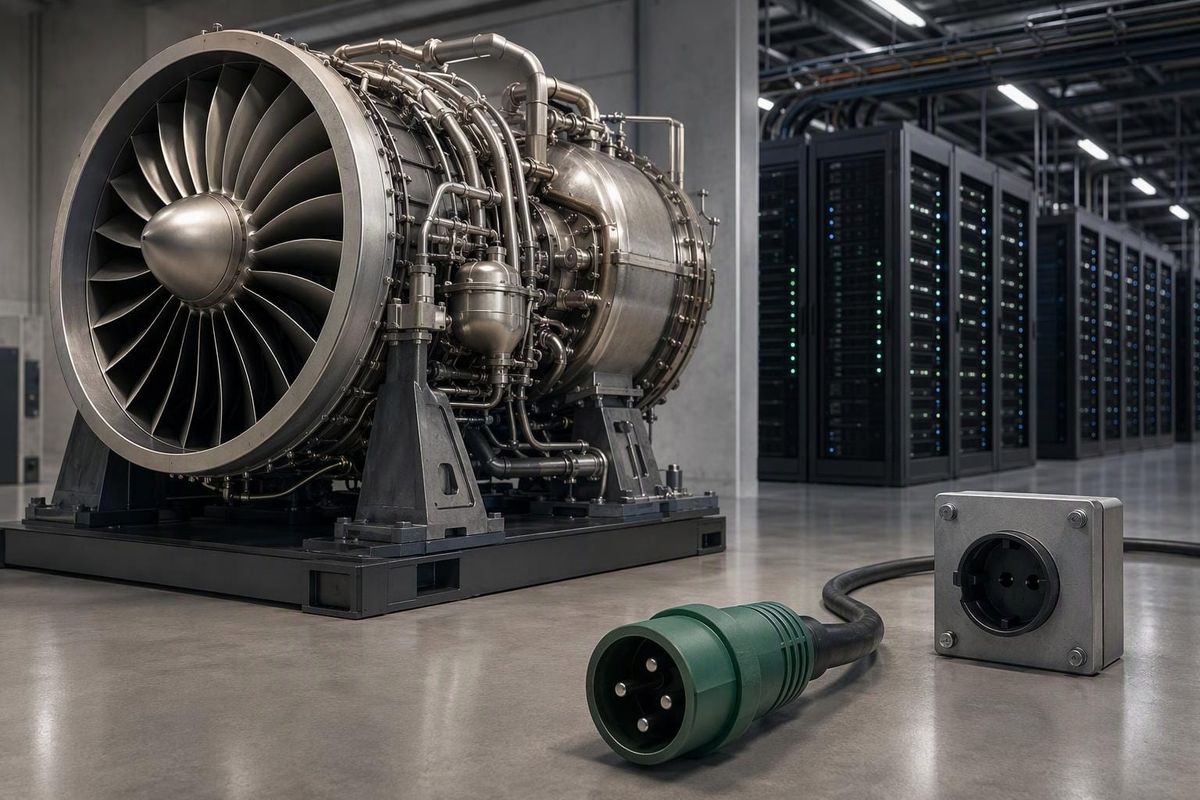
Baker Hughes is an energy technology company that makes equipment and provides services for oil and gas, liquefied natural gas, power generation and other industrial customers. Demand for AI data-center power is feeding orders at the industrial and energy technology unit, which makes gas turbines and compressors.
The oilfield services unit grew only 1%, as Middle East revenue stayed below year-earlier levels.
Remaining performance obligations of $46.4 billion give Simonelli's argument its weight: the question on the call was how fast that work converts into revenue.
Sources
- Baker Hughes stumbles as Q3 earnings fall short of high expectations (BKR:NASDAQ) | Seeking Alpha — seekingalpha.com
- Is Baker Hughes (BKR) Undervalued Following Its Q3 Earnings Beat And New Orders? — Yahoo Finance
- Baker Hughes: Q3 Earnings Snapshot — Associated Press
- Baker Hughes Q3 Profit Falls 33% as Orders Surge 31% | OilPrice.com — oilprice.com
- Baker Hughes Logs Higher 3Q Revenue on Growing Demand From Energy, Industrial Markets -- Update — MarketWatch
- The company's filing (Baker Hughes) — SEC filing
- Baker Hughes (BKR) Q3 Earnings and Revenues Surpass Estimates — Zacks Investment Research
- These 2 Oils and Energy Stocks Could Beat Earnings: Why They Should Be on Your Radar — Zacks Investment Research
- Baker Hughes — Form 10-Q for the quarter ended 2026-06-30 (quarterly results) — SEC EDGAR