Aura Biosciences Loses $32.1 Million — Eye-Cancer Trial Results Still Expected In 2027
Treatment is complete for all 108 late-stage trial participants, and Aura expects its funding to last into the first half of 2029.


Aura Biosciences, which develops cancer therapies intended to preserve organ function, reported a $32.1 million loss for the third quarter Monday, compared with $26.1 million a year earlier. Trial spending and restructuring costs rose as the company focused on eye cancers, with its lead drug’s main late-stage results expected in the second half of 2027.
Restructuring Adds To Trial Spending
Aura’s research and development bill reached $24.7 million, versus $22.2 million in the year-earlier quarter. The company attributed most of the increase to clinical work and outside research costs for its global bel-sar trial in early choroidal melanoma.
Administrative expenses reached $10.3 million, compared with $5.7 million. Approximately $4.5 million in restructuring charges were the main reason for that increase; the plan, completed during the quarter, aligned resources with Aura’s eye-cancer portfolio.
Those charges covered employee separation benefits and additional stock compensation from accelerated award vesting. Administrative stock compensation totaled $2.8 million, versus $1.7 million a year earlier.
Aura held $297.2 million in cash, cash equivalents and marketable securities at September 30. Management expects those resources to fund operations into the first half of 2029.
108 Participants Enter Follow-Up
All 108 participants in the late-stage trial have completed treatment and entered a 24-month observation period. The main analysis measures tumor progression at 15 months, with results expected in the second half of 2027.
The trial compares bel-sar with a sham treatment. An agreement with the FDA establishes alignment on the study design and planned analyses for a potential approval application; it is not drug approval.
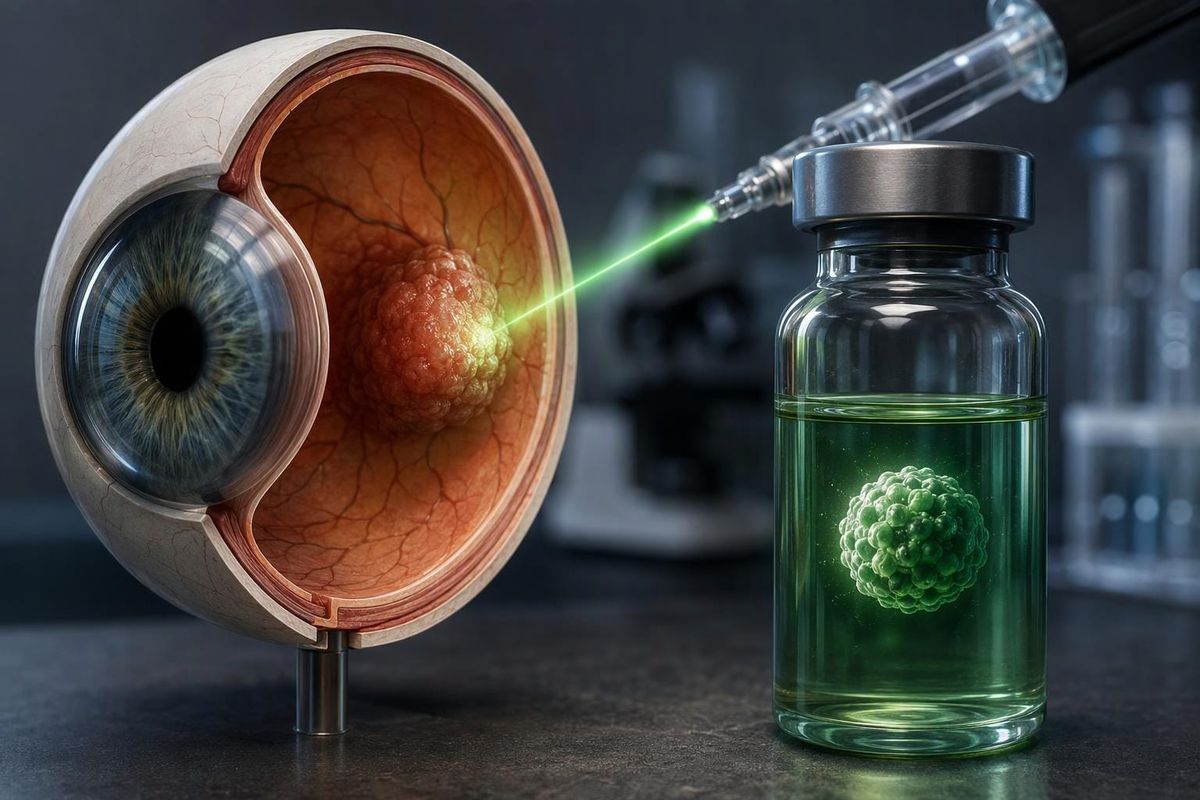
Bel-sar uses a modified human papilloma virus protein shell carrying light-activated molecules designed to kill tumor cells. Aura has no approved products, and bel-sar’s safety and effectiveness remain unestablished, with no approval in any jurisdiction.
The earlier study provides the evidence behind Aura’s ambitions, but on a small scale: its presentation reports 80% tumor control at 12 months among 10 patients who received the therapeutic regimen and qualified under the late-stage trial’s eligibility criteria. Vision was preserved in 90% of that group. The earlier study was open-label and tested escalating doses, rather than using the late-stage trial’s sham comparison.
Reserving Bel-Sar Production Capacity
Aura established a relationship during the quarter with a contract manufacturer experienced in viral-vector medicines. The companies are setting aside capacity for bel-sar’s development and potential commercial supply.
“Designated capacity is intended to provide us with long-term control over our production scheduling,” Susan Abu-Absi, Aura Biosciences’ chief operating officer, said in the company’s statement.
Aura also continues early clinical studies in cancers that spread to the choroid and cancers of the eye’s surface. It expects updates on both programs in the first quarter of 2027, including disease burden, study designs and schedules for future results.
Aura plans an investor event on December 8 focused on early choroidal melanoma, including current treatments, unmet need and an updated analysis of the disease’s frequency.
Sources
- 8-K Filing — Aura Biosciences, Inc. (AURA) — SEC EDGAR
- Exhibit aura-ex99_1.htm — Aura Biosciences, Inc. 8-K exhibit — SEC EDGAR
- Exhibit aura-ex99_2.htm — Aura Biosciences, Inc. 8-K exhibit — SEC EDGAR
- Aura Biosciences Reports Third Quarter 2026 Financial — globenewswire.com