Arbutus Argues Hepatitis B Cure Tally Could Rise To 11 From 10
Long-term follow-up showed five of eight patients maintained functional cure, while three lost that status but stayed partial cures.


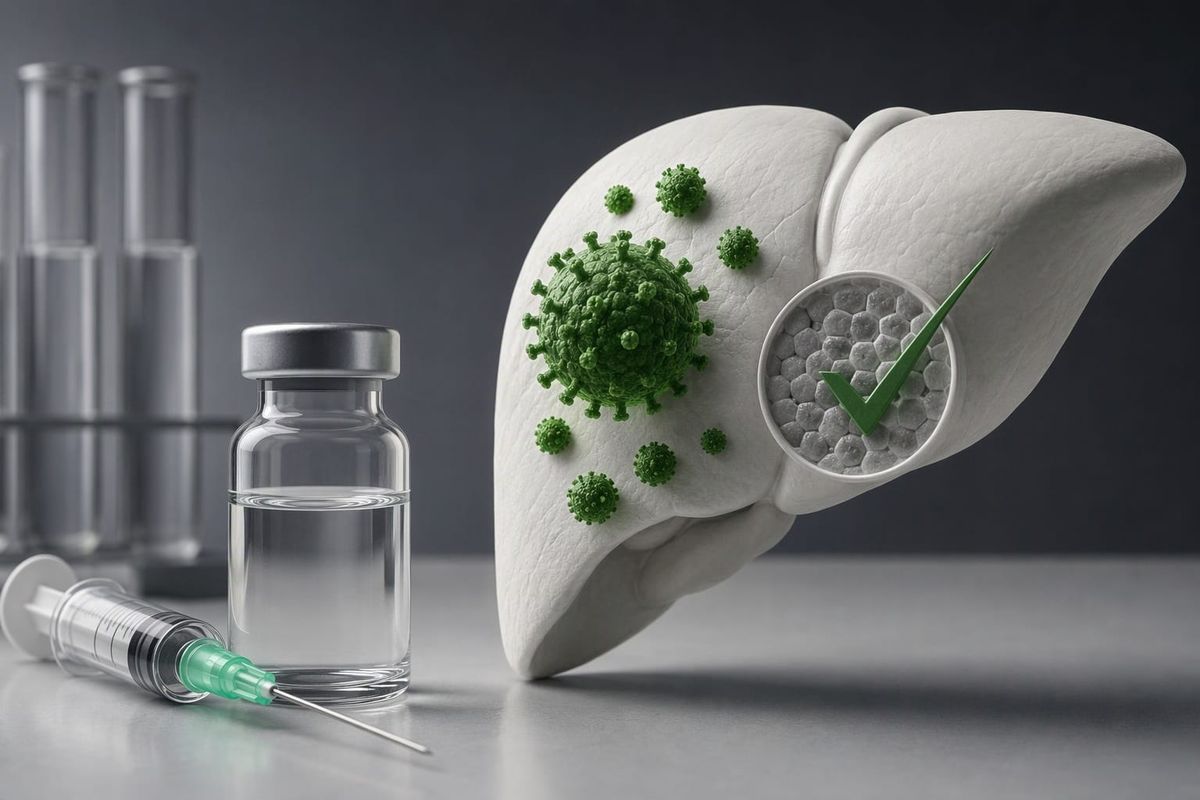
Arbutus Biopharma, which develops experimental infectious-disease medicines, argued Thursday that a revised assessment would likely raise its hepatitis B trial cure tally to 11 from 10. The case, outlined in a presentation accompanying an SEC filing, would reclassify a patient who remains off antiviral treatment.
A Different Test For Cure
Arbutus bases its proposed reassessment on criteria it said the FDA accepted for Hibsago, the approved hepatitis B medicine also known as bepirovirsen. Those criteria allow an isolated detectable virus or surface-antigen reading when the readings immediately before and after meet the specified undetectable thresholds.
Functional cure means hepatitis B surface antigen has cleared and viral DNA remains undetectable for 24 weeks without treatment. Surface antigen is a marker of the infection; the assessment measures whether patients sustain control after stopping therapy.
Under the approach Arbutus described, a qualifying isolated reading would not invalidate functional cure at 24 weeks. Consecutive detectable readings would count as relapse.
Arbutus said applying that approach to its mid-stage imdusiran trial involving immunotherapies would likely add a functional cure. The patient lost cure status after week 24 but continues without antiviral medicine. The proposed tally remains the company's interpretation of its trial results.
Cure And Staying Off Treatment
The long-term results show why the distinction matters. Five of eight patients who entered follow-up maintained functional cure; three lost that classification but still met partial-cure criteria.
Partial cure requires suppressed viral DNA and surface antigen below 100 international units per milliliter for 24 weeks after stopping antivirals. All 10 patients classified as having achieved functional cure in the mid-stage trials continued to have viral DNA below the test's quantification limit.
Across the mid-stage studies, 16 of 18 patients who stopped antiviral therapy remained off it through follow-up extending to 146-plus weeks. One additional patient achieved functional cure during follow-up; another who achieved it was not followed beyond 60 weeks.
The broader benefit measure combines cure with stopping antivirals: 48 of 105 mid-stage participants, or 46%, achieved functional cure or discontinued antiviral therapy. Those outcomes are distinct, and the combined percentage is not a cure rate.
Arbutus said imdusiran was generally well tolerated in more than 250 patients across clinical trials. Among repeat-dose recipients, it reported no related serious adverse events or safety-related discontinuations. The most common laboratory abnormality was an elevation in the liver enzyme ALT, at 6%, mostly mild or moderate; all returned to baseline.
Drug Development And Patent Cash
Imdusiran is an injected RNA-interference treatment designed to silence hepatitis B viral messages in the liver. Arbutus tested it with antiviral medicines and either pegylated interferon or immunotherapies. The company is evaluating a larger mid-stage trial and ways to accelerate development.
Arbutus also develops AB-101, an experimental oral drug targeting the immune-system protein PD-L1. It reported Tuesday that the FDA had lifted the hold on that program following an early-stage trial abroad.
Patent licensing provides another source of money. Arbutus licenses its lipid nanoparticle technology through Genevant Sciences, its exclusive licensee, and owns about 16% of Genevant's common equity. Arbutus is suing Pfizer and BioNTech over the technology's use in their COVID-19 mRNA vaccines.
Arbutus and Genevant settled global patent litigation with Moderna in March; Moderna paid them $950 million in July. Arbutus subsequently returned $230 million to shareholders through an early-October tender offer.
Arbutus had $104.6 million in cash and cash equivalents as of October 31. Its next imdusiran development step remains the larger mid-stage trial it is evaluating.
Sources
- 8-K Filing — Arbutus Biopharma Corp (ABUS) — SEC EDGAR
- Exhibit exh_991.htm — Arbutus Biopharma Corp 8-K exhibit — SEC EDGAR
- Arbutus Reports Third Quarter 2026 Financial Results and — globenewswire.com