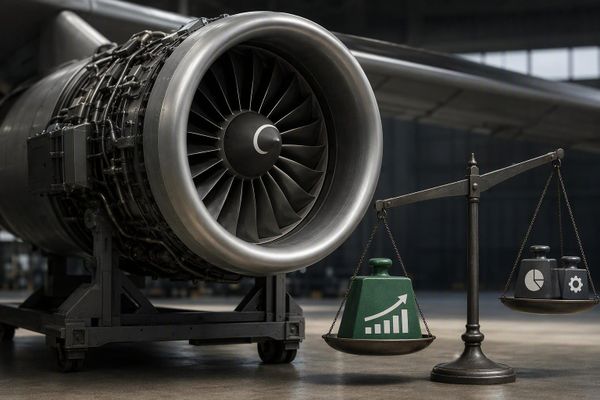
Align Starts US Pilot Of 3D-Printed Sports Mouthguard, A Market CEO Puts At $6 Billion To $8 Billion
CEO Joe Hogan called the move "180 degrees versus sleep apnea devices" and said Align will sell only through its existing channels.


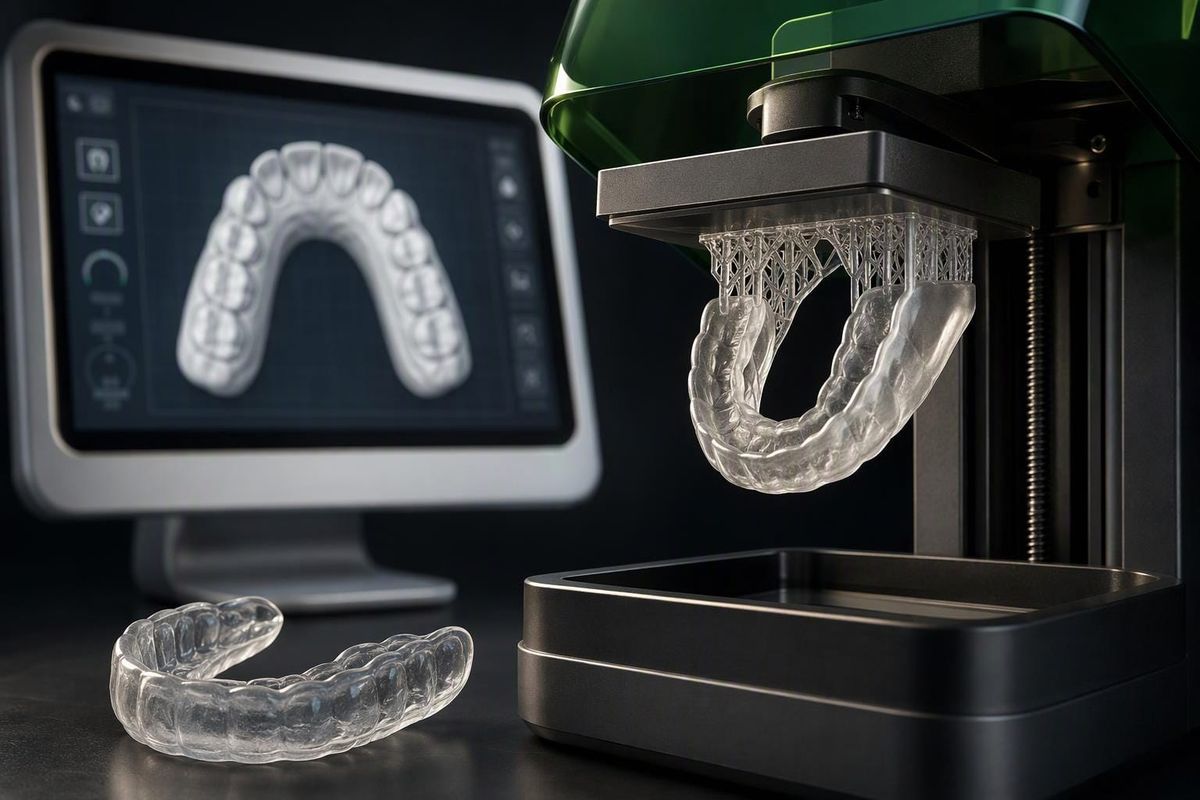
Align Technology, which makes Invisalign clear aligners and iTero scanners, begins a US pilot this week of a 3D-printed sports mouthguard, CEO Joe Hogan said on the company's third-quarter earnings call on Wednesday. Hogan put the sports mouthguard business at "anywhere between six to eight billion dollars."
A guard built from an iTero scan
Hogan, Align's president and CEO, said the Invisalign sports guard is a custom, directly 3D-printed mouthguard made from an iTero digital scan. It comes in multiple thickness options and will be sold through participating Invisalign providers.
He said Align developed a resin with significant advantages over those used in mouthguards today, and that the printing allows designs tailored to a specific sport. The market, he said, is primarily "boil and bite," which he described as non-exact manufacturing.
An analyst at UBS asked whether shoppers would find an Align guard at a store like Dick's Sporting Goods. Hogan said Align will keep to its channel strategy and not go outside it. He called the guard a premium product that won't hurt the retainer business, and said "almost every orthodontist we have out there is asking for mouth guards." He also said the company expects the product to build awareness of Invisalign among kids and teens.
Not sleep apnea, Hogan says
An analyst at Stifel asked whether the guard marks a push into adjacencies and whether Align is a clear aligner company or a 3D printing company. Hogan recalled that sleep apnea was on the table when he arrived, but he considered the technology diversionary, the channel and reimbursement system unfamiliar, and the product hard to make at scale.
Mouthguards, by contrast, can be sold through current channels "without any kind of friction," he said. "I look at it as 180 degrees versus sleep apnea devices."
Hogan described the pilot as one step in a roadmap that includes more orthodontic uses and wider application of direct 3D printing to aligner treatment. Align's next-generation 3D-printed materials platform is called NXT, and the Invisalign Palatal Expander was its first directly printed orthodontic appliance.
The quarter behind the pitch
Third-quarter revenue rose 1.9% from a year earlier to $1.015 billion, and clear aligner shipments rose 6.6% to 691,000. Systems and services revenue fell 7.6% to $175.5 million as customers shifted to lower-priced scanners and leasing. The installed base of scanner units placed, including leased, rented and certified pre-owned systems, passed 157,000 worldwide.
Align expects 2026 revenue of about $4.11 billion to $4.13 billion and plans roughly $500 million of share buybacks this year. Align also announced on Wednesday that Jennifer Davis will join as CEO-elect on November 2 and take over as CEO on December 31, succeeding Hogan, who is stepping down. Align's market value was $10.8 billion after the report.
Davis takes over as CEO on December 31, and Align will give its full 2027 outlook with fourth-quarter results.
Sources
- Align Technology appoints new CEO (ALGN:NASDAQ) | Seeking Alpha — seekingalpha.com
- Align Technology Non-GAAP EPS of $2.80 beats by $0.04, revenue of $1.01B beats by $10M (ALGN:NASDAQ) | Seeking Alpha — seekingalpha.com
- Invisalign’s Moment of Truth: Will International Growth Save ALGN on Oct 28? — Yahoo Finance
- Align Technology: Q3 Earnings Snapshot | wusa9.com — Associated Press
- Is the Options Market Predicting a Spike in Align Technology Stock? — Yahoo Finance