Yum China Lifts 2026 Store-Opening Target To Over 2,400, Citing Pizza Hut Royalty Savings
CEO Joey Wat said buying back Pizza Hut ends a 2.8% royalty, so more new stores can meet the company's payback bar.


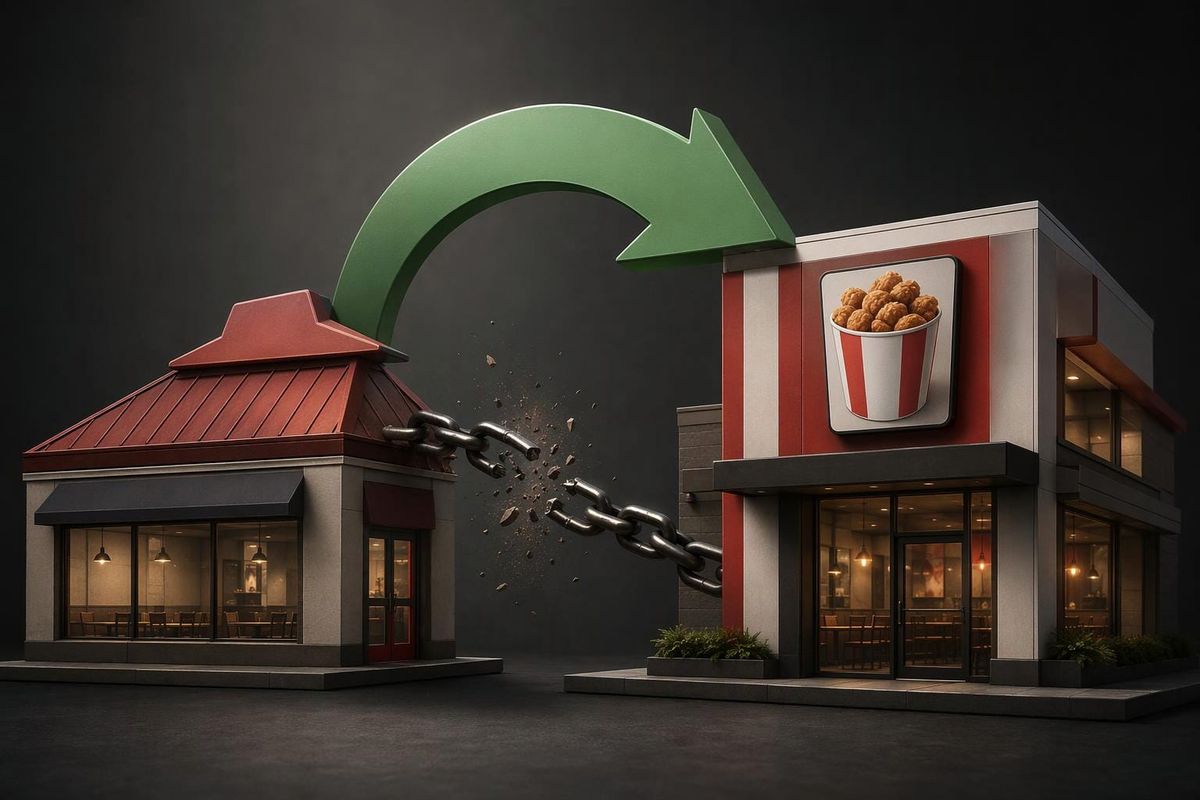
Yum China, which runs KFC and Pizza Hut restaurants in China, raised its 2026 net store-opening target from 1,900 to over 2,400, CFO Adrian Ding told analysts on the company's Tuesday earnings call. CEO Joey Wat said on the same call that buying back the Pizza Hut brand removed a 2.8% royalty and helped more new stores meet the company's return test.
Royalty gone, payback bar stays
Wat said the company holds new stores to a strict standard: "We want our new store to deliver two to three years payback." She called that the quality requirement "before we talk about the numbers."
Buying back the Pizza Hut brand, she said, means Yum China no longer pays the 2.8% royalty. That expands margin and lets more stores qualify, so the company "can up the target." Yum China said in its results release that it completed the brand purchase on Aug. 7, 2026.
Ding put the new target at roughly 13% of last year's store base. The company had 18,101 restaurants as of December 31, 2025, according to its annual report.
Double white space in smaller cities
Ding pointed to room to grow as the main driver. More than half of new openings are in lower-tier cities, strategic channels or trade zones with no existing dine-in or delivery coverage, which he called "double white space." Management uses small-format models, including KFC Small Town and Pizza Hut Wow, to push into those markets.
Wat said more than 1,500 Chinese cities have KFC but no Pizza Hut. Ding said the faster opening pace should continue for the next few years and, with solid same-store sales, should support the three-year guidance from last November's investor day for both top line and bottom line.
Margin math and labor costs
A UBS analyst asked how 30 basis points of group margin expansion squares with a drop of more than 200 basis points in Pizza Hut occupancy costs as a share of revenue. Ding said the 30 basis points is for the whole group, and that he believes the effect on Pizza Hut itself is around 160 to 170 basis points.
On labor, Ding said pressure from rider costs should be much more moderate next year than this year, with delivery mix broadly stable. Rider costs added only 30 basis points of cost in the third quarter, against more than 150 basis points in the first half. Labor cost as a share of sales will not fall, he said, but should stay broadly stable.
Wat said 70% to 80% of KFC and Pizza Hut stores are run by managers who oversee two to four stores. She said their take-home pay has risen by mid-teens in the last two to three years while overall labor cost held steady.
In Tuesday premarket reporting, the stock was up 2.84% with a market value of $15.8 billion.
Sources
- Yum China Holdings (YUMC) Meets Q3 Earnings Estimates — Yahoo Finance
- Yum China meets Q3 earnings expectations, raises 2026 store-opening target (YUMC:NYSE) — seekingalpha.com
- Yum China: Q3 Earnings Snapshot — Associated Press
- Yum China Reports Third Quarter 2026 Results – Company Announcement - FT.com — Financial Times
- Yum China Board Welcomes New Board Member — Yahoo Finance