Yum CFO On Pizza Hut Leftover Costs: 'I Don't Like It, But It Is Manageable'
Ranjith Roy promised "a clean 2028," but said parts of 2027 could carry about $2.5 million a month in Pizza Hut transition costs.


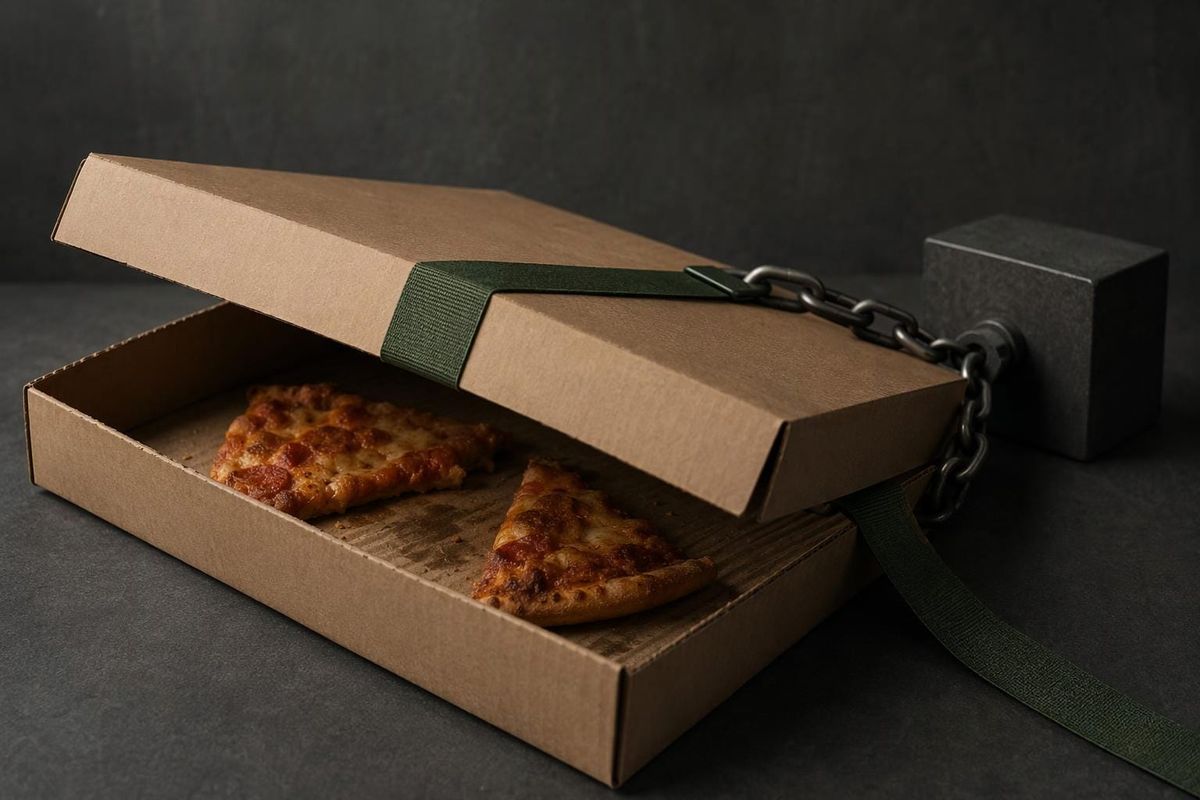
Yum Brands, the parent of KFC, Taco Bell and Habit Burger & Grill, may carry part of about $2.5 million a month in leftover Pizza Hut support costs through parts of 2027, CFO Ranjith Roy told analysts on the company's earnings call Tuesday. Answering a Wells Fargo question on offsetting the dilution from the sale, he said: "I don't like it, but it is manageable, it is contained, and it is temporary."
Why the costs linger
Yum is still servicing the buyers of Pizza Hut under about 74 transition services agreements, Roy said. The fees sit in other income, while the costs they cover sit in general and administrative expense: people, facilities, infrastructure, subleases and pass-through third-party contracts.
The agreements are due to roll off by mid-2027. Roy said it is "not practical for us to line up cost management perfectly with when the TSAs roll off," so there may be temporary stretches in parts of 2027 when the P&L is exposed to some of the roughly $2.5 million a month. He promised a clean 2028.
The fourth-quarter outlook already carries the burden. Yum guided to general and administrative costs, excluding special items, of $285 million to $305 million, including about $2.5 million a month of corporate cost previously allocated to Pizza Hut. Offsetting fee income is expected to taper off by mid-2027, and Roy said the company expects to mitigate the costs over time.
Cash and the debt queue
Yum ended the third quarter with $2.1 billion in cash, after receiving approximately $2.4 billion in net proceeds from selling Pizza Hut to Long Range Capital and Yum China. It repaid a $675 million revolver balance and repurchased $543 million of stock in the quarter.
On deploying the cash, Roy said excess capital will go back to shareholders after near-term maturities are handled, mainly through refinancing. Yum expects to address $1.6 billion of maturing debt between now and the first half of next year. Net leverage is running materially below the company's roughly four-times target, he said, and the capital allocation framework is unchanged.
CEO Chris Turner would not discuss a new long-term growth formula, saying: "I'm not going to get ahead of any potential long-term guidance or updates to our algorithm today."
A three-brand company
Yum completed the Pizza Hut sale at the beginning of September, a quarter it also marked by a food safety issue that hit Taco Bell U.S., where same-store sales fell 4%. Excluding Pizza Hut, system sales rose 3% and core operating profit rose 1%. The sale produced a pre-tax gain of approximately $1.7 billion.
Taco Bell's same-store sales have been up about 1% quarter to date, Roy said, and roughly 3% over the trailing four weeks.
Yum reports fourth-quarter results on February 3, the first full quarter under the new G&A range.
Sources
- Yum Brands (YUM) Q3 2026 earnings — CNBC
- YUM Set to Report Q3 Earnings: KFC Growth & Taco Bell Trends in Focus — Yahoo Finance
- Yum! Brands reports Q3 results as KFC growth offsets Taco Bell sales decline (YUM:NYSE) | Seeking Alpha — seekingalpha.com
- Yum! Brands Q3 2026 earnings: revenue rises despite Taco Bell slump — qz.com
- Yum: Q3 Earnings Snapshot | wusa9.com — Associated Press