Visteon Sees 2027 Memory And Electronics Costs 'In The Range' Of 2022's Roughly $500 Million
The cockpit-electronics maker says it expects to recover all of the incremental cost from automakers, and will update in February 2027.


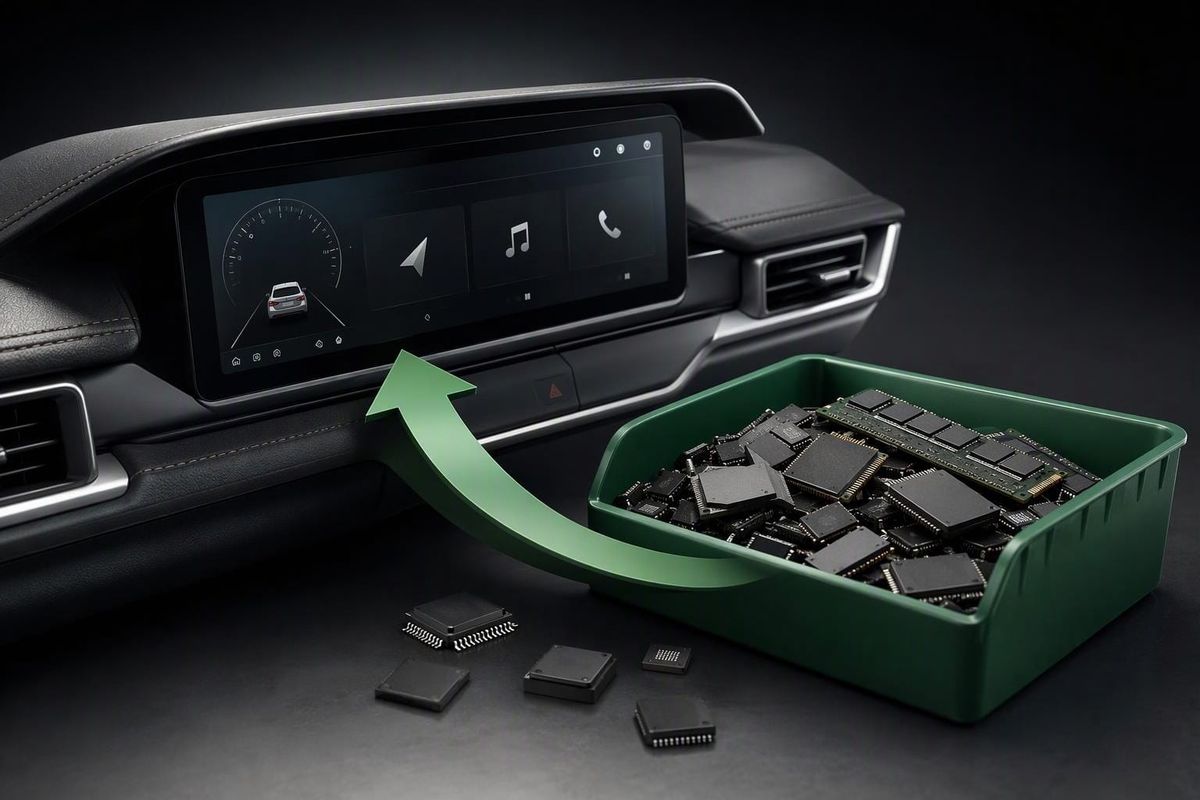
Visteon expects its 2027 increase in memory and other electronics costs to land "in the range of what we saw in 2022," CEO Sachin Lawande said on the third-quarter earnings call, putting that year's hit at "roughly $500 million" of incremental cost. Visteon, which makes digital instrument clusters, displays and cockpit computers for automakers, plans to recover all of it from customers.
An indicative $500 million range
Lawande said the figure combines memory with other electronic components, printed circuit boards in particular. He called it an indicative range only: pricing with Micron and new suppliers is still being finalized, and the outcome depends on customers' content choices and production volumes.
CEO Lawande said the company has secured a substantial portion of 2027 memory demand through supply agreements and commitments from new suppliers, but at higher cost. Memory costs will exceed the assumptions Visteon laid out at its June investor day.
An analyst, who said the inflation looked almost three times what had been discussed before, asked what levers exist beyond recoveries, such as fixed-cost or R&D cuts. CFO Jerome Rouquet said the aim is to keep EBITDA dollars untouched, using recoveries, productivity, other material costs and commercial recoveries. Given the size of the costs, he said, recovering them "will become imperative."
Why memory costs will not fall back
Lawande called the memory change structural, as the industry shifts from DDR4 to DDR5. Costs "are not going to go back to the 2025 levels," he said, though they may moderate beyond 2027, and he expects Visteon to recover all of the incremental cost.
Printed circuit board inflation is different, he said: a timing issue tied to shortages of components for high-layer boards, which he expects to correct as supply returns.
Visteon bought into 2027 supply by purchasing a full year of demand for chips going out of production, Lawande said, which means cash outlays early in the year and a lumpy cash flow.
A 2026 squeezed by inflation and warranty charges
Third-quarter sales rose 6% to $970 million. Adjusted EBITDA was $46 million, or $123 million excluding $77 million of warranty charges on two instrument cluster programs. Customer recoveries fully offset memory cost increases in the quarter, but about $10 million leaked from a second wave of inflation in circuit boards and other parts.
Visteon cut its full-year adjusted EBITDA outlook to $370 million to $410 million, from $455 million to $495 million. It now expects component inflation to equal about 3.25% of full-year sales, and does not expect to offset it fully this year. Adjusted free cash flow guidance fell to $90 million to $130 million, from $170 million to $210 million.
Visteon shares fell about 6% to $80.02 in Thursday trading, for a market value of $2.3 billion. Rouquet said the company will provide an update in February 2027.
Rouquet said Visteon will give its next update on 2027 costs and recoveries in February 2027.
Sources
- Visteon Q3 2026 Earnings Call Transcript — benzinga.com
- Visteon: Q3 Earnings Snapshot – WTOP News — wtop.com
- Top Auto Suppliers: Deutsche Bank’s Picks Ahead of Third Quarter — Yahoo Finance
- Visteon (VC) Lags Q3 Earnings Estimates — Yahoo Finance
- Visteon Announces Third Quarter 2026 Financial Results – Company Announcement - FT.com — Financial Times