Viridian Targets Eight-Week Autoimmune Injections After 74% Antibody Reduction In Healthy Volunteers
The company plans a myasthenia gravis trial in mid-2027, pending regulatory feedback, as it expands beyond thyroid eye disease.


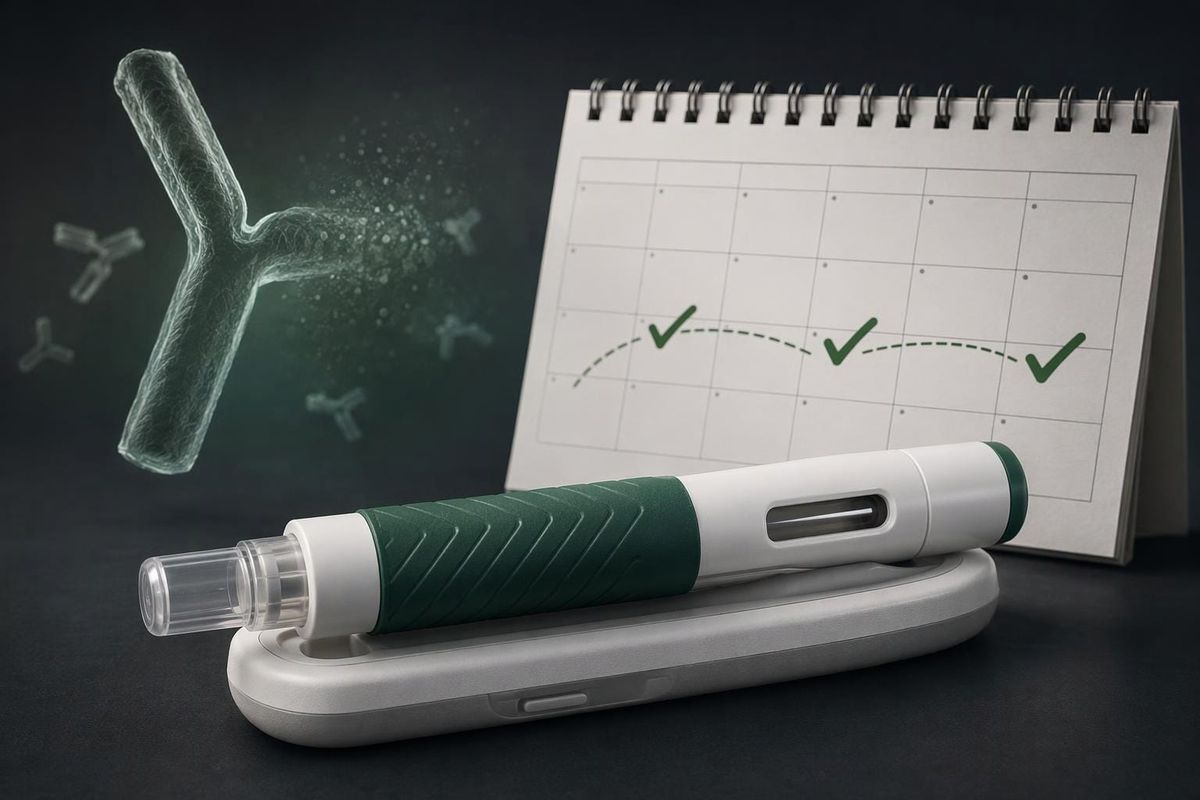
Viridian Therapeutics, which develops medicines for autoimmune and rare diseases, reported a 74% peak reduction in IgG antibody levels in six healthy volunteers receiving its experimental treatment VRDN-008, according to an SEC filing Monday. The company believes the results support developing injections spaced eight weeks apart, with a myasthenia gravis trial planned for mid-2027 pending regulatory feedback.
Eight-Week Dosing Still Needs Testing
The volunteers received injections when the study began and again four weeks later. Antibody suppression persisted through eight weeks after dosing, but the study tested a different schedule from the every-eight-week regimen Viridian hopes to advance.
VRDN-008 had a 15–18 day half-life—the time needed for its concentration to fall by half. Viridian said that was up to six times longer than first-generation Fc fragments. Its modeling of the early-stage results supports testing both four-week and eight-week injection schedules.
Participants experienced no serious adverse events or toxicities that prevented further dosing. The company described the treatment as generally well tolerated, with albumin and LDL levels spared. These are results from healthy volunteers, rather than evidence of disease control in patients.
Myasthenia Gravis Leads The Expansion
Viridian plans at least one pivotal trial—a study intended to support an approval application—in 2027. The proposed myasthenia gravis study would compare both dosing schedules with placebo, using the wearable enFuse injector.
“We plan to advance VRDN-008 rapidly into registrational development starting with MG in mid-2027, pending feedback from regulatory authorities,” said Steve Mahoney, president and CEO of Viridian, in the trial announcement.
VRDN-008 was licensed from Paragon Therapeutics. The FcRn inhibitor combines an Fc fragment with an albumin-binding component designed to keep antibody suppression lasting longer. Viridian intends to concentrate its FcRn clinical development on VRDN-008, while leaving open future development opportunities for VRDN-006.
Viridian also plans to study VRDN-008 in additional autoimmune diseases involving antibodies that attack the body's own tissues. The company licensed exclusive worldwide rights to enFuse for FcRn-targeted treatments in January 2023. Developed by Enable Injections, the hands-free device is designed for self-injection at home.
Lumvoa Provides A Commercial Foundation
Viridian's existing business centers on thyroid eye disease, a rare autoimmune condition that inflames tissue around the eye. Its FDA-approved treatment Lumvoa generated $24.7 million in net product revenue in the third quarter, and more than 100 patients were receiving therapy as of September 30, according to Wednesday's financial update.
Viridian reported $955.2 million in cash, cash equivalents and marketable securities. The company also plans to seek FDA approval for elegrobart, its experimental thyroid eye disease treatment delivered under the skin, in the first quarter of 2027.
The planned myasthenia gravis trial would put Viridian's proposed eight-week schedule to the test in patients, alongside four-week dosing and placebo; its mid-2027 start remains subject to regulatory feedback.
Sources
- 8-K Filing — Viridian Therapeutics, Inc.\DE (VRDN) — SEC EDGAR
- Exhibit d106932dex991.htm — Viridian Therapeutics, Inc.\DE 8-K exhibit — SEC EDGAR
- Viridian Therapeutics Announces Positive VRDN-008 Phase 1 Results Supporting Potential Best-in-Class Profile with Every-8-Week Subcutaneous Dosing — businesswire.com
- Viridian Therapeutics Reports Third Quarter 2026 Financial Results and Highlights Recent Business Progress — businesswire.com
- Viridian Therapeutics to Host Conference Call to Present VRDN-008 Phase 1 Data and FcRn Portfolio Plans on November 9, 2026 — businesswire.com