Uber's R&D Bill Jumps 48% As A New Cost Allocation Moves Network Spending Out Of Cost Of Revenue
A July accounting change shifted network costs into operating expenses, with no effect on operating income, Uber says.


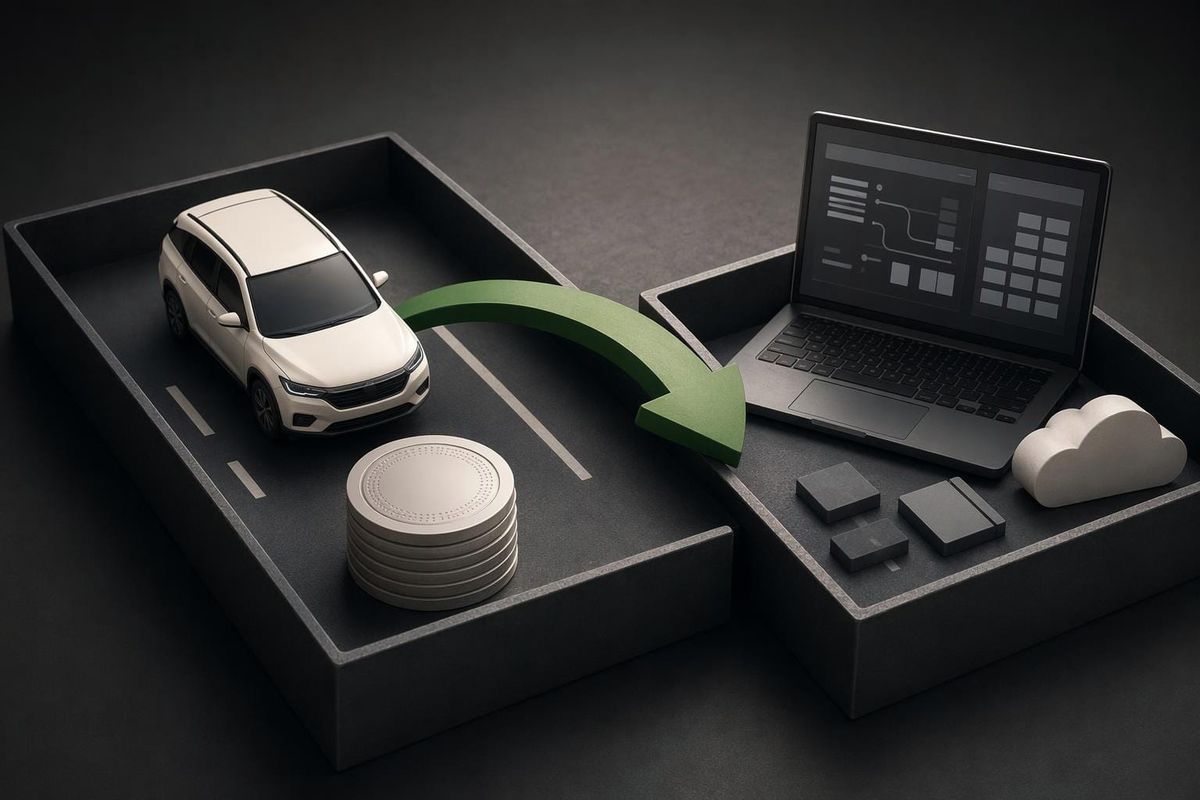
Uber's research and development expense jumped 48% to $1,273 million in the third quarter, while cost of revenue rose only 3%, and part of the gap comes from a July change in how the company allocates network costs. The 10-Q filed Wednesday says the change moves some spending between expense lines and leaves operating income, net income and earnings per share untouched.
A reclassification, not a new cost
Uber, which runs a platform connecting riders, eaters and shippers with drivers, couriers, merchants and carriers, said it refined its method for allocating network costs across lines of business and expense categories to better reflect actual consumption. It calls the move a change in estimate, applied going forward from July 1, 2026, so earlier periods were not recast.
Some network spending that used to sit in cost of revenue now lands in operating expenses. The company says operating income, net income and diluted earnings per share are unaffected.
R&D rose $411 million from $862 million a year earlier. The 10-Q credits a $255 million increase in employee pay, including stock-based compensation, and a $130 million increase in network costs, primarily due to the new allocation method. For the first nine months, R&D rose 30% to $3,267 million, with a $173 million network-cost increase attributed mainly to the same change.
Cost of revenue looks lighter
Cost of revenue, excluding depreciation and amortization, rose 3% to $8,349 million from $8,109 million. It equaled 57% of revenue, against 60% a year earlier. The nine-month discussion cites a $129 million increase in network costs from higher usage, partly offset by the allocation change.
The change was not mentioned in the prior 10-Q. Uber does not give a dollar figure for the amount moved out of cost of revenue.
Two shifts muddy the comparison
Cost lines are already distorted by a UK business-model change effective January 2, 2026, under which driver payments are netted against revenue. The 10-Q says it cut third-quarter revenue by $1.1 billion and cut driver payments in cost of revenue by the same amount.
Revenue rose 10% to $14,766 million. Income from operations rose 30% to $1,447 million, while net income attributable to Uber fell to $512 million from $6,626 million, which included a $476 million pre-tax net loss on revaluing equity stakes this quarter and a $4.9 billion tax benefit a year earlier, per the earnings release.
The filing also carries a $6,816 million gross notional deal-contingent currency forward that hedges the euro purchase price of Delivery Hero, settling only if the takeover closes. Uber expects that deal to close in the second half of 2027.
Uber's market value stood near $136.0 billion after the report on Wednesday; the fourth-quarter 10-Q will show the first full quarter under both the UK change and the new allocation.
Sources
- 10-Q Filing — Uber (UBER) — SEC EDGAR
- 10-Q Filing — Uber (UBER), Q2 FY2026 filed 2026-08-05 (comparison basis) — SEC EDGAR
- 8-K Filing — Uber, filed 2026-11-04 (Items 2.02, 5.02, 9.01) — SEC EDGAR
- Earnings release (8-K Item 2.02, uberq326earningspressrelea.htm) — Uber, filed 2026-11-04 — SEC EDGAR
- Uber (UBER) Q3 2026 earnings — CNBC
- PYMNTS | Uber Battles Driver Shortage as Gross Bookings Jump 20% — pymnts.com
- Uber Earnings: Strong Delivery Growth Helps Ease Some Mobility Concerns but Not All | Morningstar — morningstar.com
- Uber Stocks Rise 7.42% as Driverless Fleet Targets Shift Focus to Commercial Returns — Yahoo Finance
- Uber’s Delivery Business Catches Up to Ride-Sharing. Robo-Taxis Are Next. — Barron's