Trinity Trims Its 2027 Railcar Delivery View To 30,000-35,000, Still Calls 2026 The Low
CEO Jean Savage lowered her top-end 2027 industry forecast from 35,000 cars, while Trinity's order rates rose 40% from the second quarter.


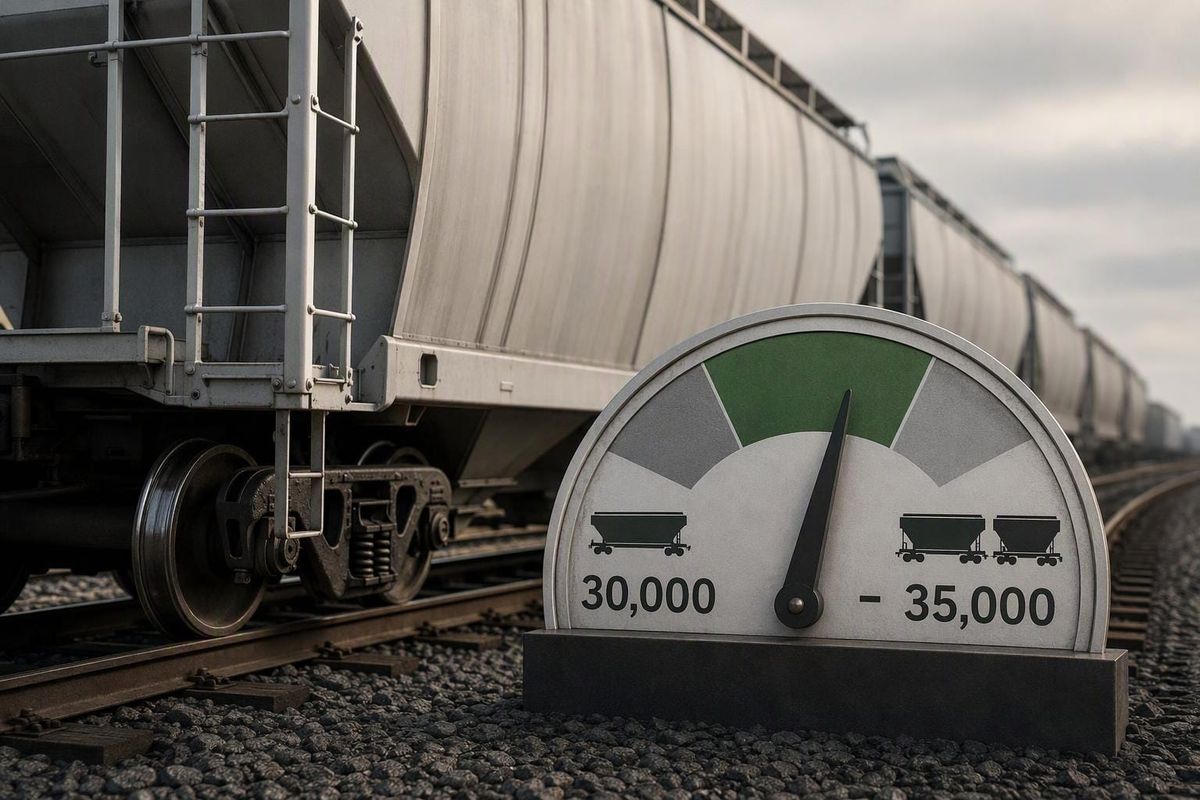
Trinity Industries, which leases, makes and services railcars in North America, now sees industry deliveries of 30,000 to 35,000 cars in 2027, CEO Jean Savage said on the company's third-quarter earnings call Thursday. She had previously cited 35,000 units, and she still calls 2026 the cyclical low.
A narrower 2027 view
Savage told analysts that she is "now saying between 30 and 35,000 cars," which is still up significantly from this year. She said the revision rests on the delivery rate and the order rate.
Her 2026 projection, built from three quarters of industry data plus a projected fourth quarter, comes to just over 23,000 cars. Chief Financial Officer Eric Marchetto said the industry has delivered 16,000 railcars so far this year and expects fewer than 25,000 for 2026. He said Trinity is not giving formal 2027 guidance; Savage said it will provide guidance next quarter.
The industry is on track to scrap about 40,000 railcars in 2026, Savage said, well above new production. She said October was the 17th consecutive month of fleet contraction, and cars in storage stand at 18%, the lowest since May 2023.
Orders up 40%, steel and tariffs in the way
Trinity's order rates rose 40% from the second quarter, Savage said. Railroads, lessors and shippers are all ordering, with agriculture and chemical cars strongest and much of it replacement demand.
Tank cars lag. Savage said hot-rolled coil and plate steel prices are up 63% from a year ago, mills have doubled lead times, and higher steel costs, higher interest rates and tariff uncertainty are leading some tank car owners to delay orders.
On tariffs, she said Trinity is not currently paying Section 232 duties and is waiting on a clarification from US customs. Under current rules she described, the tariff on a tank car would be 25% with less than 85% US melt-and-pour steel and 10% at 85% or more. She said Trinity believes it meets the 85% test and is building a 10% tariff into tank car quotes.
Union Tank Car, a Berkshire Hathaway subsidiary, has filed anti-dumping and countervailing duty petitions on tank cars imported from Mexico. Savage said Trinity disagrees and will defend vigorously, expects a final outcome late next year, and has seen no customers delay backlog orders.
Lease rates and the quarter
Marchetto said he is "very bullish that lease rates will continue to increase," citing steel-driven asset prices and rising interest rates. The future lease rate differential was essentially flat in the quarter, which Savage attributed to having repriced most of the fleet. Renewal rates were 4.1% above expiring rates, fleet utilization was 97% and the renewal success rate was 89%.
Revenue rose 18% from a year earlier, operating profit was $96 million, down 19%, and earnings per share were 27 cents. That includes a $13.4 million gain on a Longview facility sale worth 12 cents a share, which Marchetto said sits inside full-year EPS guidance, held at $2.20 to $2.40.
Trinity raised its expected secondary-market railcar gains for the year to $180 million to $200 million. Year to date it has generated $243 million of cash and returned $119 million to shareholders, including $23 million of buybacks in the quarter. In October it closed a $350 million term loan and bought Rubber Lining Specialist, an Orange, Texas, servicer of rubber-lined railcars; Savage called the deal not material.
Savage said Trinity will give its 2027 guidance when it reports next quarter.
Sources
- Trinity Industries: Q3 Earnings Snapshot – WTOP News — wtop.com
- Trinity Industries, Inc. (TRN) Stock Forecasts — Yahoo Finance
- Trinity Industries Q3 2026 Earnings Preview | Seeking Alpha — seekingalpha.com
- Trinity Industries, Inc. Announces Third Quarter 2026 Results — businesswire.com