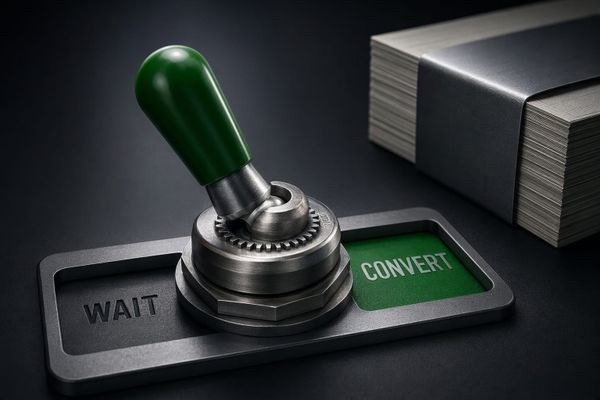
TG Therapeutics Sees Self-Administered BRIUMVI Potentially More Than Doubling Its Peak-Sales Opportunity
Management plans an auto-injector launch in 2028, while raising its U.S. product-sales forecast to $915–920 million.


TG Therapeutics, which develops and sells medicines focused on multiple sclerosis, sees a self-administered version of BRIUMVI potentially more than doubling the brand’s peak-sales opportunity, Chief Commercial Officer Adam Waldman said on Monday’s earnings call. The company also raised its U.S. product-sales forecast to $915–920 million from $890–905 million.
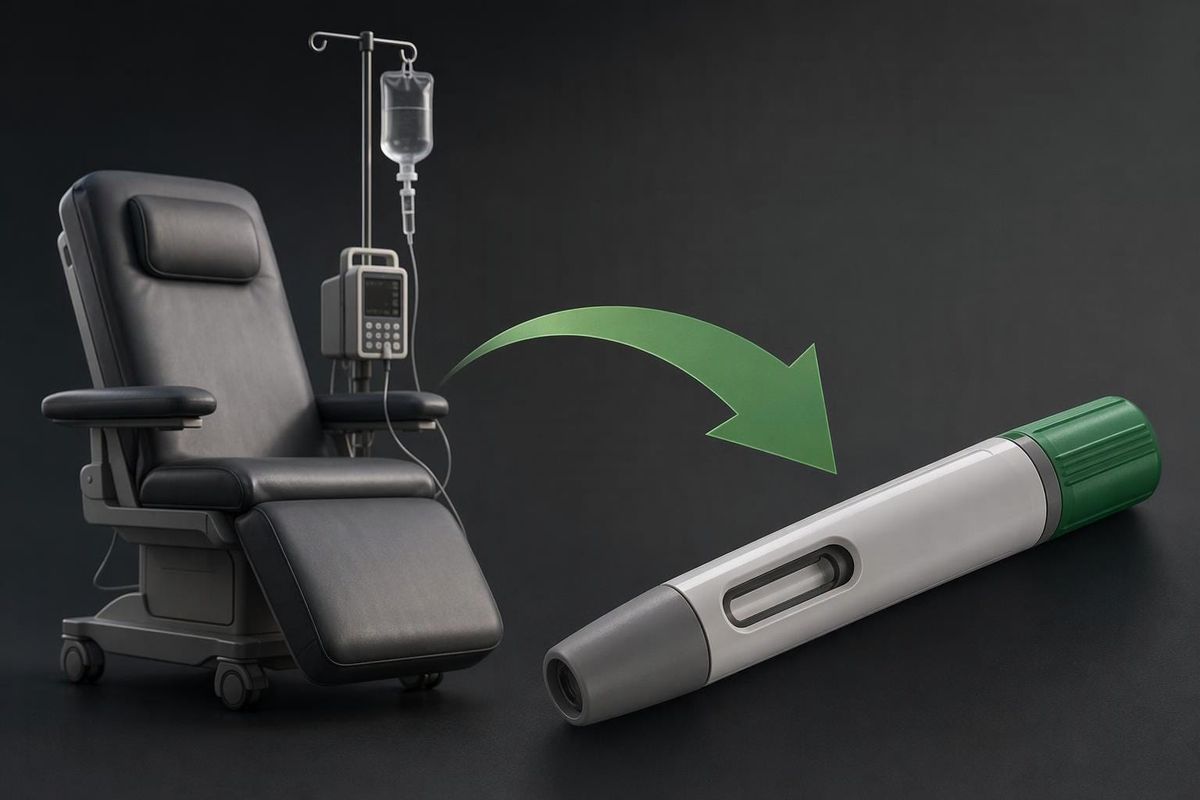
Reaching Patients Beyond The Infusion Chair
Approximately 35% of new treatment starts for anti-CD20 medicines involve self-administration, Chairman and Chief Executive Officer Michael Weiss said. BRIUMVI currently treats adults with relapsing multiple sclerosis through intravenous infusion, leaving that segment outside its reach.
The proposed injection would be taken once every three months. Weiss expects adoption could be faster than the infusion launch because TG already has physician relationships, an established brand and a sales team serving the same patients.
Waldman said the existing commercial organization could sell the injection without a separate buildout. “We're looking to build two substantial businesses under one brand,” he said. Management intends to keep supporting the infusion product alongside the injection, and Waldman said the intellectual-property portfolio extends into the mid-2040s.
TG sells BRIUMVI in the United States; Neuraxpharm sells it in certain overseas markets, including Germany, under an agreement that pays TG milestones and sales royalties. Weiss recalled describing BRIUMVI on the previous call as the foundation for further investment, supplying both commercial capabilities and financial resources.
The Pen And Manufacturing Test
An analyst from Jefferies pressed management on the injection device and manufacturing preparations. Weiss reaffirmed plans to launch with an auto-injector, with a bridging study intended to accompany the FDA approval application. Chief Development Officer Harry Miskin said manufacturing readiness was incorporated into the potential 2028 launch timetable and described the intended device as a familiar pen-like injector.
The late-stage study is fully enrolled, with results expected around year-end or early 2027. A commercial launch remains conditional on successful development and regulatory review.
Miskin reported estimated bioavailability of approximately 62% for the injection relative to intravenous delivery—a measure of how much medicine reaches circulation. Modeling for the 400-milligram quarterly regimen predicted exposure sufficient to clear the ongoing trial’s threshold for comparison with the infusion.
In the early-stage study, all patients on the fully injected 400-milligram regimen achieved B-cell depletion within four days, sustained across dosing intervals. Miskin said observed injection reactions were limited and mild. Those findings support the proposed schedule; the late-stage results remain ahead.
TG is also targeting potential approval around mid-2027 for a simplified infusion start that combines the first two doses into one 600-milligram infusion. Waldman said pricing would not change. Weiss expects any additional sales benefit to emerge later in the second half of 2027 as treatment centers implement the regimen.
The Infusion Business Funds Expansion
Chief Financial Officer Sean Power reported third-quarter U.S. net product sales of $233 million, up 52% from a year earlier. Global revenue was approximately $260 million, up 61%, and management raised its full-year global target to approximately $1 billion. Diluted earnings were $0.35 per share.
Waldman said patients receiving their first treatment now account for approximately 40% of new patient business, versus approximately 25% at launch. Around one-third of new starts still come from patients switching from another anti-CD20 medicine. October set a monthly prescriber record, while September and October were the strongest hospital months since launch, he said.
Power reported $86 million in operating income, compared with $29 million a year earlier, and approximately $557 million in cash and investments at September’s end. TG bought back $100 million of stock during the quarter while continuing to fund injection and secondary-source manufacturing preparations.
TGTX shares had gained about 101% since the beginning of 2026 as of Monday’s report. The next development milestone is the injection study’s expected year-end or early-2027 readout.
TG’s commercial plan uses infrastructure already in place. Its proposed quarterly injection still has to pass the late-stage study and regulatory review before that plan can become a second business.
Sources
- TG Therapeutics GAAP EPS of $0.35 misses by $0.01, revenue of $259.9M beats by $14.45M (TGTX:NASDAQ) | Seeking Alpha — seekingalpha.com
- TG Therapeutics (TGTX) Beats Q3 Earnings and Revenue Estimates — Yahoo Finance
- TG Therapeutics: Q3 Earnings Snapshot | 9news.com — Associated Press
- TG Therapeutics (TGTX) Reports Initial Phase 1 Azer Cel Data In Progressive MS — Yahoo Finance
- TG Therapeutics Reports Third Quarter 2026 Financial Results and Raises Full-Year Revenue Guidance — businesswire.com