Target Sales Climb 7% With Back-To-School Gains — It Raises Its Full-Year Outlook
Tariff refunds added $0.50 to quarterly earnings per share, but Target's profit also improved without that benefit.


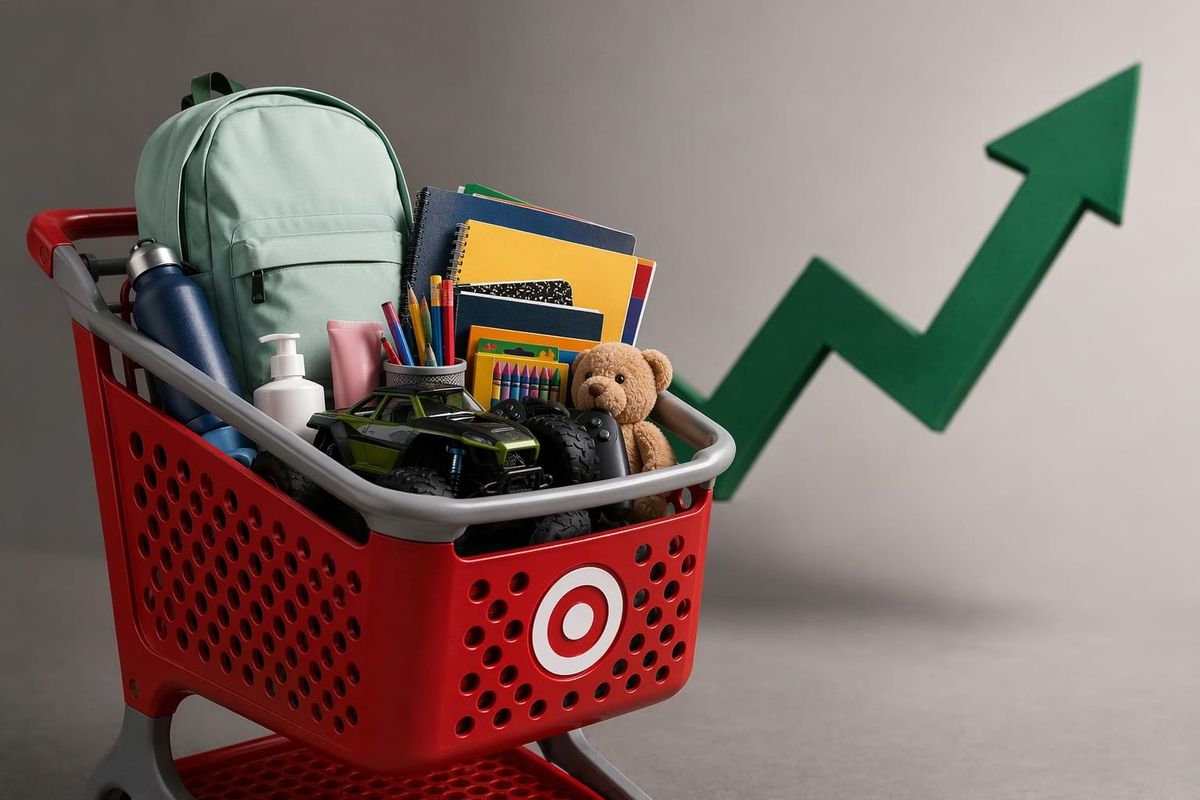
Target's third-quarter sales climbed about 7% to $27.1 billion, with back-to-school shopping its strongest stretch and a third consecutive quarter of comparable-sales gains. The retailer raised its annual sales-growth outlook in results released Wednesday with an SEC earnings filing.
More Trips, Nearly 27% Toy-Category Growth
Comparable sales—merchandise sales excluding recently opened and closed stores—rose 5.6%, reversing a 2.7% decline a year earlier. Shopping transactions increased 5%, while the average purchase amount rose 0.6%; comparable store sales increased 4.6% and online sales grew 9.8%.
Fun 101, Target's category encompassing toys, electronics and collectibles, grew nearly 27%. Beauty sales increased more than 9%, and food and beverages rose nearly 7%. Sales increased in each month of the quarter, with back-to-school and college shopping delivering the best performance.
Target sells groceries, everyday essentials and general merchandise through stores and digital channels, with nearly all sales coming from the U.S. Its stores also handle pickup, shipping and same-day delivery; they fulfilled 97.4% of quarterly merchandise sales.
Revenue beyond merchandise grew 19.3%, including advertising, credit-card profit sharing, memberships and marketplace activity. Advertising revenue reached $296 million, compared with $241 million a year earlier.
Profit Improved Beyond The Tariff Refunds
Reported and adjusted earnings were $2.65 per share, up from $1.51 reported and $1.78 adjusted a year earlier. Both current measures include $0.50 per share from tariff refunds.
Those refunds contributed $301 million before taxes and $228 million to net earnings. Target calculated that, without them, earnings per share would still have increased 42% under standard accounting and 21% on an adjusted basis.
Operating income reached $1.7 billion, including the refunds, versus $948 million reported and $1.1 billion adjusted a year earlier. Gross margin—the share of sales left after merchandise costs—rose to 30.5% from 28.2%; refunds accounted for 1.1 percentage points of that improvement.
Target attributed the remaining improvement to the comparison with last year's higher markdowns and tariff rates, growth beyond merchandise and supply-chain productivity. Higher freight and fuel costs partly offset those benefits. Higher incentive pay, additional store labor and store investments pushed adjusted selling and administrative costs to 21.9% of sales from 21.3%.
A Higher Forecast, An Unfinished Recovery
Target now expects annual sales growth around 6%, one percentage point above its previous range. It forecasts reported and adjusted earnings of $10.65–$11.40 per share, including approximately $2.14 from tariff refunds already recognized but excluding potential future refunds.
The company said November sales so far have matched its expectations and accelerated from October's trend. Its holiday assortment includes more than 8,000 new gifts, over half exclusive to Target, alongside new AI-powered shopping experiences.
The retailer has yet to recover all the market share lost during its post-pandemic decline. A UBS research note in early November found that clothing and home-goods sales per Target store fell in recent years while industry sales grew. Target shares have risen more than 60% this year.
Quarterly capital spending reached $1.4 billion, $400 million above a year earlier, primarily for new and existing stores. Target paid $527 million in dividends and repurchased $251 million of shares during the quarter.
Target expects to spend $5 billion–$6 billion on stores and other capital investments in 2027.
Sources
- 8-K Filing — TARGET CORP (TGT) — SEC EDGAR
- Exhibit a2026q3ex-99.htm — TARGET CORP 8-K exhibit — SEC EDGAR
- Target Heads Into Holiday Season With Strong Third-Quarter Sales - Business Insider — Business Insider
- Target will take momentum from a strong third quarter into the holiday shopping season — Associated Press
- Target turnaround on track with third straight quarter of sales growth — startribune.com
- Target Corporation Reports Third Quarter Earnings — prnewswire.com