Stoke Says FDA Is 'Willing To Accept' A Combined Cognition Score For Its Dravet Drug
The company plans to file in the second half of 2027 after a third-quarter 2027 readout, and it expects no advisory committee.


The FDA is willing to accept a combined, multi-part score of cognition and behavior as the key secondary endpoint in Stoke Therapeutics' Dravet syndrome trial, CEO Ian Smith said on the company's third-quarter earnings call on Thursday. Stoke, which develops RNA-based medicines for severe genetic diseases, also said the agency never raised an advisory committee in the meeting.
One score instead of four hurdles
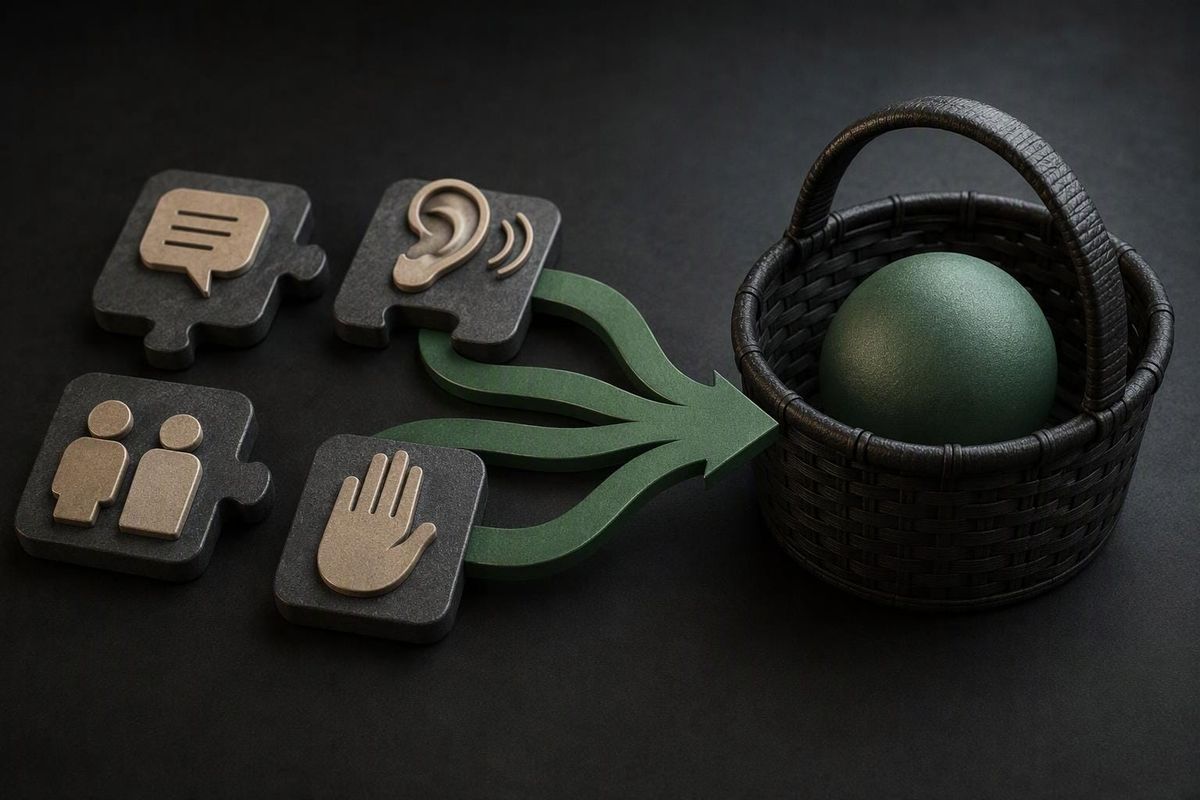
Smith called the FDA's willingness to accept a multi-component reading of Vineland-3 data "a positive outcome." Chief Medical Officer Dr. Barry Ticho said the score averages four subdomains: expressive communication, receptive communication, interpersonal relationships and personal skills.
Ticho said there is no hierarchy among the four and no split of statistical significance across the study's endpoints. Smith argued that a ranked approach can become "a little bit of a lottery," and said the basket removes it.
Asked by a Leerink Partners analyst whether the score can succeed if benefit is concentrated in one or two subdomains, Smith said yes: as long as the combined p-value is hit, it is acceptable. He said the FDA wants to see a forest plot of what drives the score.
What the earlier data showed
Smith said a 12-month analysis of the four domains missed statistical significance on three and hit on one. The combined score still reached a p-value he first put below 0.001, then at 0.01. He cautioned that the dosing in that data was suboptimal, with a six-to-seven-month gap, and Ticho noted that the patient numbers were small.
Ticho said the Phase 3 study, called Emperor, has 90% power to detect a difference of roughly 1.8 to 2.1 raw points on the combined score at week 52, at significance levels of 0.05 and 0.01. For seizures, management said the same power covers a 46% to 53% relative reduction, assuming 150 evaluable patients. Ticho said the standard for success in the protocol is a p-value of 0.05 for the primary and key secondary endpoints.
Stoke has enrolled 162 patients, and Smith said none has discontinued treatment. About 110 have finished the week 28 visit, when the primary seizure endpoint is measured.
Filing timeline and cash
Smith said Stoke is reiterating a data readout in the third quarter of 2027, followed by a planned U.S. application in the second half of that year. Data would be submitted through the first half of 2027 to give the FDA the option of an early review. He said Stoke does not anticipate an advisory committee, and that there was "absolutely no discussion" of one with the agency.
Smith said the company is looking toward a potential U.S. approval in early 2028. Stoke collaborates with Biogen on zorevunersen outside the U.S., Canada and Mexico, and Smith said Biogen controls the European filing, where individual subdomains are still used.
CFO Thomas Leggett said Stoke ended the quarter with $358.8 million in cash, equivalents and marketable securities, and a net loss of $73.6 million for the three months, including $11 million of non-cash stock compensation. He said the cash, along with Biogen reimbursement and a potential milestone payment, should fund operations into early 2028.
Stoke's stock carried a market value of about $1.7 billion as of the original report, ahead of a readout that Smith said is due in the third quarter of 2027.
Sources
- Stoke Therapeutics, Inc. (STOK) Reports Q3 Loss, Tops Revenue Estimates — Yahoo Finance
- Stoke Therapeutics GAAP EPS of -$1.08 misses by $0.16, revenue of $11.26M beats by $3.08M (STOK:NASDAQ) | Seeking Alpha — seekingalpha.com
- Stoke Therapeutics Announces Third Quarter 2026 Financial Results and Provides Business Updates – Company Announcement - FT.com — Financial Times