Satellogic Plans An In-Orbit Satellite Stockpile To Put Governments In Control Within Months
Its largest sovereign satellite contract yet, worth approximately $37 million, covers three spacecraft expected to transfer by mid-2027.


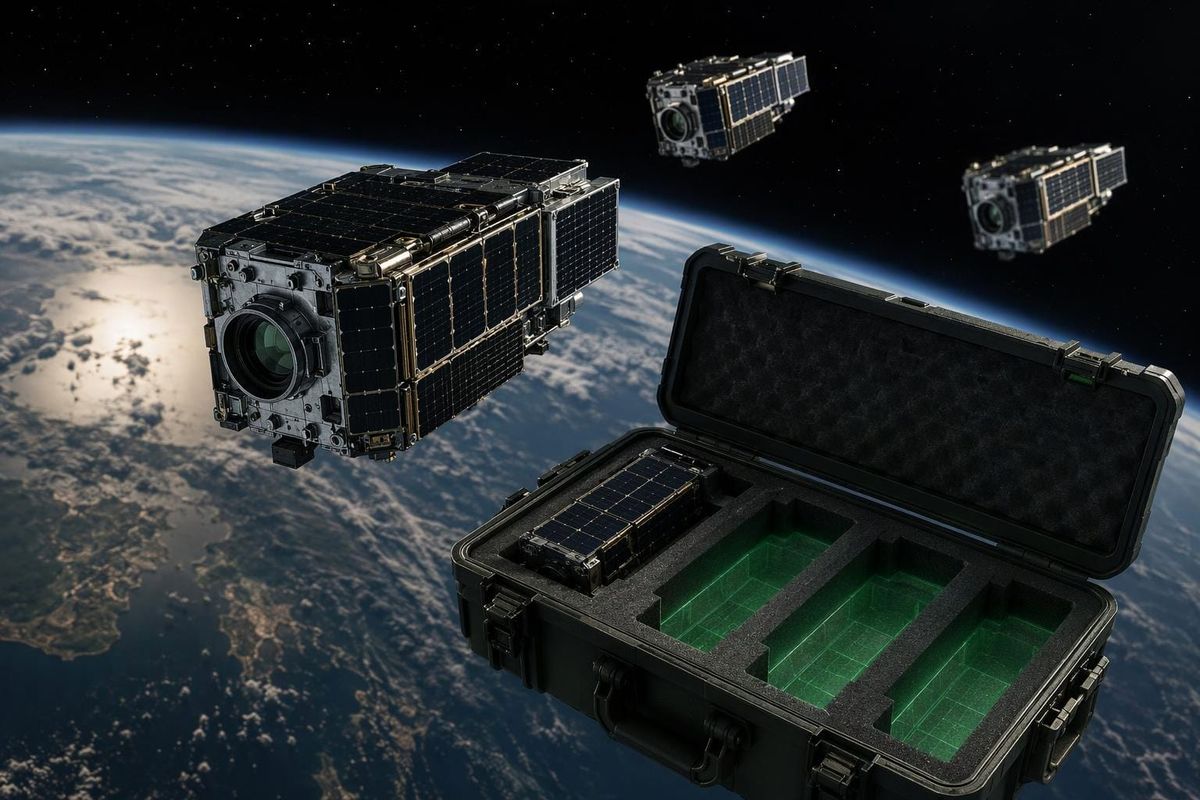
Satellogic, which builds and operates Earth observation satellites and sells their imagery, plans to keep spacecraft inventory in orbit so governments can buy working satellites in months, Founder and Chief Executive Officer Emiliano Kargieman said on the company's earnings call Tuesday. The company signed an agreement after quarter-end to transfer three satellites for approximately $37 million, according to its results release—a deal Kargieman called its largest sovereign satellite contract to date.
Ownership Instead Of Rented Imagery
Kargieman's pitch is control: governments can take ownership of commissioned, flight-proven spacecraft rather than wait through a traditional multiyear build. “Governments want to own the capabilities their national security depends on, not rent them,” he told analysts.
He argued that imagery access can be restricted or repriced during a crisis. Satellogic's offering, he said, avoids U.S. International Traffic in Arms Regulations restrictions, reliance on foreign suppliers for key components and outside control over when imaging stops.
The latest agreement covers one NewSat Mark V and two Mark VI satellites. Two are already in orbit. Satellogic expects to complete the transfers by mid-2027, subject to contractual and regulatory milestones.
The company announced four in-orbit satellite agreements covering seven spacecraft over the past 12 months. That record includes Portugal's CEiiA $18 million agreement, a $12 million transfer to a sovereign defense customer and a satellite sale to HEO. Tata also operates dedicated satellite capacity for India.
A Sale Can Bring Repeat Orders
Asked by a Craig-Hallum analyst whether spacecraft sales could continue, Kargieman said sovereign demand “is exceeding our expectations at the beginning of the year.” He plans to keep building inventory in orbit to meet that demand quickly.
A government buying its initial satellites can return for fleet expansion, replacements, training and local integration, he said. Those relationships can also bring support and monitoring-service business.
Kargieman argued that transfers need not limit Satellogic's imagery business: its manufacturing economics, vertically integrated operations and reserved launches let it replace the capacity quickly. Launch slots are booked through the first half of 2029, allowing production for customers and the company's own constellation to be coordinated.
In October, Satellogic launched an additional sovereign-program Mark V alongside two Mark VI satellites. The Mark VI spacecraft can communicate directly with other satellites, supporting rapid alerts and follow-up imaging.
Answering a Northland Capital Markets analyst, Kargieman put qualified sales opportunities at more than $550 million. Those prospects have customer budgets, he said, but the figure is not revenue guidance. Satellite transactions typically spend longer in the pipeline than imagery-and-analysis deals.
Satellite Deliveries Drive The Revenue Mix
Space Systems generated $9.5 million, or 59% of third-quarter revenue, with the second CEiiA satellite delivery contributing to the result. Total revenue rose 342% from a year earlier to $16.0 million; Data & Analytics contributed $6.6 million, versus $3.2 million a year earlier.
Satellogic sells satellites to governments and local partners, while its imagery business offers tasking, archived data, dedicated constellation services and Aleph Observer site monitoring. Kargieman expects Observer pilots to convert into full contracts in 2027.
Interim Chief Financial Officer Dustin Greer reported $106.5 million in quarter-end cash. Contracted revenue still to be delivered totaled $66.9 million, down from $80.7 million at June 30—a decline he attributed primarily to recognizing revenue from the CEiiA delivery. The approximately $37 million agreement was signed after that cutoff and is expected to add to the fourth-quarter total.
Merlin.01 launched on October 1 and is operating, with payload commissioning underway. Satellogic plans additional Merlin launches in the first half of 2027 and expects service and initial revenue in the second half; Kargieman told a Cantor Fitzgerald analyst that most of Merlin's impact is expected from 2028 onward.
The next delivery target for the sovereign strategy is mid-2027, when Satellogic expects the latest three-satellite transfer to be complete.
Sources
- Satellogic results release (Form 8-K, EX-99.1) — SEC EDGAR
- Satellogic Reports Third Quarter 2026 Financial Results — globenewswire.com