Sarepta Targets $1.25 Billion–$1.3 Billion In Product Sales Despite ELEVIDYS Constraints
Exon-skipping drugs lifted the sales forecast floor, while a smaller research bill helped narrow the quarterly loss.


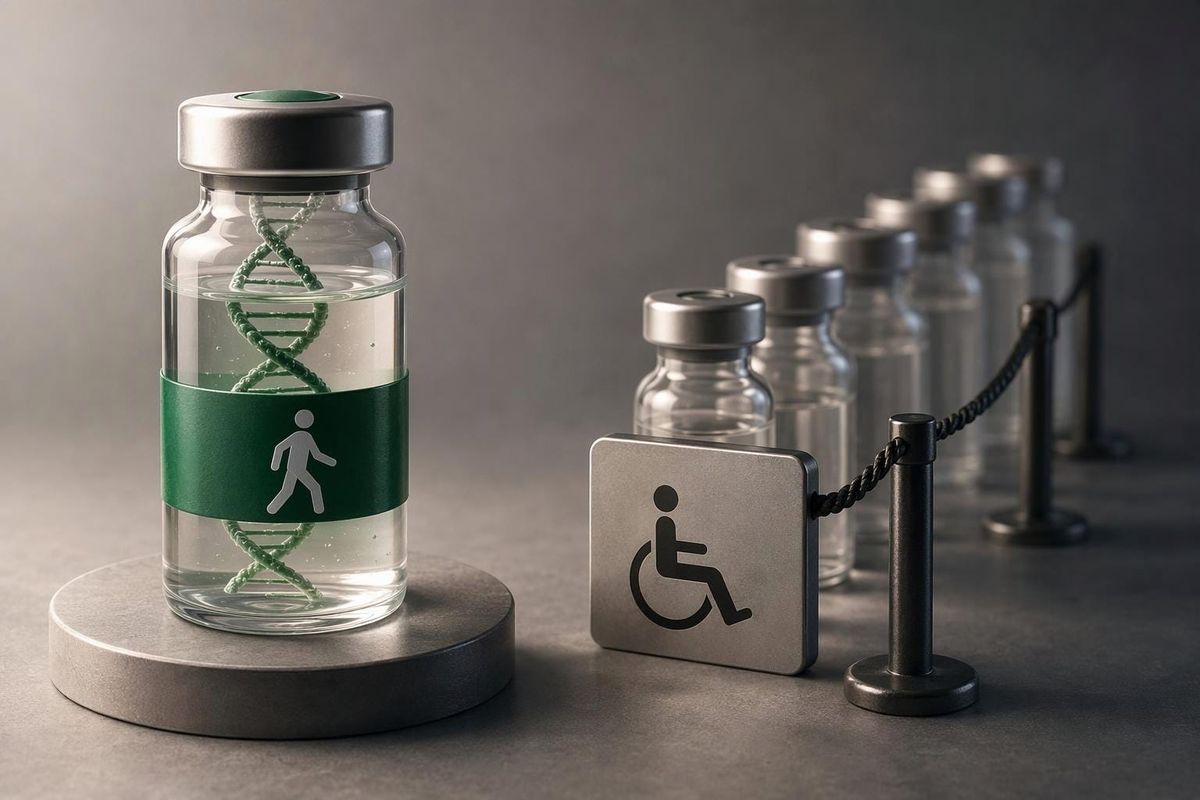
Sarepta Therapeutics, which develops genetic medicines for rare diseases, raised its 2026 product-sales outlook to $1.25 billion–$1.3 billion Thursday, lifting the floor by $50.0 million on stronger exon-skipping drug performance. Results accompanying its SEC filing also showed falling quarterly revenue as ELEVIDYS eligibility restrictions continued to limit treatment volume.
Exon-Skipping Drugs Carry The Forecast
Third-quarter revenue fell 5% from a year earlier, reaching $381.4 million against $399.4 million. Sarepta attributed the decline primarily to lower ELEVIDYS volume under a label restricted to patients who can walk; an additional $31.4 million in contract-manufacturing revenue from supplies delivered to Roche partly offset that decline.
Product sales totaled approximately $323.8 million. Exon-skipping medicines accounted for approximately $240.3 million, while ELEVIDYS generated $83.5 million. Management expects fourth-quarter ELEVIDYS sales to be roughly consistent with the third quarter, allowing for the normal variability of a one-time gene therapy.
Sarepta sells the Duchenne muscular dystrophy treatments EXONDYS 51, VYONDYS 53 and AMONDYS 45 alongside ELEVIDYS. Its exon-skipping drugs reach US patients through specialty pharmacies and a distributor serving hospitals and outpatient clinics; ELEVIDYS is supplied to hospitals for infusion. Roche licenses ELEVIDYS outside the US.
ELEVIDYS is indicated for eligible patients age 4 and older who can walk. Its prescribing information carries a boxed warning for serious liver injury and liver failure, including fatal cases. Sarepta also presented preliminary real-world findings from its ENDURE study examining approaches to reduce liver safety risks.
A Smaller Research Bill, Catalent Costs
Sarepta narrowed its quarterly net loss to $28.5 million, or $0.27 per share, from a revised $50.6 million, or $0.50 per share, a year earlier. Adjusted earnings were $15.6 million, compared with an adjusted loss of $12.9 million. The operating loss narrowed to $9.0 million from $103.4 million; on an adjusted basis, operating profit reached $22.9 million.
Research spending fell to $82.5 million from $218.9 million. The comparison includes a $100.0 million payment to Arrowhead in the year-earlier quarter tied to enrollment and dose-escalation progress in the myotonic dystrophy type 1 study. Sarepta said its July 2025 pipeline reprioritization and restructuring also reduced manufacturing and clinical expenses.
Selling and administrative spending moved the other way, rising to $118.6 million from $91.9 million. The earlier quarter benefited from reversals of stock-award and incentive-pay expenses associated with the restructuring.
Cost of sales, excluding amortization of licensed rights, rose to $188.5 million from $150.8 million. That bill included a $62.0 million charge for binding Catalent manufacturing commitments covering inventory Sarepta elected not to produce.
Management lowered the ceiling for combined adjusted research, selling and administrative spending by $25.0 million, putting the full-year range at $800 million–$825 million.
Cash Backs Two Muscle-Disease Programs
Sarepta ended the quarter with approximately $998.7 million in cash, cash equivalents, restricted cash and investments, versus $953.8 million at the end of 2025. The company reported positive quarterly cash flow and expects its financial resources and commercial cash flows to fund its DM1 and FSHD programs through late-stage development.
Repeated-dose trial results are expected by year-end for SRP-1003 in myotonic dystrophy type 1 and SRP-1001 in facioscapulohumeral muscular dystrophy. Sarepta has begun manufacturing clinical supplies as it prepares for potential late-stage trials.
Michael Severino, Sarepta’s chief executive officer, said, “We are already preparing both programs for potential late-stage development with the intent of moving efficiently if the results support advancement.”
The year-end trial findings and discussions with the FDA will inform whether Sarepta pursues accelerated or traditional approval pathways for those programs.
Sources
- 8-K Filing — Sarepta Therapeutics, Inc. (SRPT) — SEC EDGAR
- Exhibit srpt-ex99_1.htm — Sarepta Therapeutics, Inc. 8-K exhibit — SEC EDGAR
- Sarepta misses on the bottom line, but raises lower end of 2026 revenue guidance | Seeking Alpha — seekingalpha.com