Sana Biotechnology Has $121.7 Million To Fund Its Push Toward Diabetes And Lymphoma Trials
Sana expects funding into mid-2027, while higher manufacturing and laboratory costs widened its quarterly adjusted loss.


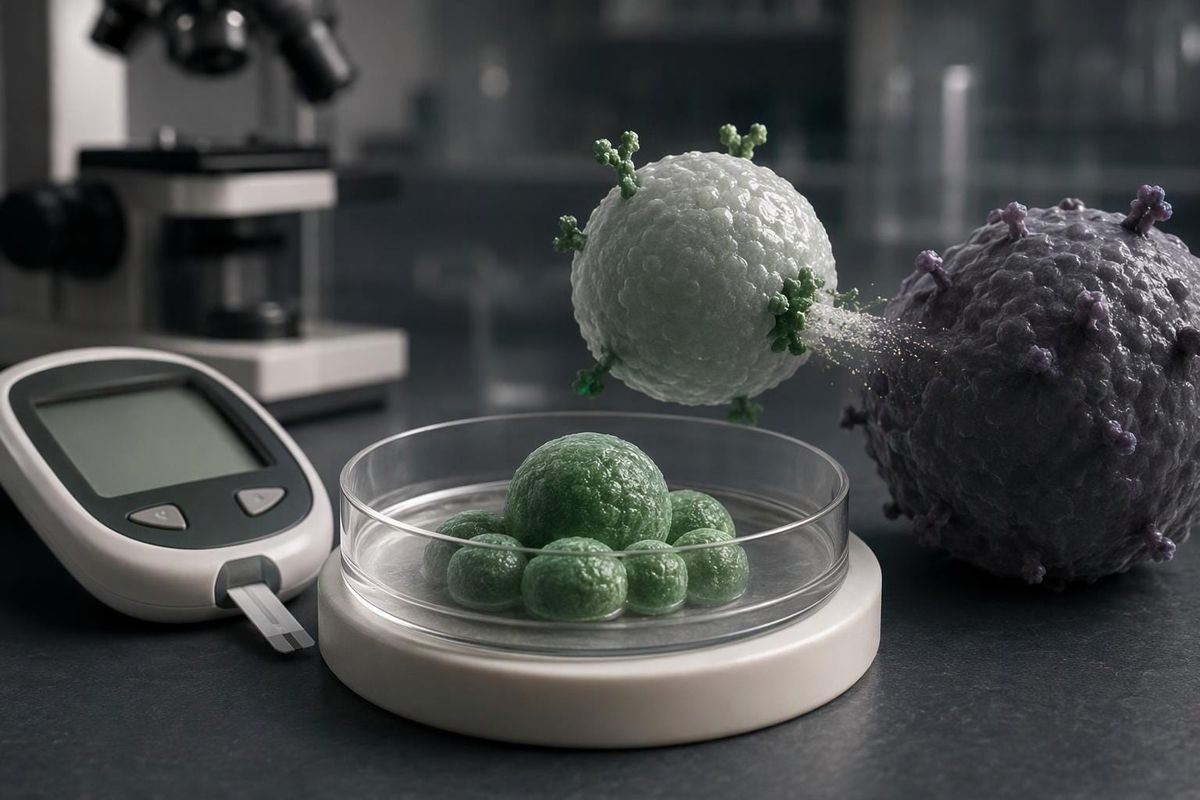
Sana Biotechnology, which develops engineered-cell therapies, ended September with $121.7 million in cash and marketable securities and expects that funding to last into mid-2027 as it prepares diabetes and lymphoma treatments for human testing. Thursday’s SEC results filing accompanied a quarterly profit driven by non-cash gains, while its adjusted loss widened.
Cash Falls, Research Costs Rise
Sana’s cash balance was down from $138.4 million at December 31, 2025. During the first nine months of 2026, operations used $108.9 million and equipment purchases used $2.7 million, partly offset by $93.3 million of net proceeds from equity financing, according to its earnings release.
Adjusted operating cash consumption for those nine months was $103.4 million, compared with $108.0 million a year earlier. That measure excludes financing inflows, equipment purchases and costs tied to portfolio changes.
The third-quarter adjusted loss reached $43.0 million, versus $39.0 million a year earlier. Research and development spending increased to $33.9 million from $30.1 million, chiefly because outside manufacturing costs rose for SC451 and SG293 and laboratory costs increased for SC451. Across the first nine months, research spending fell to $93.4 million from $97.1 million, helped by lower personnel and facility costs and expenses from suspended programs that did not recur.
SANA shares rose about 3% to $2.40 in Friday trading.
Payment Revaluation Produces A Profit
Sana reported third-quarter net income of $20.4 million, including $63.4 million of non-cash gains from revised estimates of potential payment obligations. A year earlier, the company recorded a $42.2 million net loss.
Of the quarterly gains, $55.5 million concerned payments tied to the Cobalt acquisition, primarily because of an August 2026 agreement amendment. The amendment reduced or deferred certain milestone payments until a change of control and expanded payment triggers to include proceeds from business-development transactions involving its cell-delivery technology.
The first-nine-month net loss was $90.4 million, compared with $185.3 million in 2025; the adjusted losses were $121.5 million and $125.4 million, respectively. The adjusted measure removes payment revaluations and the asset write-downs recorded in 2025.
Those write-downs totaled $44.6 million and primarily involved the Bothell manufacturing facility and Seattle laboratory and office space. Sana suspended its internal manufacturing build-out in the second quarter of 2025 after concluding that increasingly available outside capacity could meet its needs.
Diabetes Evidence Meets Trial Plans
Sana’s programs take different routes: SC451 supplies stem cell-derived pancreatic islet cells designed to avoid immune rejection, while SG293 delivers genetic instructions to modify a patient’s T cells inside the body and target disease-causing B cells. Sana retains worldwide rights to its candidates and uses contract manufacturers.
The company expects to seek FDA permission and begin an early-stage SC451 diabetes trial as early as this year. SC451 uses the same immune-evasion modifications as UP421, whose investigator-sponsored study at Uppsala University Hospital is led by principal investigator Dr. Per-Ola Carlsson.
In that study, transplanted cells in a patient taking no immune-suppressing drugs survived and produced insulin through 14 months, Sana said. No safety issues were identified. The New England Journal of Medicine published the longer-term findings, which were also presented at the European Association for the Study of Diabetes’s 2026 annual meeting.
Sana’s Mayo Clinic collaboration focuses on developing and standardizing SC451 delivery procedures across clinical settings. The experimental therapy’s goal is a one-time treatment that maintains normal blood glucose without insulin treatment or immune suppression.
President and CEO Steve Harr said Sana is progressing toward starting SG293 testing in non-Hodgkin lymphoma in the first quarter of 2027. “We aim to share data from both of these programs in 2027,” Harr said.
Animal testing of an SG293 surrogate showed targeted delivery and deep B-cell depletion without chemotherapy to deplete immune cells. Sana could share initial human lymphoma results as early as the first half of 2027 and intends to expand into B-cell autoimmune diseases if successful.
Sana is also preparing SG227 for multiple myeloma testing as early as 2027, contingent on SG293’s early clinical profile.
Sources
- 8-K Filing — Sana Biotechnology, Inc. (SANA) — SEC EDGAR
- Exhibit sana-ex99_1.htm — Sana Biotechnology, Inc. 8-K exhibit — SEC EDGAR
- Sana Biotechnology Reports Third Quarter 2026 Financial — rss.globenewswire.com