RTX CEO Says New Munitions Contracts Are 'Protected On The Downside' If Budgets Change
Chris Calio says the roughly $70 billion in converted contracts guard against budget and volume shifts, with rates rising 2 to 4 times.


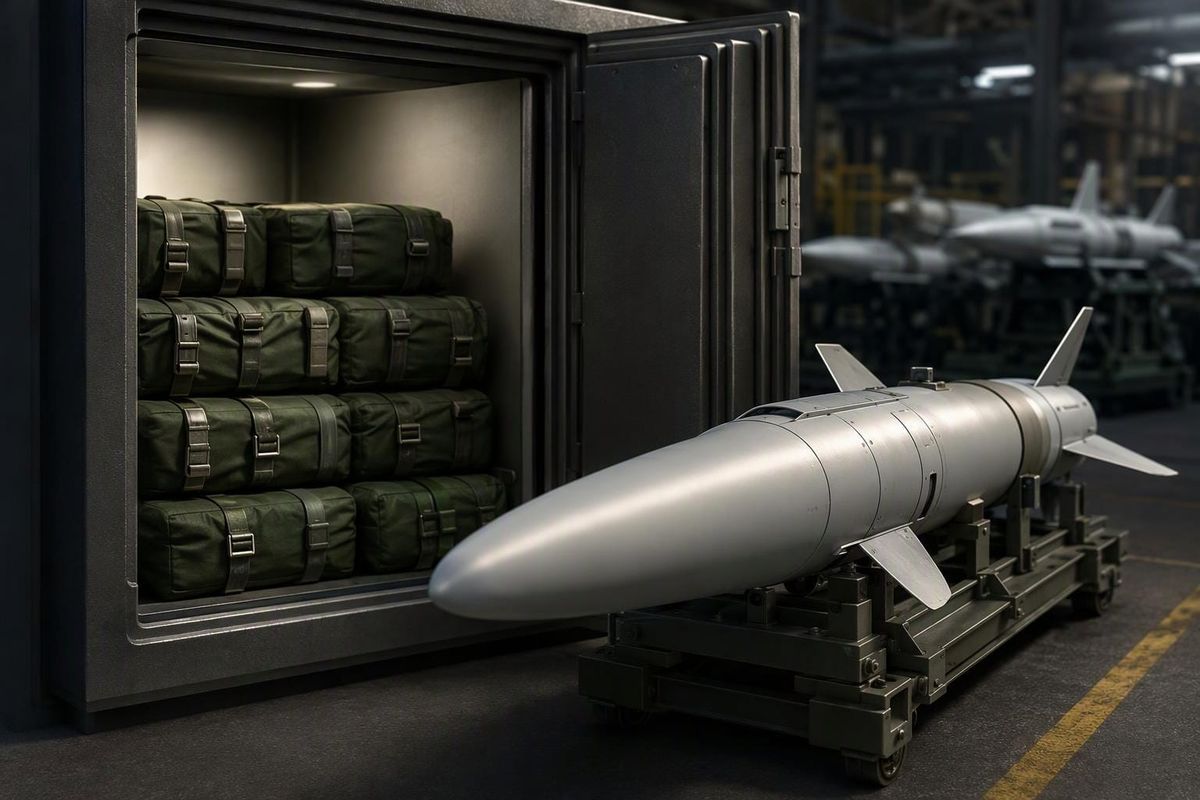
RTX Chairman and CEO Chris Calio said on the company's third-quarter earnings call that Raytheon's newly converted missile contracts include protections if the government's budget or volume plans change. Pressed by a Bank of America analyst on what happens if political winds shift, he said the company is "protected on the downside just in case."
What Calio said about the safeguards
Calio declined to give detailed terms. He said the protections cover changes in the budget environment and in volumes, and that they were a critical part of the talks.
RTX wanted to move out quickly, he said, and the Department of War understood that. It was also "cognizant of the fact that that things could change in this budget environment." The protections, he said, are what let RTX feel good about making the investments.
He added that he believes critical munitions will be prioritized however the reconciliation and base-budget questions resolve. In his words, the contracts are "a testament to how critical these munitions programs are."
The size and shape of the contracts
Answering a Jefferies analyst, Calio put the converted framework agreements at about $70 billion in combined value. He said that gives Raytheon almost a decade of demand visibility, as it seeks to raise production rates anywhere from 2 to 4 times. The contracts are binding, he said, with terms covering price and delivery schedules.
RTX expects to execute them over roughly 7 to 10 years, with revenue recognized on a cost-to-cost basis. Calio said higher volumes and supply-chain visibility could support Raytheon margin expansion beyond today's levels. Year to date, output across critical munitions is up over 90% from a year earlier, he said.
On the call, the contracts were described as undefinitized, meaning final terms are still being settled. The call gave differing counts of conversions: Calio's opening remarks cited four framework agreements converted, while CFO Neil Mitchill said two converted in the third quarter and two more come in the fourth, to be included in fourth-quarter bookings.
Cash and timing
Mitchill said the contracts' funding approach essentially preserves upfront free cash flow. RTX will make capital spending and other investments over the next two to three years, and revenue will be recognized as costs are charged to the programs.
He expects sales and profit contributions over several years, with a ramp in earnest over the next two years and full-rate production through 2030. He described the biggest variable as how defense budgets play out in coming months. Some revenue was booked in 2026, and he expects part of the ramp in 2027.
RTX will give its detailed 2027 outlook on its fourth-quarter call in January.
The work has now moved to lining up suppliers and ordering tooling and test equipment, Calio said, with supply-chain bottlenecks the main constraint on reaching the higher rates.