Rezolute Sizes Tumor Hyperinsulinism At $4-5 Billion, With Patients Needing Triple The Vials
The company's investor deck puts the U.S. opportunity for ersodetug at about 6,000 patients, driven by weight-based dosing.


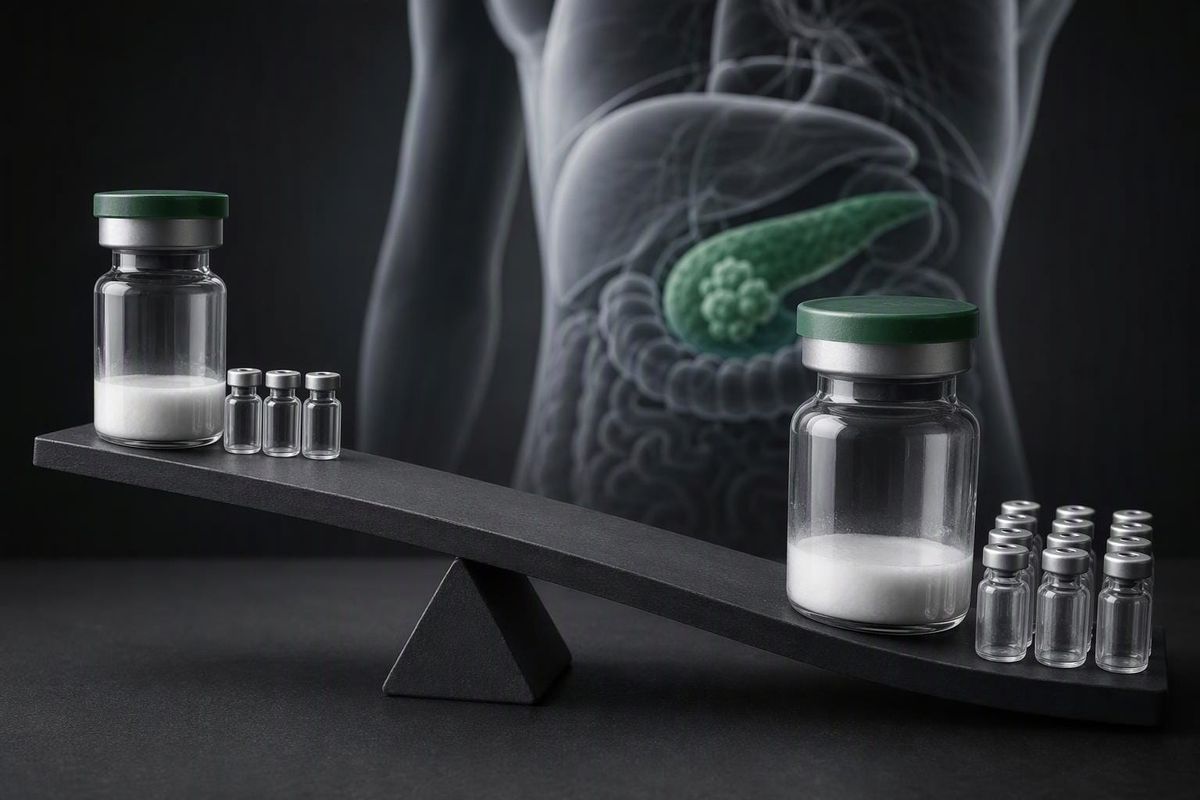
Rezolute, a late-stage rare disease company developing therapies for dangerously low blood sugar linked to excess insulin, put the U.S. market for its antibody ersodetug at about 6,000 addressable patients in an investor presentation furnished in an 8-K on Thursday. Tumor patients, the deck says, need about three times as many vials as congenital patients under weight-based dosing.
Tumor patients carry the market
The company pegs tumor hyperinsulinism at about 4,000 patients and a $4-5 billion total addressable market. Congenital hyperinsulinism, which affects children, is put at about 2,000 patients and $750 million to $1 billion.
Within the tumor group, the deck counts about 2,500 addressable malignant insulinoma patients and about 1,500 addressable patients with non-islet cell tumor hypoglycemia. Both figures are point-in-time prevalence as of October 2026 from the Veeva Compass database.
The company says the combined opportunity exceeds $5 billion, and cites a total of $5 billion or more globally.
The vial math behind the numbers
The congenital maintenance dose is 10 mg/kg. A pediatric patient averaging about 24 kg uses 3 vials per infusion, or 39 vials a year on an every-four-week schedule.
The tumor maintenance dose is 9 mg/kg. An adult averaging about 80 kg uses 9 vials per infusion, or 117 vials a year.
Payer research, the company says, supports rare-disease, weight-based pricing for both indications. It expects prior authorization aligned to the label, with a step through diazoxide for insulinoma patients, and reimbursement through a J-code under buy-and-bill. Diazoxide is the first-line and only approved drug, and about 60% of patients do not respond to it.
Where the programs stand
Rezolute has no approved products. In congenital disease, the main goal of the late-stage sunRIZE trial, cutting weekly hypoglycemia events, was not met. The company blames a placebo effect from functional unblinding. It says the FDA reviewed additional data at its request and encouraged a request for a pre-BLA meeting, the step before an approval application. The deck lists a BLA filing for 2027.
In tumor disease, the single-arm upLIFT study enrolls about 16 adults. An interim update reported that 7 of the first 8 met the main goal. The eighth entered hospice and died a week later of cancer progression, and the company counts that patient as a non-responder.
The deck lists $108 million in cash, with runway through the first quarter of 2028.
Topline upLIFT results are expected in mid-December 2026, and regulatory discussions on GI-surgery hypoglycemia are slated for the first half of 2027.
Sources
- 8-K Filing — Rezolute, Inc. (RZLT) — SEC EDGAR
- Exhibit tm2628517d1_ex99-1.htm — Rezolute, Inc. 8-K exhibit — SEC EDGAR