Rani Therapeutics Loss Widens To $8.8 Million As Research Pay Costs Rise
Contract revenue of $1.7 million accompanied higher spending, while Rani expects its cash to fund operations at least through 2027.


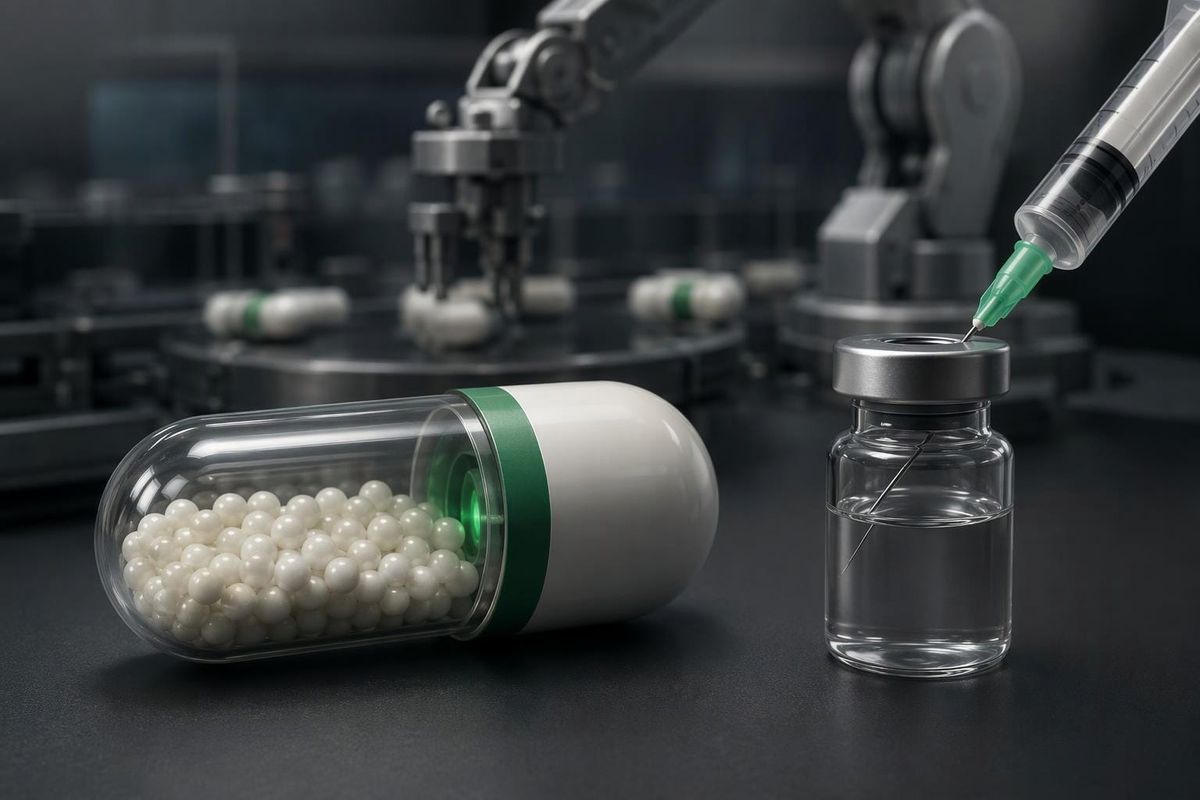
Rani Therapeutics, which develops swallowable capsules to deliver biologic medicines instead of injections, posted an $8.8 million loss for the third quarter, against $7.9 million a year earlier, according to its Monday SEC earnings filing. Higher research compensation costs helped push spending up even as the company recorded $1.7 million in contract revenue.
Research Pay Drives Spending Higher
Rani spent $6.0 million on research and development, compared with $3.2 million in the third quarter of 2025. Compensation accounted for $2.3 million of the $2.8 million increase; outside services added $0.3 million, and facilities, materials and supplies added $0.2 million.
Administrative expenses reached $4.9 million, versus $4.0 million a year earlier. The increase principally came from outside services, which added $0.7 million, and other expenses, which added $0.2 million.
Contract revenue was zero in the year-earlier quarter. Rani attributed the increase primarily to its collaboration and license agreement with Chugai Pharmaceutical. Stock-based compensation included in the quarterly loss was $2.2 million, compared with $2.3 million a year earlier.
The quarter differed from the nine-month picture: Rani's consolidated net loss for the first nine months was $25.2 million, versus $31.9 million a year earlier. Contract revenue over that period reached $5.1 million, compared with $172,000.
Capsules Still Need Clinical Development
Rani's RaniPill platform is designed to move medicines such as antibodies and proteins through the intestinal wall. Its solid- and liquid-drug versions support programs in obesity, inflammatory conditions and hemophilia. Rani has no approved products or commercial product sales; it designs, prototypes and makes pilot capsules in-house, with clinical work that includes studies in Australia.
In October, the FDA accepted the platform into its Emerging Technology Program. Rani expects discussions with the agency's technology team, including pre-submission meetings and possible site visits, to address manufacturing, technical and regulatory matters. Participation neither approves the platform or a medicine nor changes the requirements for approval.
Talat Imran, Rani Therapeutics' chief executive officer, said: “We expect this engagement to be valuable as we continue to invest in manufacturing automation to support further clinical development.” Rani's partnerships span Chugai, ProGen and PegBio, covering rare diseases, immunology and obesity.
Cash Runway And Oral-Delivery Data
Rani held $45.3 million in cash, cash equivalents and marketable securities at September 30, down from $53.4 million at June 30. Management expects that money to cover its current operating plan at least through the end of 2027.
Enrollment continues in an expansion of Rani's early-stage RT-114 study, which uses a RaniPill capsule to deliver ProGen's PG-102, a drug targeting both GLP-1 and GLP-2. Rani expects to enroll 15 additional healthy volunteers to compare drug exposure from oral dosing with injection.
Rani expects additional RT-114 results by the end of 2026, providing the next planned data on its capsule's delivery of PG-102.
Sources
- 8-K Filing — Rani Therapeutics Holdings, Inc. (RANI) — SEC EDGAR
- Exhibit rani-ex99_1.htm — Rani Therapeutics Holdings, Inc. 8-K exhibit — SEC EDGAR
- Rani Therapeutics Reports Third Quarter 2026 Financial — globenewswire.com