Prime Medicine Expects Funding Through 2027 As Its Liver Treatments Move Into Human Testing
A completed offering brought approximately $134.7 million in net proceeds, with liver-trial results and an approval application planned for 2027.


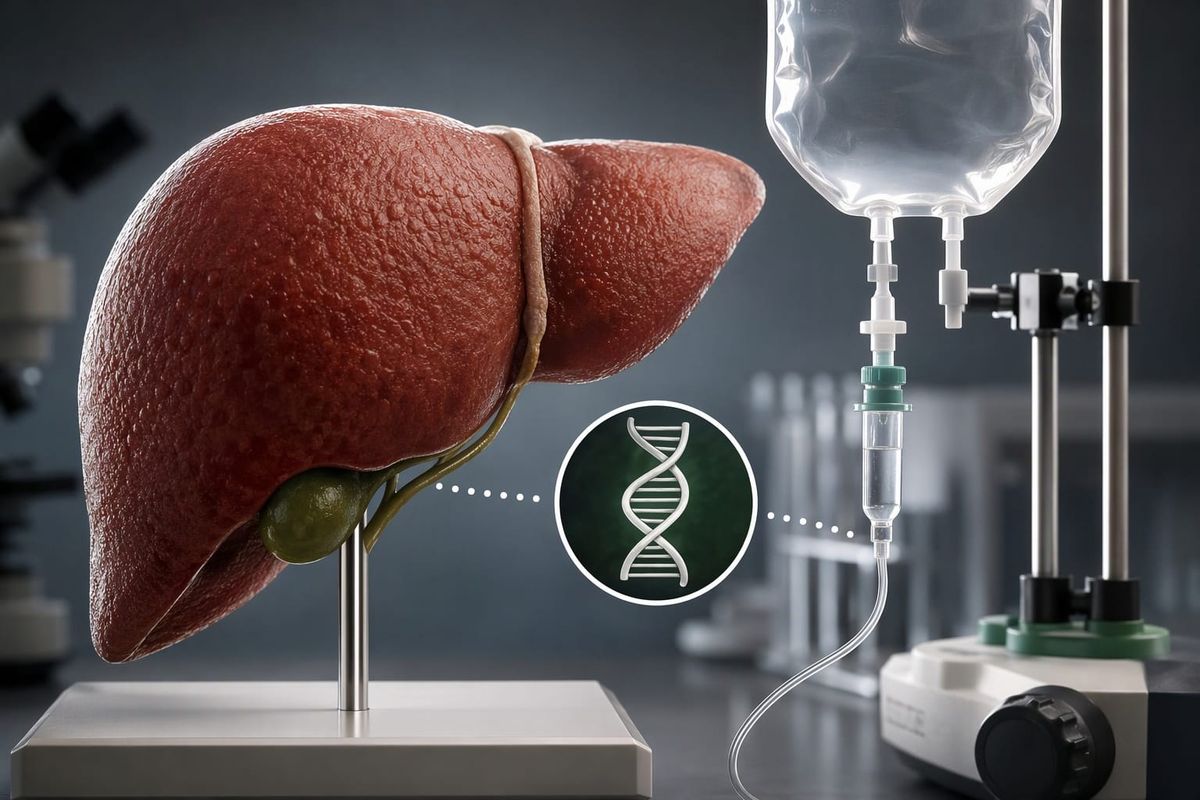
Prime Medicine, which develops gene-editing treatments for inherited diseases, expects its financing-backed resources to fund operations through 2027. In the earnings release accompanying Thursday's SEC filing, it set out a calendar that includes initial liver-treatment trial results and a planned approval application for chronic granulomatous disease.
Financing Pays For The Clinical Push
Prime Medicine completed a public offering in November that brought in $143.7 million before fees, including the full exercise of the underwriters' option for additional shares. Net proceeds were approximately $134.7 million.
Adding the financing to its September resources gives the company approximately $209.5 million in cash, cash equivalents, investments and restricted cash. That financing-adjusted figure compares with $74.8 million at September 30, versus $191.4 million at December 31, 2025. Management's funding forecast covers operating costs and capital spending under its current plans.
Chief Executive Officer Allan Reine said the financing provides “additional resources needed to advance these programs through key clinical milestones.”
Liver Trials Lead The 2027 Calendar
Prime Medicine announced in October that the first patient had received PM577a, its Wilson disease candidate, in an early-stage trial. Enrollment initially focuses on adults stable on standard treatment; the study evaluates safety, tolerability and preliminary effectiveness in adults and adolescents.
PM577a targets the H1069Q mutation in ATP7B, the most prevalent Wilson disease-causing variant in North America and Europe. A follow-on candidate, PM577b, targets R778L, the most prevalent variant in East Asian populations, and remains in laboratory development. The FDA granted PM577 a Rare Pediatric Disease designation in October.
The FDA cleared PM647, the alpha-1 antitrypsin deficiency candidate, for clinical testing in September. A July arbitration decision involving Beam Therapeutics established that the candidate falls within Prime Medicine's licensed field under their 2019 agreement. PM647 targets the E342K mutation in SERPINA1; approximately 100,000 people in the United States carry the PiZZ genotype it is designed to correct.
The planned PM647 trial will begin with adults whose disease affects only their lungs. If tolerability is demonstrated, a separate group will include adults with significant liver disease, whether or not they also have lung symptoms. Prime Medicine expects initial results from both liver trials in 2027.
For PM359, its chronic granulomatous disease treatment, Prime Medicine plans an FDA approval application in the first half of 2027. The candidate has FDA Regenerative Medicine Advanced Therapy, Fast Track, Orphan Drug and Rare Pediatric Disease designations.
Lower Spending Narrows The Loss
Third-quarter net loss narrowed to $39.0 million from $50.6 million a year earlier, and the loss per share declined to $0.22 from $0.32. Revenue, generated by collaborations, rose to $4.2 million from $1.2 million; total operating expenses fell to $44.1 million from $55.2 million.
Research spending declined to $34.1 million from $44.0 million. Prime Medicine attributed the comparison to stock awards that raised the earlier quarter's costs and lower laboratory equipment repair and maintenance expenses. Administrative costs fell to $10.0 million from $11.2 million, primarily because of lower corporate legal fees, the company said.
Prime Editing rewrites DNA to correct disease-causing changes. Alongside its internally developed liver treatments, Prime Medicine is pursuing cystic fibrosis work supported by the Cystic Fibrosis Foundation and edited immune-cell treatments with Bristol Myers Squibb. That licensing collaboration, signed in September 2024, generated a $55.0 million upfront payment.
Prime Medicine's next planned steps are continued Wilson disease enrollment, the start of the alpha-1 antitrypsin deficiency trial and the chronic granulomatous disease approval application.
Sources
- 8-K Filing — Prime Medicine, Inc. (PRME) — SEC EDGAR
- Exhibit q320268-kex991xpressrelease.htm — Prime Medicine, Inc. 8-K exhibit — SEC EDGAR
- Prime Medicine Announces Closing of Public Offering and — globenewswire.com
- Prime Medicine Reports Third Quarter 2026 Financial Results — globenewswire.com
- Prime Medicine Announces Pricing of Public Offering of — globenewswire.com