Pitney Bowes Adjusted Free Cash Flow Hits $147 Million, Up From $60 Million, As Presort Wins Clients
Third-quarter revenue slipped to $456 million, but adjusted earnings per share rose to $0.42 and the company raised its 2026 cash flow range.


Pitney Bowes, which sells shipping and mailing technology and sorts mail for postal discounts, generated $147 million of adjusted free cash flow in the third quarter, against $60 million a year earlier, even as revenue slipped to $456 million from $460 million, the company said in an 8-K filed Wednesday. Adjusted earnings per share rose to $0.42 from $0.31.
Profit and cash up, sales down
Adjusted EBIT, the company's operating profit measure, rose to $114 million from $107 million. Standard-accounting earnings per share were $0.37, against $0.30 a year earlier. Cash from operations reached $151 million, up from $67 million.
The company cut debt by $148 million in the quarter, including $46 million through a discounted tender offer for notes due in 2037 and 2043. It also repriced its $585 million Term Loan B, due 2032, trimming the interest margin by 75 basis points (0.75 percentage points).
Pitney Bowes bought back about 1.0 million shares for $17 million in the quarter, at an average $16.84, and another 0.6 million shares for $11 million from the start of the fourth quarter through October 23. CEO Kurt Wolf wrote in his shareholder letter that the company has repurchased 18.4 million shares this year.
Presort gains from a rival's exit
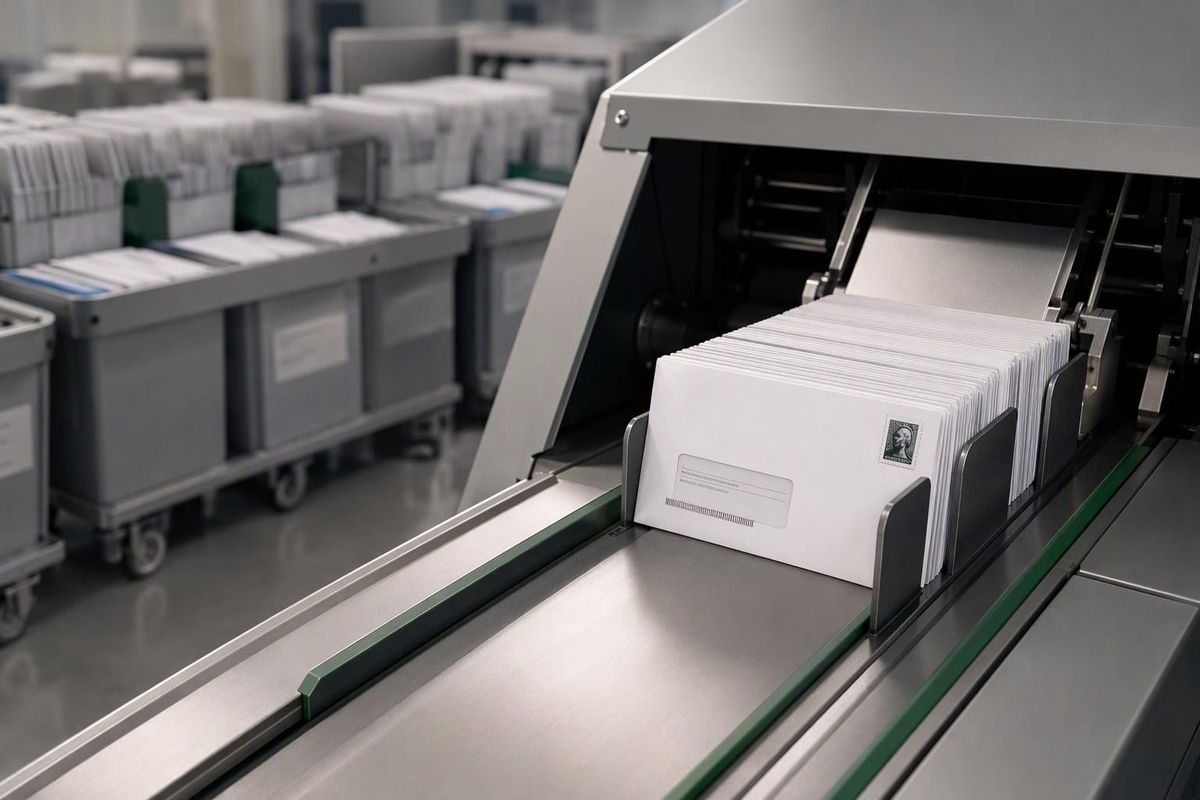
Presort Services revenue grew 1% to $151 million, returning to year-over-year growth on new client wins. The unit sorted 3.4 billion pieces of mail, a 4% increase. Adjusted segment EBIT slipped 2% to $32 million on lower revenue per piece and a $6 million rise in transportation costs.
Wolf wrote that the exit of PCI from the market brought in more than 30 new clients, representing an estimated two billion pieces of annual volume. He said another presort company's exit is evidence that industry pricing is too low, and that he expects pricing and margins to rise.
SendTech revenue fell 2% to $305 million on an anticipated shrinking of the mailing install base, partly offset by higher equipment sales. Adjusted segment EBIT climbed 14% to $115 million as operating expenses fell $13 million. That included a $3 million non-recurring benefit allocation from corporate expenses.
Guidance and the strategic review
For 2026, Pitney Bowes raised the low end of its revenue range to $1,830 million from $1,800 million, keeping the $1,860 million top. It lifted adjusted free cash flow guidance to $380 million-$420 million from $360 million-$410 million. It narrowed its adjusted EBIT range to $450 million-$470 million and its adjusted EPS range to $1.58-$1.67, keeping both midpoints. The company said year-to-date cash flow benefited from higher prepayments from new customers after a significant mail sortation competitor left.
Wolf said the board's Strategic Review Committee continues to weigh alternatives and that the company will not comment on potential outcomes. A non-core contract inherited from the exited Global eCommerce segment is winding down, which he said will weigh on 2027 revenue. He expects year-over-year revenue growth by the end of 2028, if not sooner.
Management discusses the results on a webcast Thursday at 8:00 a.m. ET, and the $0.10 quarterly dividend is payable December 8 to holders of record on November 16.