Omnicell Says Leasing Now Helps It Get In The Door On Competitive Deals
Executives put active leasing at about 30% of the market, with most of it tied to the main rival's customers.


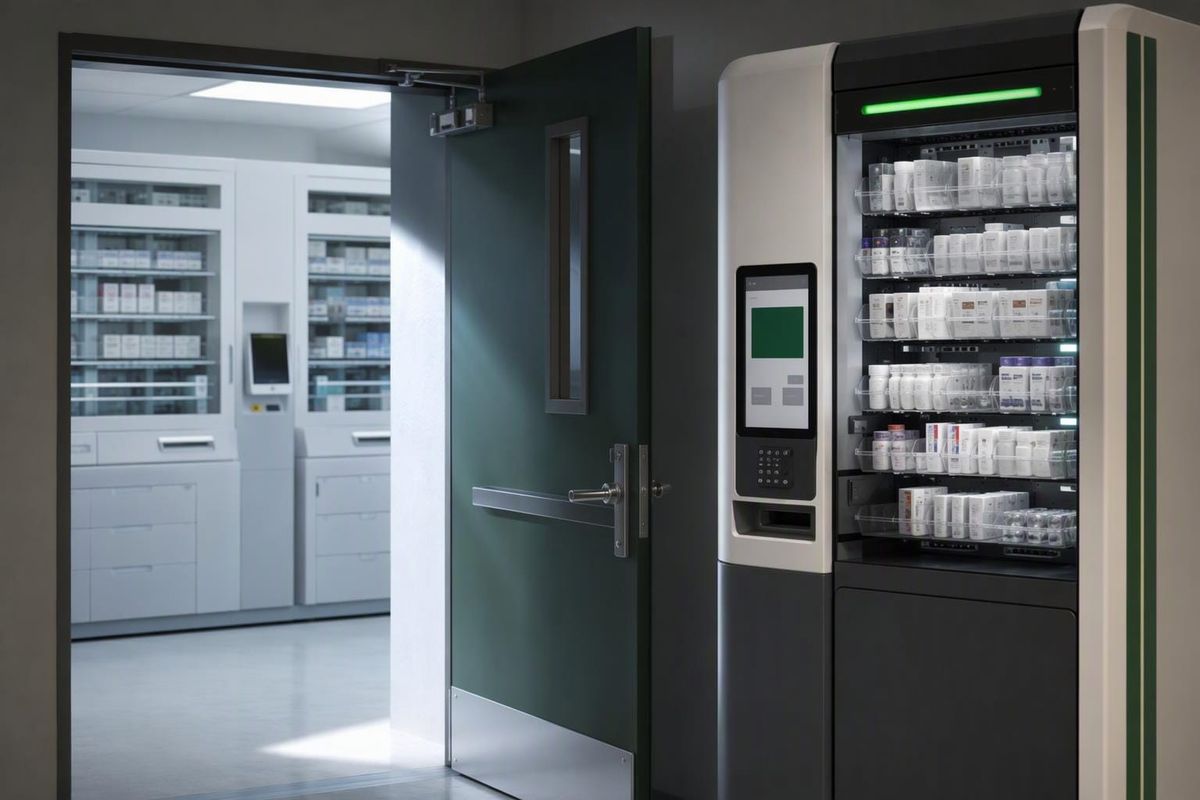
Omnicell, which makes medication management systems for hospitals and pharmacies, said on its third-quarter earnings call Thursday that leasing has become a meaningful part of its competitive bids. CFO Baird Radford estimated that about 30% of the market is actively involved in leasing transactions, most of them customers of Omnicell's primary competitor.
A door-opener, not a closer
Chairman and CEO Randall Lipps said leasing is not the single factor that wins a competitive deal. In his words, it "removes an early barrier to the conversation" and lets Omnicell compete on reliability, service and innovation.
Radford echoed the point when a Piper Sandler analyst asked about the economics. Leasing, he said, turns the talk from whether Omnicell can do the deal to clinical capabilities and workforce efficiency.
President and COO Nnamdi Njoku added that financing flexibility matters a great deal to health systems and is one of the most important factors in how competitive evaluations play out.
Revenue up front, margin later
The Piper Sandler analyst noted that leases are material for what the analyst called the first time in Omnicell's history. Radford said the leases work as sales leases: revenue is recognized up front, as in a capital sale, while lease payments arrive over time.
That means a slight erosion in gross margin at implementation and first revenue recognition. Interest then flows through product revenue over the lease life, which Radford said will carry a greater margin structure.
He expects the pace of leasing to be slow, probably steady and at times lumpy, depending on which competitive customers Omnicell wins and whether they prefer a capital or lease structure. Pacing, he said, will be muted.
Nine to 12 months to revenue
Njoku said competitive deals that close around now take nine to 12 months to convert to revenue, so any such revenue would potentially land in the back half of next year. Radford said the same window applies to the installed base, though larger competitor customers could come in waves over several quarters.
The company reported third-quarter revenue of $308 million, above its guidance range of $301 million to $307 million. Adjusted EBITDA was $45 million, above a $32 million to $37 million range. It guided fourth-quarter revenue to $295 million to $301 million and raised full-year adjusted EBITDA and earnings-per-share guidance.
The first Titan XT shipment, the company's new dispensing cabinet, is days away. Omnisphere, its cloud platform, is targeted for general availability in the first half of 2027.
Radford said Omnicell still sees a replacement-cycle opportunity of more than $2.5 billion, and that pacing, not size, is the issue.
Sources
- Omnicell (OMCL) Q3 Earnings and Revenues Top Estimates — Yahoo Finance
- Omnicell: Q3 Earnings Snapshot — Associated Press
- Omnicell Announces Third Quarter 2026 Financial Results – Company Announcement - FT.com — Financial Times
- Omnicell: Q3 Earnings Snapshot – WTOP News — wtop.com
- Omnicell: Q3 Earnings Snapshot | 9news.com — Associated Press