Ocular Therapeutix’s Loss Widens To $94.8 Million — AXPAXLI Approval Bid Still Planned
Research costs rose as revenue fell, while the company prepares a fourth-quarter FDA application for its investigational eye implant.


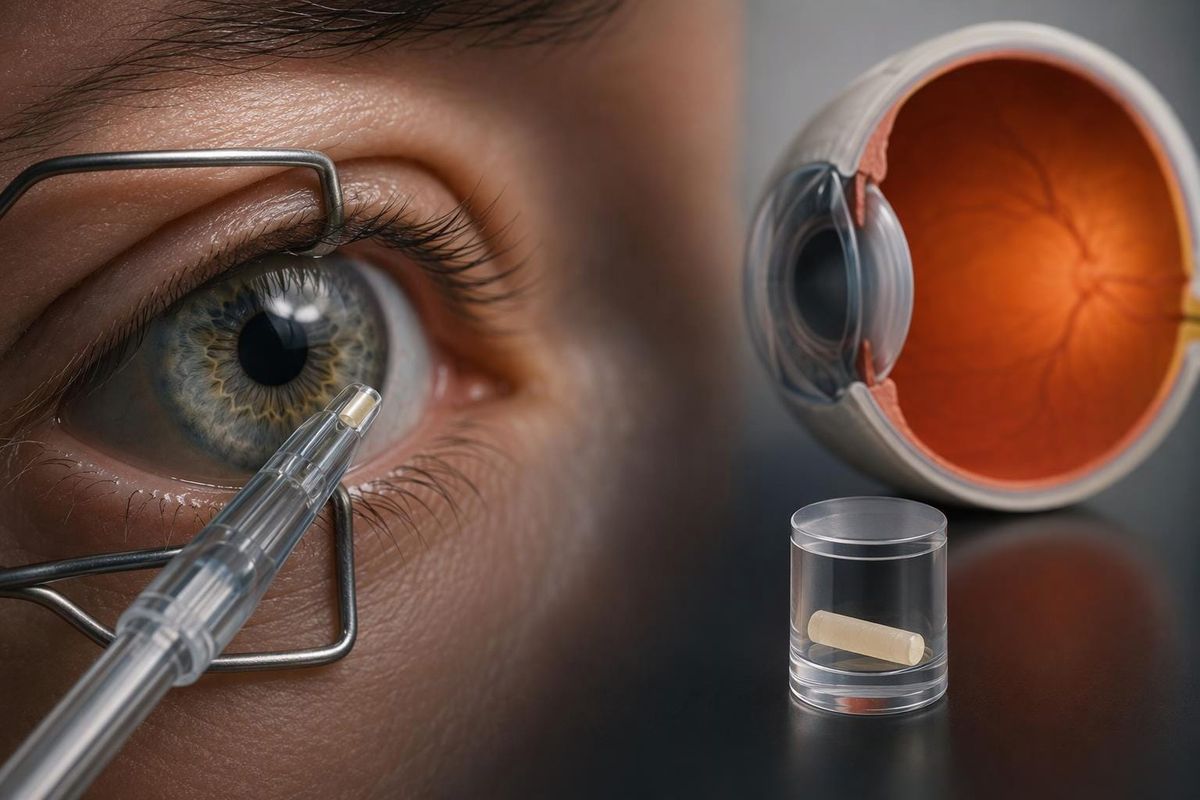
Ocular Therapeutix, which develops treatments for eye diseases, reported a third-quarter loss of $94.8 million Monday, versus $69.4 million a year earlier, as research and launch-preparation spending increased. The company still plans to apply for FDA approval of AXPAXLI in the fourth quarter, following an interim safety analysis, according to its results announcement.
Research Costs Outrun Revenue
The unaudited loss amounted to $0.42 per share, compared with $0.38 a year earlier. Revenue fell to $12.9 million from $14.5 million, while research expenses reached $74.8 million, up from $52.4 million. Ocular attributed the research increase to faster enrollment in its diabetic-retinopathy and long-term extension trials, along with more staff and clinical infrastructure.
Preparations for a potential AXPAXLI launch helped raise selling and marketing expenses to $15.7 million from $13.1 million. Administrative costs increased to $18.8 million from $16.0 million as personnel and infrastructure spending grew.
Ocular had $530.6 million in cash and cash equivalents on September 30. Management expects that money, together with anticipated DEXTENZA receipts, to fund current plans into 2028—but that projection excludes the full anticipated cost of expanding manufacturing capacity and the commercial team.
AXPAXLI’s Application And Injection Schedule
AXPAXLI is an investigational axitinib implant that uses Ocular’s dissolving ELUTYX hydrogel to release medicine inside the eye over time. Its commercial product, DEXTENZA, is an FDA-approved corticosteroid insert for inflammation and pain after eye surgery and itching associated with allergic conjunctivitis.
The planned approval application builds on results announced in February 2026: 74.1% maintained vision at Week 36 in the AXPAXLI arm of its late-stage wet age-related macular degeneration trial, meeting the main goal. At Week 52, 65.9% maintained vision, meeting a key secondary goal. Ocular said a September FDA meeting reaffirmed alignment on its proposed application package; AXPAXLI remains unapproved.
The application is planned to include efficacy and safety results from that trial, interim Week 52 safety results from the comparison trial and confirmatory evidence. Together, the safety studies are expected to cover more than 300 patients followed for at least a year after treatment.
Peter K. Kaiser, Ocular Therapeutix’s chief development officer, said, “Building on AXPAXLI's demonstrated durability in SOL-1, we have modified SOL-X to evaluate retreatment every 48 weeks.” The extension study examines long-term treatment outcomes, while the comparison trial evaluates retreatment every six months.
Patient Selection Shapes The Comparison
Preliminary screening analysis found that approximately 20% of otherwise eligible comparison-trial patients were excluded because of persistent early retinal fluid or fluid fluctuations. The study uses a six-month screening period to select patients without those features.
That distinction matters to interpreting the studies. An analysis conducted after the earlier trial found persistent early fluid in 28% of AXPAXLI-treated patients; those patients had worse vision outcomes, needed more supplemental injections and received their first supplemental injection 32 weeks earlier than patients without persistent early fluid.
Ocular moved the comparison trial’s main vision assessment to Week 40 from Week 56 so every patient completes that assessment before the interim safety review. Secondary assessments remain at Weeks 56 and 96, and treatment assignments will remain concealed through Week 96. Results remain targeted for the first quarter of 2028.
Enrollment also continues in the late-stage diabetic-retinopathy trial, designed to compare AXPAXLI every 48 weeks against sham injections in approximately 620 patients. On the commercial side, Ocular appointed Riad Sherif, CEO and director of Oculis Holding, to its board; Seung Suh Hong will step down at year-end.
The next planned regulatory step is the fourth-quarter interim safety analysis, followed by Ocular’s AXPAXLI approval application—not a marketing approval.
Sources
- 8-K Filing — OCULAR THERAPEUTIX, INC (OCUL) — SEC EDGAR
- Exhibit tm2629079d2_ex99-1.htm — OCULAR THERAPEUTIX, INC 8-K exhibit — SEC EDGAR
- Ocular Therapeutix™ Reports Third Quarter 2026 Financial — globenewswire.com