Novartis Raises Rapsido Peak Sales Guidance To Over $4 Billion For Hives, Holds Off On Other Uses
CEO Vas Narasimhan says the company counts only indications that have read out positive in late-stage trials, so more upside waits.


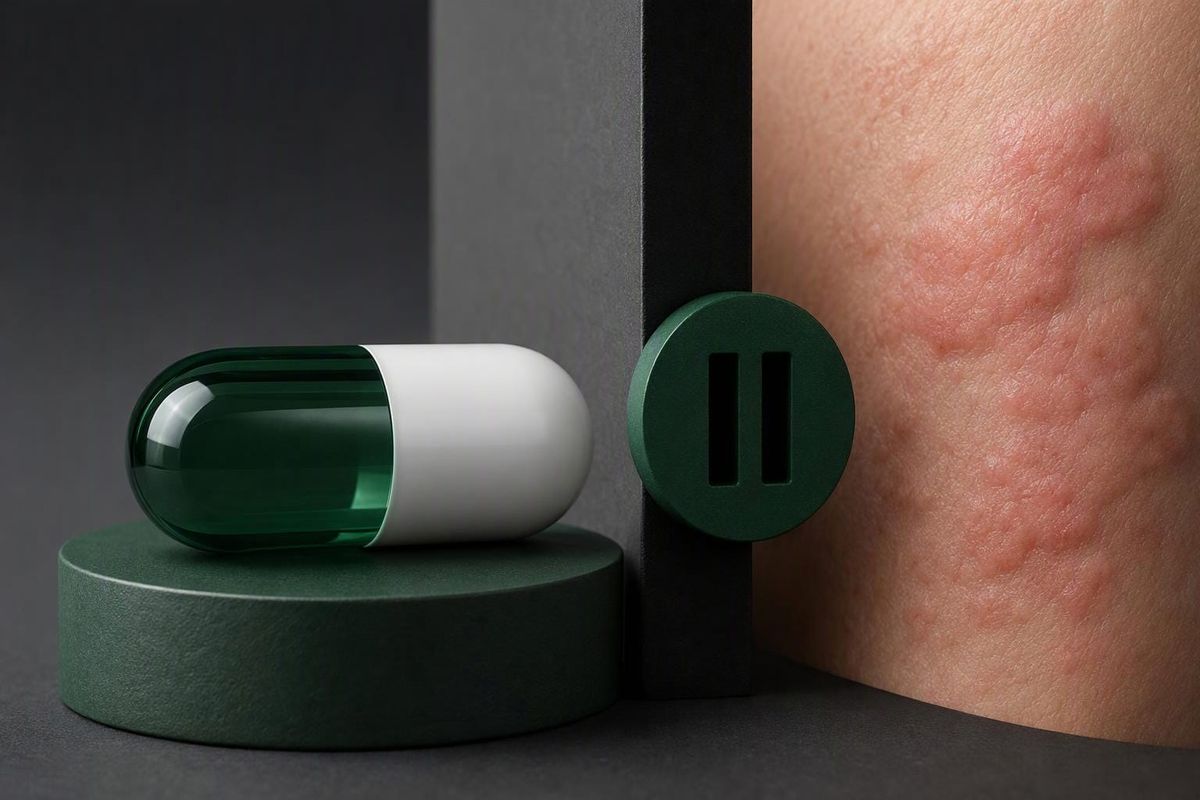
Novartis is raising its peak sales guidance for Rapsido in chronic spontaneous urticaria and symptomatic dermographism, two forms of hives, to over $4 billion, CEO Vas Narasimhan said on the company's third-quarter earnings call on Tuesday. Novartis, the Swiss drugmaker behind Entresto, Cosentyx, Kisqali and Kesimpta, is leaving the drug's other possible uses out of the number for now.
Two $4 billion pieces, then a pause
Asked by a UBS analyst why the hives increase came separately from other peak-sales changes, Narasimhan called the company's thinking "not too sophisticated." He put $4 billion for the two hives conditions beside $4 billion for the current multiple sclerosis readout, which excludes non-relapsing secondary progressive MS, and said the two together equal $8 billion plus.
The company's standard, he said, is not to include peak sales for indications that have not read out positive in Phase 3 trials, the late-stage studies. Results in hidradenitis suppurativa, a skin condition, would inform the next revision, and success in food allergy would trigger another. He listed chronic pruritus of unknown origin and rosacea as later candidates.
He said he hopes the two sequential hidradenitis readouts arrive before the company's Meet Novartis Management event, where it will update peak sales for key growth drivers.
Rapsido's launch numbers
In chronic spontaneous urticaria, Narasimhan said Rapsido has more than 6,000 US subscribers, split between allergists and dermatologists, and more than 15,000 patients treated. Its share of new-to-brand prescriptions is about 26%, up about three points from the prior quarter, achieved with roughly 50% of insurers covering it to label. He expects further access expansion in the fourth quarter and into 2027.
Symptomatic dermographism, which he said covers about two-thirds of chronic inducible urticaria patients, is the first condition with an approved treatment. About 100,000 US patients are uncontrolled on antihistamines, out of about 500,000 total, and the prescribers overlap fully with those for the other hives indication.
The multiple sclerosis opportunity
For MS, Narasimhan said Novartis thinks about 30% of treatment-naive patients would be open to a medicine like remibrutinib. Among patients controlled on anti-CD20 therapies, he said about 45% in the US might want to switch to an oral drug. He said that supports a $4 billion-plus medicine, with further upside from non-relapsing secondary progressive MS.
The company reaffirmed its 5% to 6% constant-currency sales growth guidance for 2025 to 2030. In the quarter, sales rose 4% in constant currency and the company raised its full-year 2026 core operating income outlook.
Novartis will update its midterm guidance for 2026 to 2031, and its peak sales for key growth drivers, at Meet Novartis Management, which Narasimhan said is a few weeks away.
Sources
- Novartis CEO unfazed by high-profile clinical failures, maintains long-term revenue goal | Fierce Pharma — fiercepharma.com
- Novartis: Q3 Earnings Snapshot — Associated Press
- Novartis lifts profit outlook as new medicines counter generic erosion (NVS:NYSE) | Seeking Alpha — seekingalpha.com
- Novartis Raises Earnings Guidance Despite Third-Quarter Profit Decline - WSJ — The Wall Street Journal
- Novartis raised profit outlook in Q3 2026 earnings despite charge — qz.com