Norfolk Southern CEO Says Truck-To-Rail Gains May Reverse In 'A Year Or Two' Without Structural Change
Mark George says fuel prices drove the freight shift and pitches the Union Pacific merger as the way to make it permanent.


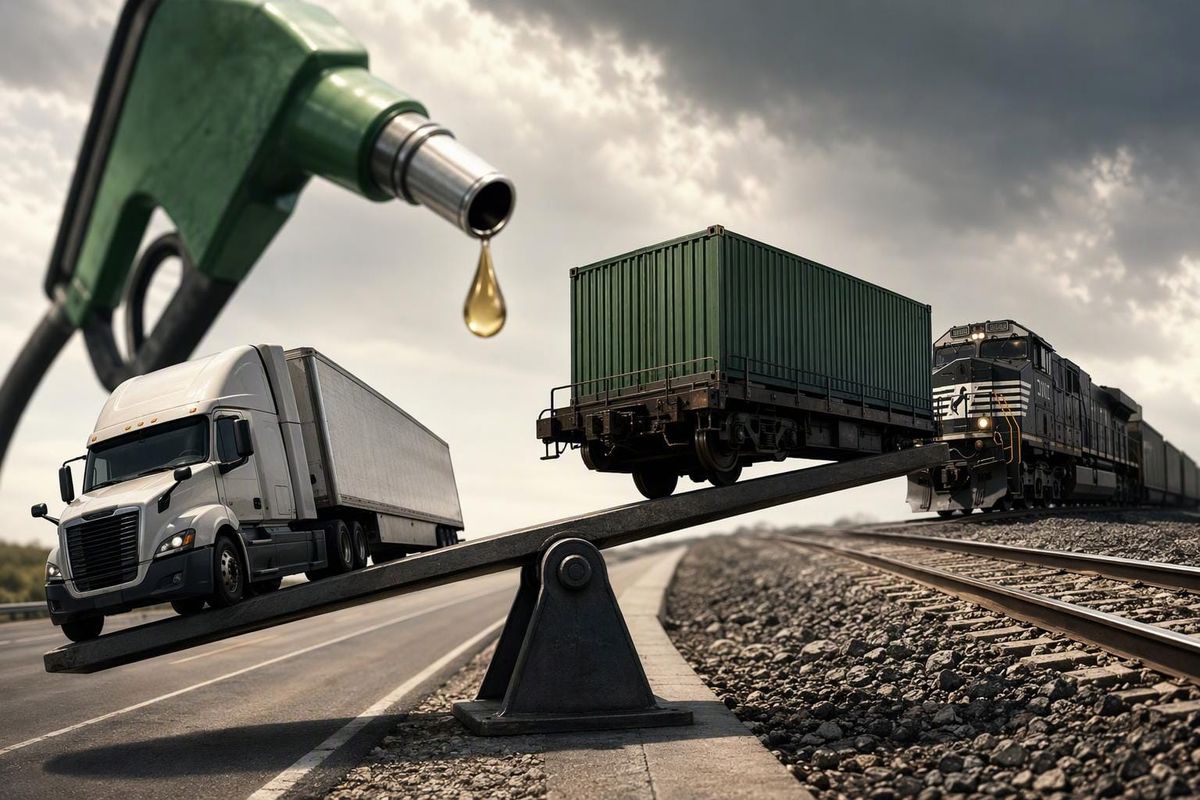
Norfolk Southern CEO Mark George said on the company's third-quarter earnings call Thursday that much of the freight it has won from trucks is a product of high fuel prices and will eventually go back to the highway, and he used that to argue for the Union Pacific merger. Revenue grew 14% in the quarter, including fuel surcharges, Chief Commercial Officer Ed Elkins told analysts.
Why George calls the gains temporary
Norfolk Southern owns a major freight railroad serving the Southeast, East and Midwest, and carries merchandise, intermodal containers and coal. Answering an analyst, George said rising fuel prices have pushed freight onto rail, and a large part of intermodal growth is highway-to-rail conversion.
When fuel returns to prior levels, he said, "a large portion of what we've gained will eventually" go back, adding "it might take a year or two." That happens "unless this industry does some very structurally different things," and he called the merger "the real difference maker" in making the share recapture permanent.
In prepared remarks, he said the company views most of the macro factors behind the conversions as temporary, but that shippers move freight to rail quickly when it offers better value than the highway.
Answering a TD Cowen analyst, George said trucking capacity returns because barriers to entry are low. He named trucking autonomy and the absence of rest-hour limits on driverless trucks as further threats that would speed their deliveries.
Hiring double to keep crews
George said railroads cannot flex easily to sharp volume swings. Filling train and engine crew jobs means hiring "double what you think you need," he said, because about half are lost during six-month training.
He said "Wall Street" thinks railroads can be perfectly volume variable, "but it's a challenge." The company boosted crew resources in the fourth quarter of last year, he said, when the volume outlook was gloomy, ahead of a volume inflection in the second quarter of 2026.
On competition, he called the environment "pretty robust," with rivals launching new products after the merger announcement. That is tougher for Norfolk Southern, he said, even as it helps rail win share back from highway.
The quarter's numbers
Adjusted operating ratio was 65.4 and earnings per share were $3.62, Chief Financial Officer Jason Zampi said, after $42 million of merger expenses and $28 million of net costs tied to the Eastern Ohio incident. Operating income rose 7%, and net income and earnings per share each rose 10%.
Fuel was a drag: Zampi said rising prices hurt the operating ratio by about 250 basis points versus the company's expectation. Full-year adjusted operating expenses are now seen just north of $9 billion, including about $700 million of extra fuel, and 2026 capital spending is roughly $2.1 billion, up from $1.9 billion.
Chief Operating Officer Brian Barr said 420 locomotives are in storage as ready capacity. Shares were up about 2% at $334.60 in Thursday trading, for a market value of $73.7 billion.
George closed by saying the merger application is more thorough than any an American railroad has presented and that the case will strengthen as the Surface Transportation Board's evidentiary record builds.
Sources
- Norfolk Southern Tops Profit Estimates as Freight Demand Stays Strong — Reuters
- Norfolk Southern Gears Up for Q3 Earnings: What's in Store? — Yahoo Finance
- Norfolk Southern (NSC) Q3 Earnings: Taking a Look at Key Metrics Versus Estimates — Yahoo Finance
- First look: Norfolk Southern earnings - News Discussion - FreightWaves Forum — forum.freightwaves.com
- How Will Norfolk Southern Stock React To Its Upcoming Earnings? — Yahoo Finance