Neurocrine Says FDA Flagged Fluid Retention As A Potential Safety Signal For Its Newly Bought VYKAT XR
The drug, bought with Soleno for about $2.9 billion, posted $106.7 million in third-quarter sales as the FDA weighs regulatory action.


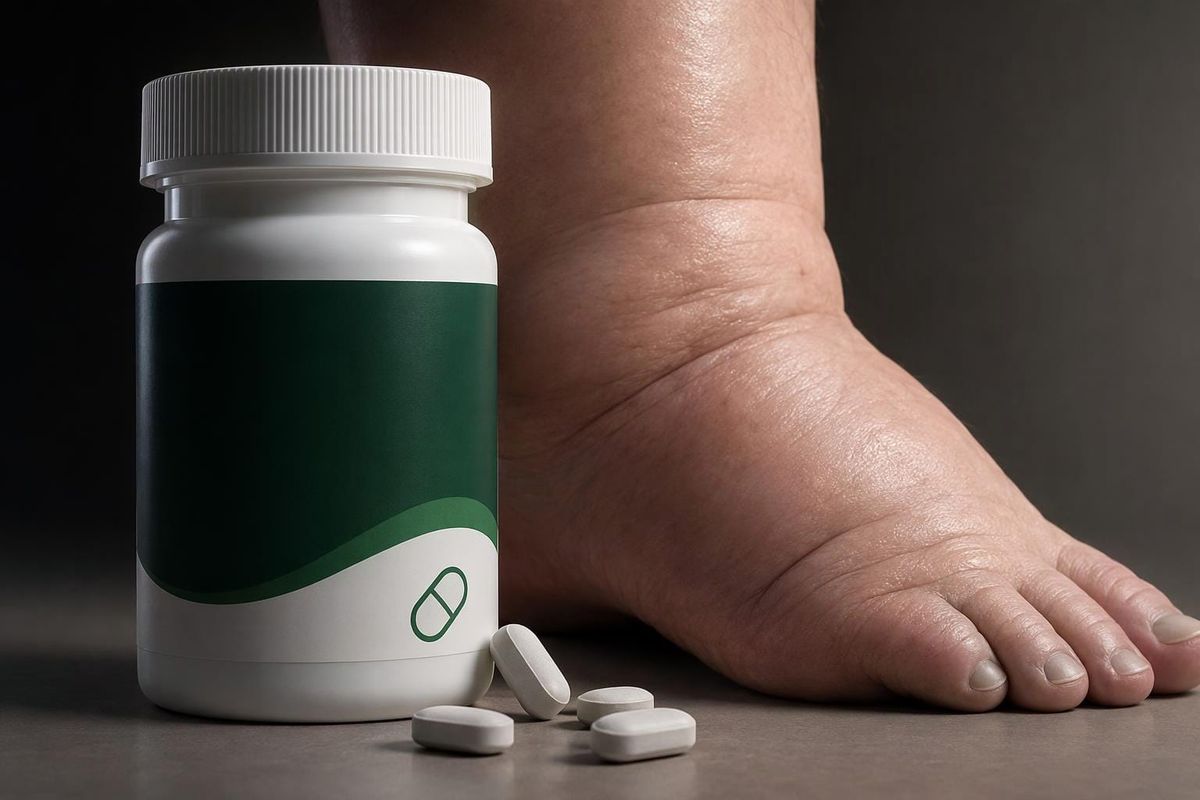
Neurocrine Biosciences, a biopharmaceutical company with treatments for tardive dyskinesia, Huntington's chorea and a rare hormone disorder, disclosed in its quarterly report filed Monday that VYKAT XR has drawn an FDA safety flag over fluid retention. The company is evaluating the need for regulatory action on the Prader-Willi syndrome drug it got through its May purchase of Soleno.
A new line in the risk factors
The filing cites the agency's September 2026 safety-signal report, and says the FDA is weighing whether to act.
The language is new against the prior quarter's filing. Prader-Willi advocacy groups also put out an August 2026 statement on serious adverse events that patients on the drug had reported to the FDA. The reports do not show VYKAT XR caused those events, the statement acknowledged, yet Neurocrine cautions that the attention could dent how safe the drug is seen to be and cut demand.
The product carrying the risk
VYKAT XR brought in $106.7 million of net sales in the third quarter, according to the filing. Neurocrine's earnings release puts total third-quarter revenue at $1.1 billion, with INGREZZA at $801 million and CRENESSITY at $211 million.
Neurocrine paid $53.00 per share in cash for Soleno, an equity value of about $2.9 billion. About $2.2 billion of VYKAT XR developed product rights sit on the balance sheet, amortized over 16 years, and goodwill from the deal was $494.6 million in a purchase price allocation the filing calls preliminary.
Since the May 18 close, Soleno has lost $35.1 million, despite $17.1 million of third-quarter net income. Those results included $163.3 million of acquisition-related and amortization expenses.
Cash drawn down, patents tested
Cash, cash equivalents and marketable securities fell to $789.7 million from $2.54 billion at the end of 2025, after the company liquidated much of its debt-security portfolio to fund the deal. No borrowings were outstanding under its credit facility, which offered $1.0 billion of available capacity.
Separately, Alvogen told Neurocrine in September that it had filed an application for a generic VYKAT XR. Neurocrine's October suit triggered a 30-month stay of FDA approval; exclusivities run to March 2028 and March 2032.
A securities class action against Soleno and its management, filed in March, also continues. Defendants moved to dismiss on October 30, and the plaintiff's opposition is due December 18, 2026.
Neurocrine reports a market value of $14.9 billion, and the FDA's evaluation of the fluid-retention signal is now the open question over a drug that contributed $106.7 million of its quarter's sales.
Sources
- 10-Q Filing — Neurocrine Biosciences (NBIX) — SEC EDGAR
- 10-Q Filing — Neurocrine Biosciences (NBIX), Q2 FY2026 filed 2026-07-31 (comparison basis) — SEC EDGAR
- Earnings release (8-K Item 2.02, q3-2026xearningsrelease.htm) — Neurocrine Biosciences, filed 2026-11-02 — SEC EDGAR
- Neurocrine Biosciences Non-GAAP EPS of $3.29 beats by $0.54, revenue of $1.12B beats by $80M (NBIX:NASDAQ) | Seeking Alpha — seekingalpha.com
- Neurocrine Biosciences Inc v Boehringer Ingelheim International GmbH — law360.com
- Nxera Pharma Operational Highlights and Consolidated Results for the Third Quarter 2026 — Yahoo Finance
- Neurocrine Biosciences Launches Interactive Educational Resources to Support Clinical Learning in Classic Congenital Adrenal Hyperplasia — Yahoo Finance
- Exelixis (EXEL) vs. BMRN and NBIX: Can CABOMETYX and Pipeline Growth Revive Investor Confidence? — Yahoo Finance