Moog Plans $120 Million Expansion For Missile Work And Aircraft Repairs
The extra facilities spending is part of a $360 million capital budget, while fiscal 2027 free cash flow is forecast below fiscal 2026.


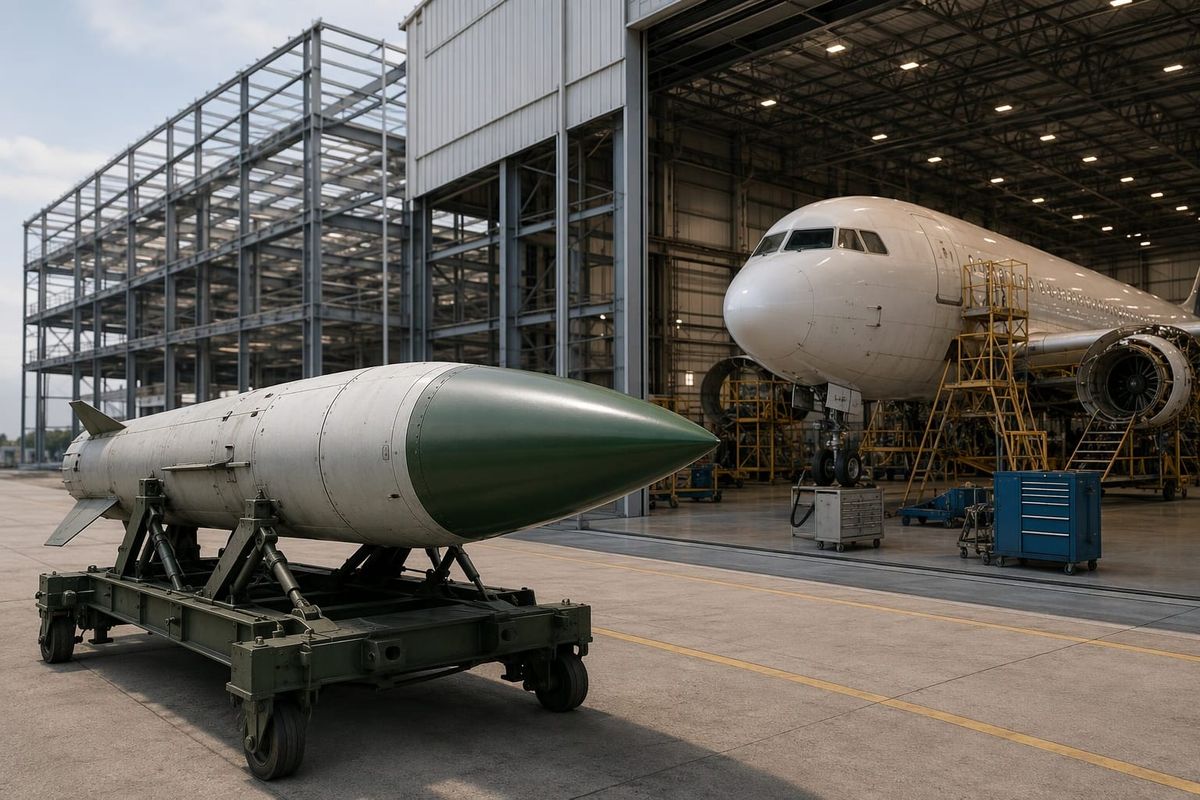
Moog, which makes precision motion and fluid-control systems, plans an extra $120 million for facilities to support missile work and commercial-aircraft repairs. Chief Financial Officer Jennifer Walter outlined the investment on the company's earnings call Friday; Moog's results release includes that spending in its lower fiscal 2027 free-cash-flow forecast.
Missiles And Repairs Need Room
The investment covers buildings and the equipment needed to put them to work. Walter described the opportunities behind it as “secured generational programs,” distinguishing the expansion from the company's regular capital budget.
Chief Executive Officer Pat Roche identified missile programs as an immediate need. Moog needs “additional and a lot of space to accommodate that growth,” he said. Roche said missile-program growth exceeded 30% in fiscal 2026 and expects growth to continue at that rate next year.
A Guggenheim analyst challenged the need for more commercial-aircraft capacity when aircraft production had yet to return to previous build rates. Walter pointed to repairs in western New York: most of Moog's work supplying new commercial aircraft takes place in the Philippines, but its local repair operations have reached what she called record levels over the past several years.
Management expects commercial-aircraft production sales to grow 28% in fiscal 2027, to $860 million, and aftermarket sales to increase 8%, to $410 million. The repair expansion addresses the latter business's anticipated demand.
A Bigger Budget, Less Free Cash
Moog forecasts total fiscal 2027 capital spending of $360 million, including about $240 million for its regular investments. Fiscal 2026 capital spending was $136 million.
The company projects $250 million of fiscal 2027 free cash flow, down from $307 million in fiscal 2026. Walter said the forecast incorporates the extra facilities investment and assumes inventory-reduction efforts largely offset the working-capital demands of growth.
The expansion follows a smaller factory footprint. Roche said factory space has declined 10% since fiscal 2022, while operating profit per employee has increased 96%. Over that same period, revenue increased almost 50% and headcount grew 6%.
Moog is also exploring a purchase of a Mattel campus in East Aurora, Buffalo Business First reported Thursday. The property sits a few miles from Moog's headquarters. Moog hired 500 people locally in 2025.
Urgent Defense Work Underpins The Plan
Moog supplies aerospace, defense and industrial customers through its Space and Defense, Military Aircraft, Commercial Aircraft and Industrial segments. It also earns revenue from replacement parts, repairs and overhaul services; aftermarket parts and services represented 14% of fiscal 2025 sales.
A TD Cowen analyst pressed Roche on the risks of prolonged stopgap federal funding. Roche said new defense-program starts account for limited revenue in Moog's fiscal 2027 plans, though their timing could slip.
Roche argued that funding redistribution under a continuing resolution would favor urgent, high-priority government programs. He said Moog's exposure to those programs supports its outlook, favoring that business over smaller opportunities that might be delayed.
Moog plans to set out its next three years of performance improvements at its March 2027 investor day.
Sources
- Moog results release (Form 8-K, EX-99.1) — SEC EDGAR
- Document — sec.gov
- Document — sec.gov
- Moog explores purchase of Fisher-Price East Aurora site - Buffalo Business First — bizjournals.com
- mog-20261120 — sec.gov
- Moog Inc. to Announce Fiscal 2026 Year-End Results on November 20, 2026 – Company Announcement - FT.com — Financial Times