Marvell CEO Sees $60 Billion More Opportunity By Combining Chips With Lumentum's Optics
The proposed all-stock merger would let the companies sell complete AI networking products, executives argued.


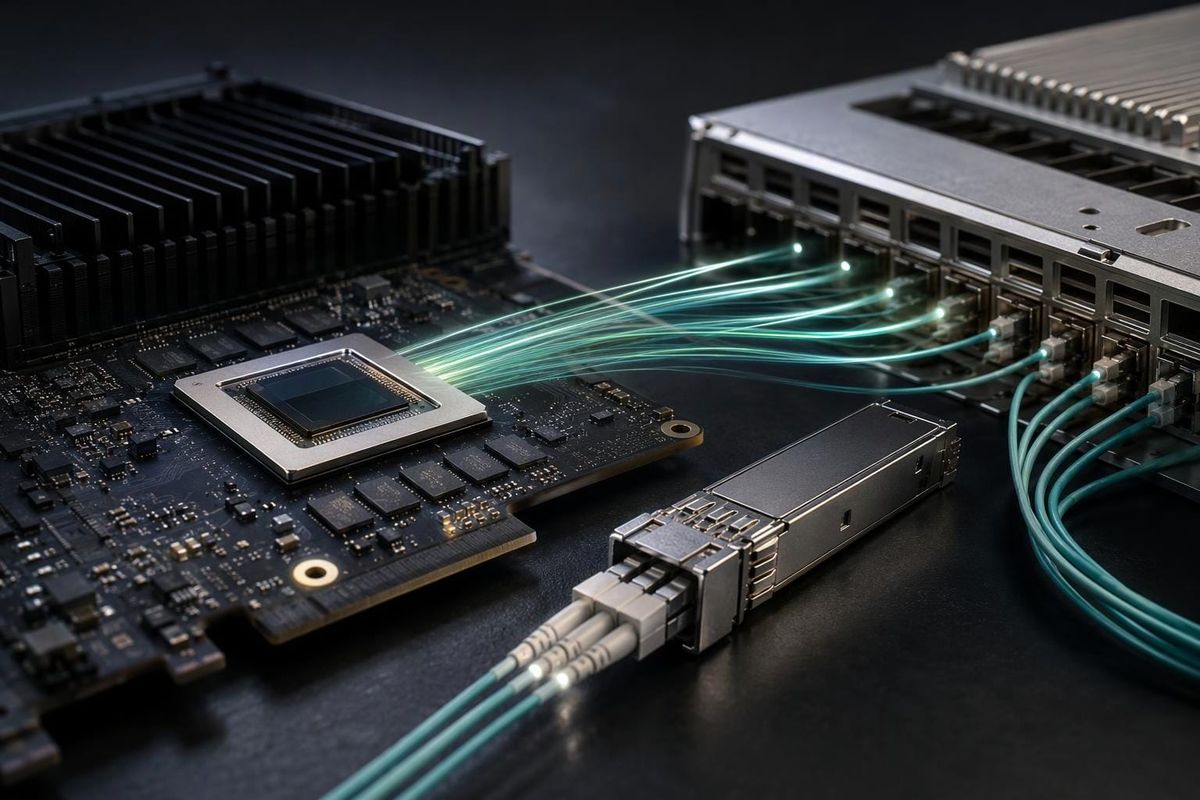
Marvell, which designs custom AI chips and data-center connectivity technology, could reach an additional $60 billion market by merging with Lumentum, which makes optical and photonic products, Marvell CEO Matt Murphy argued. His November 2 interview on Fox Business's "The Claman Countdown," reproduced in Tuesday's SEC filing, put that opportunity beyond the businesses' $490 billion combined standalone markets.
A Growth Pitch Meets A Selloff
The proposed merger was announced November 2 with an enterprise value of $115 billion. The all-stock offer valued Lumentum at $1,100.00 per share, a 24% premium to its October 28 closing price.
Lumentum shares lost roughly 36% in the week ended Friday. B. Riley's post-offer $770.00 target, down from $1,142.00, accompanied a November 3 rating cut from Buy to Neutral.
Murphy defended the transaction as a way to increase earnings per share. He also emphasized that the deal's all-stock structure centers on the relative ownership negotiated between the companies, rather than a cash payment.
Selling The Connection, Not Just Components
Murphy's estimate starts with Marvell's $400 billion potential market and Lumentum's previously stated opportunity of about $90 billion. He said the additional $60 billion emerged when the teams examined products they could build together, particularly technology connecting AI processors to one another.
"For example, we might be selling individual components, but combined with Lumentum, we could sell an entire module," Murphy said in the interview.
Lumentum already sells both components—such as laser chips and subassemblies—and finished products, including optical modules, optical circuit switches and industrial lasers. Its customers include AI infrastructure providers, cloud and network service providers, and network equipment makers; its lasers also serve manufacturing and consumer electronics.
Connecting AI processors requires processors, switches and optical communications, Murphy explained. He said customers increasingly want the complete package, while each company supplies a different piece. Combining those pieces could bring customer designs into production sooner than the companies' separate development efforts, he argued.
Lumentum CEO Michael Hurlston likewise said the combination could deliver more products faster. Hurlston said Nvidia, which has invested in both companies, reacted positively to the proposed merger.
The $21 Billion Revenue Estimate
Murphy estimated an annualized revenue pace of $21 billion for the combined businesses, using Lumentum's guidance and consensus estimates for Marvell's fourth quarter. That figure was a projection assembled from those inputs, rather than completed results from a merged company; he also cited operating margins above 40%.
Hurlston said Lumentum released its results on November 2, met its fiscal first-quarter number for the September quarter and forecast December-quarter revenue of $1.6 billion. He put the gross-margin guidance at 53%.
The executives' argument rests on both businesses growing independently while the merger adds products and shortens development schedules. Murphy said the combination would add to earnings per share, and Hurlston argued the companies could perform better together in two years than separately.
The $60 billion opportunity measures the additional market Murphy believes the companies could serve together—not revenue they have already earned.
Sources
- 425 — Marvell Technology, Inc. re: Lumentum Holdings Inc. (LITE) — SEC EDGAR
- Marvell-Lumentum Deal Odds Near Coin Flip as AI Trade Shakes (1) — news.bloomberglaw.com
- Here’s Why Lumentum (LITE) Was Downgraded — Yahoo Finance
- Can Lumentum Holdings (LITE) Stay Reasonable If Cash Flow Delivers? — Yahoo Finance
- 4 New 5-Star Stocks This Week | Morningstar — morningstar.com
- Halper Sadeh LLC is Investigating Whether ARRY, RRC, SGRY, — globenewswire.com
More on Lumentum Holdings
- Lumentum's $100 Million Customer Receivable Comes With An Offsetting $100 Million Liability, Not Revenue
- Lumentum CEO Tells Staff Optics And Electronics Are Colliding, And The Lumentum Brand Will Vanish Into Marvell
- Lumentum Stock Plunges 10%, Wiping Out $7.4 Billion, As Marvell Agrees To Buy It In $115 Billion Deal