MacroGenics' MGC026 Posts 27% Best Response Rate In Head And Neck Cancer, But Only 18.2% Confirmed
The experimental antibody-drug conjugate drew no treatment-related discontinuations in the head and neck cohort, and a pembrolizumab combination study is planned.


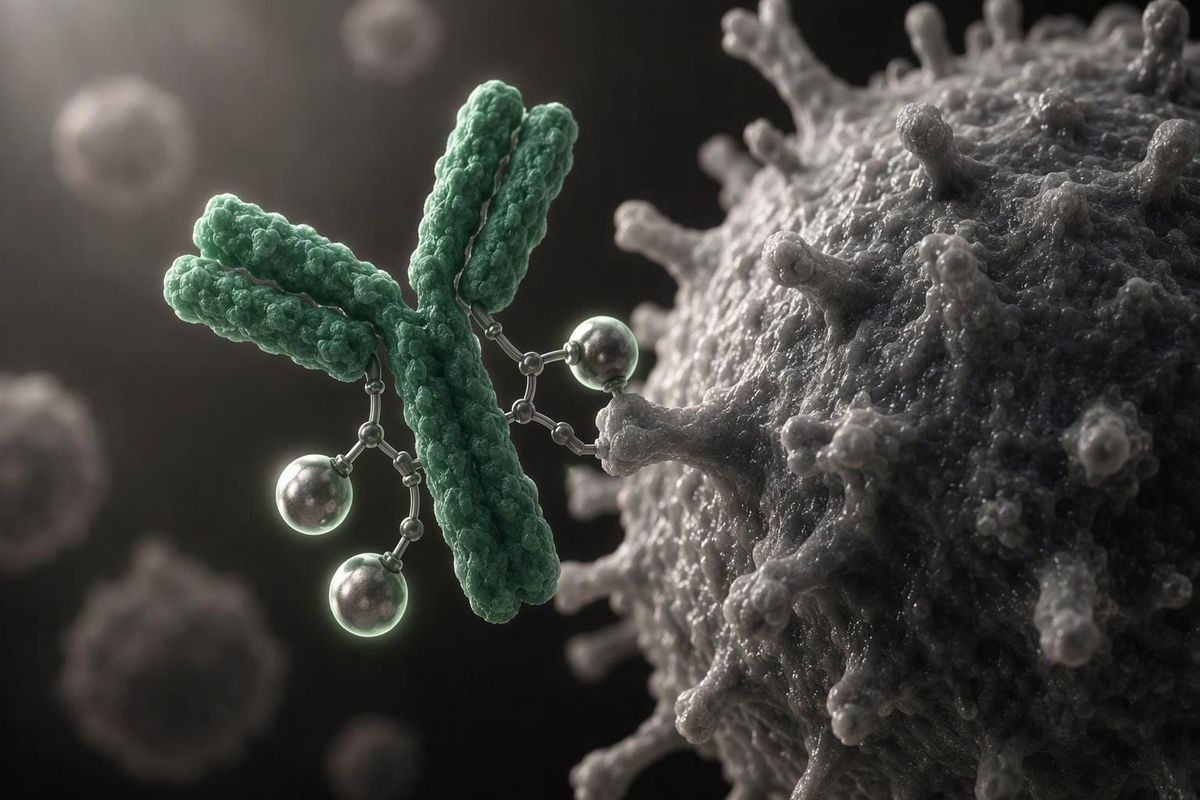
MacroGenics' experimental cancer drug MGC026 produced a 27% best overall response rate in heavily pretreated head and neck cancer patients — 6 of 22, including four confirmed and two unconfirmed partial responses, the company said Friday in interim Phase 1 data from the ESMO congress in Madrid. Confirmed responses alone were 4 of 22, or 18.2%, and the company plans a front-line combination study with pembrolizumab in early 2027.
Six responses in 22 patients
MacroGenics, a clinical-stage company that develops antibody-based cancer medicines, is testing MGC026, a B7-H3-directed antibody-drug conjugate, in a Simon's 2-stage expansion cohort for recurrent or metastatic squamous cell carcinoma of the head and neck. The cohort is designed to enroll 40 patients at 7.5 mg/kg every three weeks. The interim analysis, with a September 1, 2026 data cutoff, covers 27 patients for safety and 22 for response.
The disease control rate was 64% (14 of 22). Activity appeared higher in HPV-positive disease, where five of the responses came among 16 patients. Patients were heavily pretreated, with a median of three prior lines of therapy.
Across 17 response-evaluable dose-escalation patients, spanning 10 tumor types, who received at least 6 mg/kg, the confirmed response rate was 29% (5 of 17) and the disease control rate was 65%. Median duration of response was 10.2 months.
Safety: no discontinuations in head and neck
In the head and neck cohort, Grade 3 or higher treatment-related adverse events occurred in 48% of patients. The only two at or above 10% were anemia (30%) and neutropenia (26%). No events led to discontinuation, and there was no interstitial lung disease, pneumonitis or ocular toxicity. The company said many patients with blood toxicities had previously received platinum- or taxane-based chemotherapy.
Among all 85 patients treated, 5% discontinued over treatment-related events and 51% had Grade 3 or higher events. There were no Grade 5 events, meaning no treatment-related deaths.
Front-line combination next
MacroGenics plans an expansion cohort in early 2027 pairing MGC026 with pembrolizumab in front-line patients with PD-L1-positive recurrent or metastatic disease. Enrollment continues in the second stage of the monotherapy cohort.
CEO Eric Risser said the profile "reinforces our conviction that this molecule has the potential to play an important and differentiated role in the treatment of advanced solid tumors." Lead investigator Apostolia M. Tsimberidou of MD Anderson Cancer Center said the findings support continued development in head and neck cancer and other tumor types.
The company's slides note that no head-to-head studies against competing B7-H3 drugs have been run and that the data are not final.
Updated MGC026 data are expected in mid-2027.
Sources
- 8-K Filing — MACROGENICS INC (MGNX) — SEC EDGAR
- Exhibit a991pressreleasedatedoctob.htm — MACROGENICS INC 8-K exhibit — SEC EDGAR
- Exhibit a992mgc026clinicalupdate.htm — MACROGENICS INC 8-K exhibit — SEC EDGAR
- MacroGenics Announces Positive Interim Phase 1 Results for MGC026 and Highlights Plans to Initiate Front-Line Combination Study in SCCHN — Yahoo Finance
- MacroGenics Announces Positive Interim Phase 1 Results for — globenewswire.com